
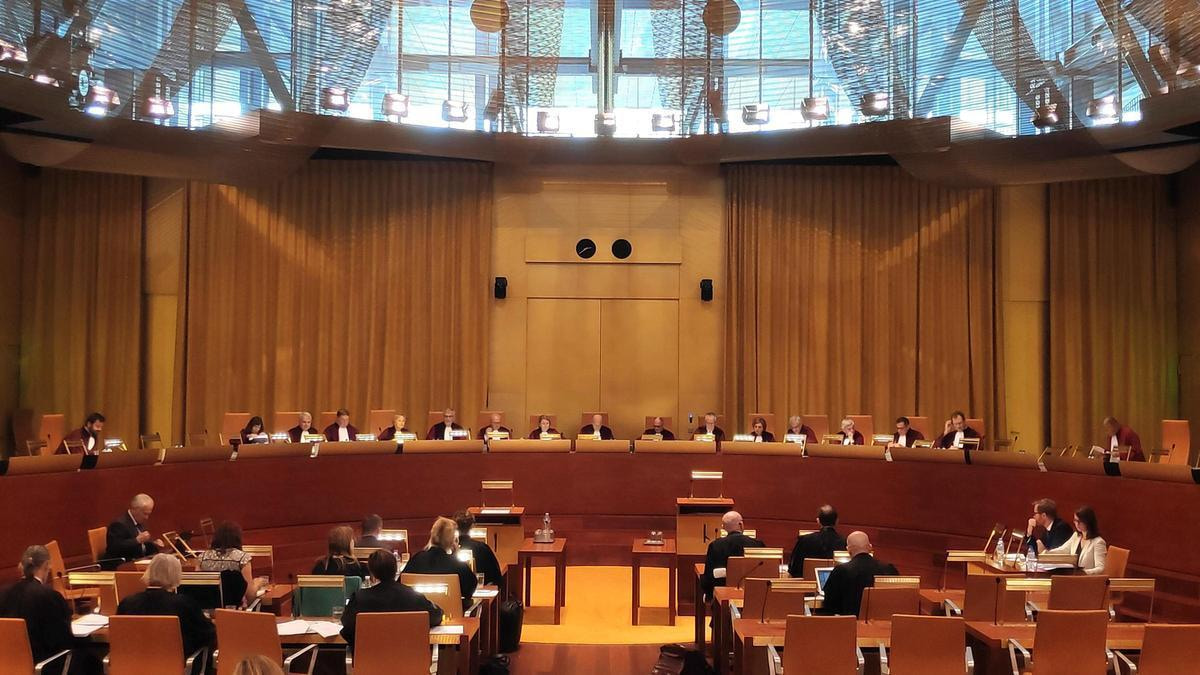
Variable mortgage rates without a fixed upper limit are not unfair in themselves, the Court of Justice of the European Union ruled on 26 November 2026. The judgment in Koź (C-607/25) closes one avenue for Polish borrowers who hoped to escape WIBOR-linked loans, yet it leaves another door open through the transparency test.
The case began at the Regional Court in Kraków. A consumer, identified as CT, signed a 30-year loan of PLN 420,000 with BNP Paribas Bank Polska on 18 December 2019. The interest equalled the three-month WIBOR benchmark plus a fixed bank margin of 2.70%. Only Poland’s statutory maximum interest rate, itself a moving figure, capped the cost.
That ceiling mattered for borrowers holding variable mortgage rates. Under Article 359 of the Polish Civil Code, maximum interest equals twice the statutory rate, which tracks the National Bank of Poland reference rate plus 3.5 points. At signing the ceiling stood at 10%. Over the loan’s life the borrower’s rate swung from 1.71% to 8.92%, starting at 4.4%.
The judges in Luxembourg held that the Unfair Terms Directive 93/13/EEC still applies to such clauses, but the absence of a cap does not by itself create an unfair imbalance. Where a term defines the main subject matter of the contract, Article 4(2) of the directive allows an unfairness review only after a finding that the bank failed the transparency requirement. Variable mortgage rates therefore stand or fall on what the lender told the customer.
Disclosure rules now take centre stage for variable mortgage rates. The Mortgage Credit Directive 2014/17/EU requires lenders to show an illustrative annual percentage rate of charge that reflects a significant rise in borrowing costs. When no fixed cap exists, that illustration should rely on the highest rate recorded over at least 20 years of historical data. The standardised ESIS sheet must also warn that the total cost of credit may change.
The Kraków court must now decide whether the bank’s illustrative figures left CT believing that the rate could never exceed 10%. If so, the bank breached transparency, although the CJEU stressed that such a breach does not automatically make the clause unfair. National judges must weigh all the circumstances at the time the contract was concluded.
The ruling builds on the Court’s judgment of 12 February 2026 in C-471/24, a case involving PKO BP. There, the judges found that using a benchmark compliant with the Benchmarks Regulation (EU) 2016/1011 does not, on its own, signal a significant imbalance between lender and borrower. Together, the two decisions narrow the litigation wave that WIBOR lawyers had hoped to build on the model of Swiss franc loan cases.
For Polish banks, the judgment brings relief, since it avoids a blanket finding that could have unravelled thousands of contracts. For consumer groups, the message is sharper. Lenders who sold variable mortgage rates with rosy scenarios or omitted the 20-year stress figure remain exposed to claims, and borrowers can still win if documents misled them.
The wider lesson reaches beyond Poland. Variable mortgage rates remain lawful across the single market, but the CJEU has made clear that honest, stress-tested disclosure is the price lenders pay for passing interest risk to households.


