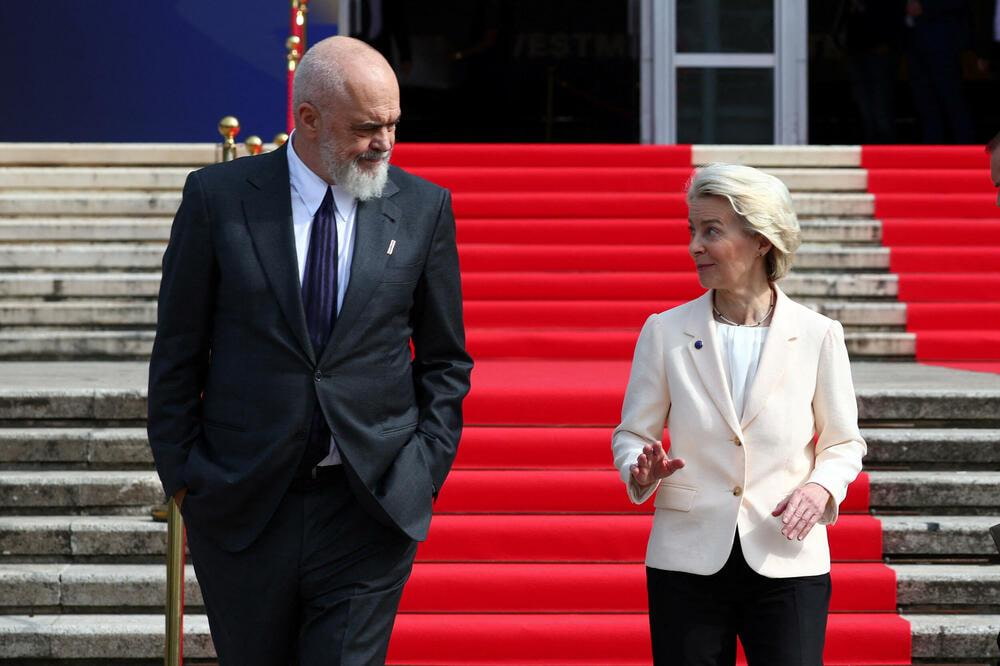
Tirana: Albania accession is the clearest test of whether the European Union can turn warm words about enlargement into a dated timetable. Commission President Ursula von der Leyen opened her sixth annual Western Balkans tour in the Albanian capital on 30 September 2026 and told a joint press conference that the goal is on the horizon, though much work remains.
The Commission is positioned to endorse Albania’s own aim of concluding membership negotiations by December 2027, according to reporting around the visit. That ambition would have sounded fanciful a few years ago. Albania closed its first three negotiating chapters in July 2026, including the chapter on external relations, and more than eighty percent of the reforms agreed under the six billion euro Growth Plan for the Western Balkans have now been implemented. The country has also joined the Single Euro Payments Area, a concrete benefit that citizens can see.
Von der Leyen made clear that adopting laws is not enough. She said it is just as important to implement reforms as to approve them, and she named the judiciary, the electoral framework and environmental protection as the areas where further work is expected. Prime Minister Edi Rama answered that Albania has an iron will to advance, and he pointed to progress against corruption and organised crime as evidence that the country has built self-correcting democratic systems.
The political backdrop complicates the story of Albania accession. Protests sometimes called the Flamingo Revolution oppose a controversial property development, and they illustrate the kind of civil society scrutiny that accession processes are supposed to welcome rather than fear. How the government handles dissent will weigh on the Commission’s assessment of the rule of law, which is the fundamental cluster that opens and closes every negotiation.
Timing adds pressure to Albania accession. The Commission is due to present a pre-enlargement policy communication in the week of 6 October, ten days before leaders meet in Brussels on 15 and 16 October, and the full enlargement package is expected on 28 October. A new instrument of roadmaps is meant to preserve commitments to democratic values and the rule of law even after membership. If Albania accession is to be finished in 2027, member states must accept that indicative dates carry a political promise.
Enlargement Commissioner Marta Kos has warned that enlargement does not work with dates, and she has a point, because deadlines that outrun technical progress breed cynicism. Yet the opposite risk is real. A candidate that reaches the frontrunner position and then waits without a timetable may lose public support for the reforms that got it there.
The honest reading is that Albania accession depends on three things at once: domestic follow-through on justice and elections, a unanimous Council willing to accept a target, and a Commission prepared to defend its own assessments. The Tirana visit showed the first and third are in place. The second will be decided in October.