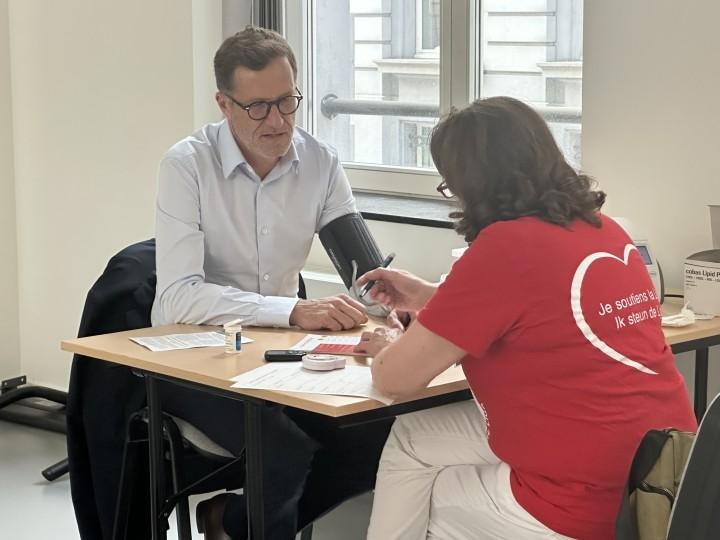
Brussels: The European Commission launched the first EU Screening Week on 28 September 2026 and proposed a Council recommendation that would bring cardiovascular screening within reach of every adult in the Union. Health Commissioner Olivér Várhelyi presented the plan, which asks governments to check blood pressure, cholesterol and blood sugar earlier and more often.
The numbers explain the push. Cardiovascular disease kills about 1.7 million people in the EU every year and costs the European economy more than €282 billion annually. The Commission says up to 80% of these cases could be prevented if doctors identify high blood pressure, high cholesterol, raised blood sugar and obesity in time.
Várhelyi framed the proposal as a change of direction for health systems. “For too long, healthcare has been primarily about treating people once they become ill,” he said, according to EU Reporter. He argued that a shift to prevention also makes health systems more sustainable for patients and for taxpayers.
Coverage today is patchy. Fewer than half of EU countries run a screening programme for heart disease, and one in four Europeans living with diabetes remains undiagnosed, Euronews reported. A Council recommendation would not bind governments, yet it would give them a common benchmark and a basis to compare results.
The proposal sits inside the Commission’s Safe Hearts Plan, which aims to cut premature cardiovascular deaths by 25% by 2035. During the screening week, health organisations opened free checking stations across Europe for the general population and for groups that standard services often miss. The Commission wants those stations to show that cardiovascular screening works outside hospitals.
Member states now have to decide how far to follow. Finance ministers will ask who pays for cardiovascular screening, and health ministers will ask which age groups and risk profiles deserve priority. The Commission publishes background material on its health policy portal for officials and clinicians who want the detail.
The three target tests are simple and cheap compared with treating a stroke or a heart attack. A blood pressure reading, a cholesterol panel and a blood sugar test can flag people who feel healthy but carry serious risk. The Commission hopes that routine cardiovascular screening will catch those cases years before an emergency admission, and it wants national programmes to invite people actively instead of waiting for them to book an appointment.
The next step is negotiation in the Council. If ministers adopt the text, national programmes will have to prove that cardiovascular screening reaches people who rarely visit a doctor, or the 25% target for 2035 will stay out of reach.