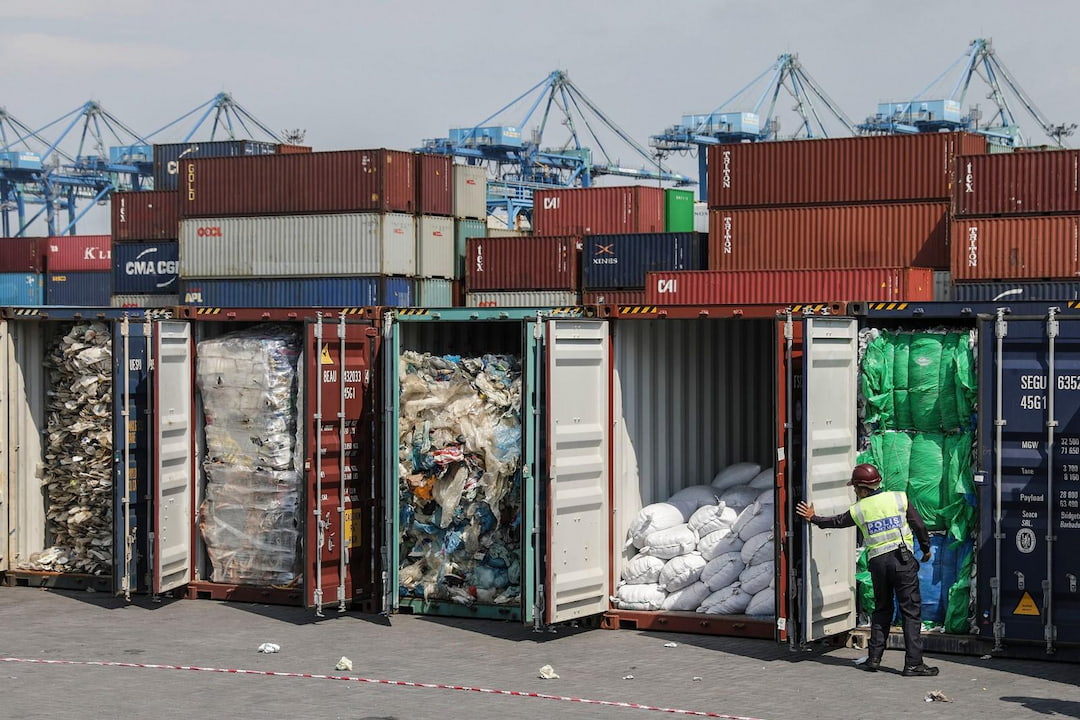
Antwerp: The European Union has stopped plastic waste exports to countries outside the OECD, as a ban under the Waste Shipment Regulation took effect on 21 November 2026. The European Commission confirmed the move on 20 November, closing a route that sent hundreds of thousands of tonnes of discarded packaging and scrap each year to Asia and beyond.
The prohibition rests on Regulation (EU) 2024/1157 on shipments of waste, which entered into force on 20 May 2024. The halt on plastic waste exports will run until at least 21 May 2029. After that date, non-OECD countries may apply to receive EU plastic waste again, but only if they can show they manage it in an environmentally sound way.
The scale of the trade explains why Brussels acted. The EU generates about 40 million tonnes of plastic waste every year and ships between 1 and 1.5 million tonnes abroad. In 2025, roughly half of those plastic waste exports went to non-OECD destinations, according to the Commission’s own figures.
Malaysia took about 276,000 tonnes last year, Indonesia about 215,000 tonnes and Vietnam about 137,000 tonnes. Those three markets now lose access to European scrap overnight. Shippers in ports such as Antwerp, Rotterdam and Hamburg must either find buyers inside the OECD or send the material to recyclers in Europe.
The door to OECD members stays open, but the Commission has promised closer scrutiny of plastic waste exports there too. Türkiye remains the single largest buyer, with about 510,000 tonnes in 2025, followed by the United Kingdom at about 108,000 tonnes. On 18 September 2026 the Commission published an assessment of plastic waste shipments to Türkiye, and officials say monitoring will continue.
The ban is only the first step in a tighter regime. From 21 May 2027, the EU will in principle stop exporting any waste to non-OECD countries. Exceptions may cover certain non-hazardous waste, but only where the receiving country asks to keep importing and proves it can treat the material sustainably.
The Commission must publish its first list of countries authorised to receive EU waste by the end of 2026. It will update that list at least every two years, giving national authorities and industry a clear reference for each shipment.
Environmental groups have long argued that Europe exported its plastic problem rather than solving it. Investigations in Southeast Asia found mixed and contaminated bales dumped or burned near informal recycling sites. The new rules aim to keep that material inside a system where EU standards apply and where enforcement is easier to verify.
Recyclers inside the bloc see an opportunity as well as a challenge. In December 2025 the Commission set out measures to strengthen the single market for recycled plastics, and the halt to plastic waste exports should push more feedstock toward European plants. The question is whether sorting and processing capacity can grow fast enough to absorb the extra volume.
Member states now carry the enforcement burden. Customs officers and environmental inspectors must check consignments, catch mislabelled plastic waste exports and stop illegal shipments disguised as other goods. The Commission has already flagged waste crime as a growing priority for police and prosecutors across the EU.
For now, the message to exporters is simple. Plastic waste exports to non-OECD countries are off the table until at least 2029, and the wider waste ban arrives in 2027. Companies that relied on cheap shipping to Asia need a European or OECD solution, and they need it quickly. Details are available on the Commission’s waste shipments page.