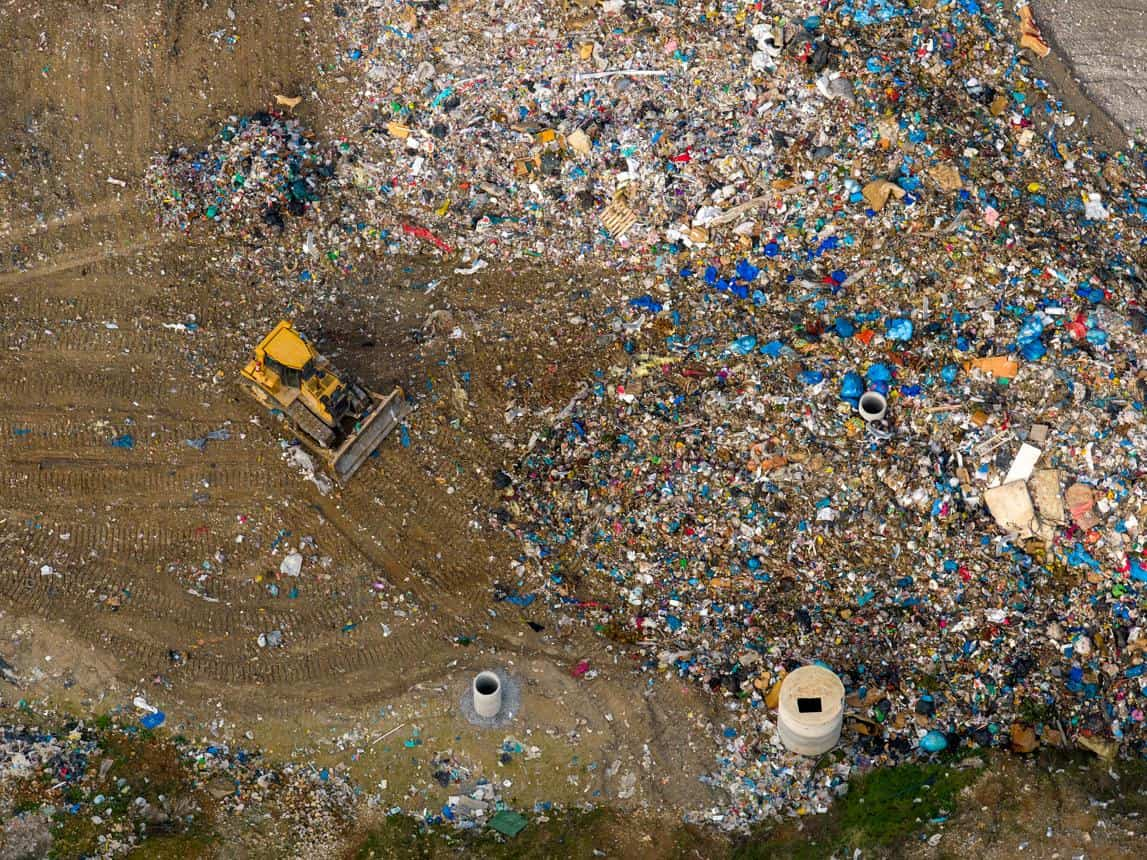
Larissa: Landfill waste rules are heading to the Court of Justice of the EU after the European Commission decided on 1 October 2026 to refer Greece and Cyprus for failing to apply them correctly. The referrals form part of the Commission’s October infringement package and concern the Landfill Directive and the Waste Framework Directive.
The two cases carry the references INFR(2021)2166 for Greece and INFR(2021)2217 for Cyprus. Both date back to 2021, so the Commission has spent years on exchanges, formal notices and warnings before taking the last step. A referral moves the dispute from the negotiating table to the courtroom in Luxembourg, where judges decide whether the governments breached their obligations.
In Cyprus the figure behind the case is easy to grasp. The Commission says that 21 percent of the waste the island produces goes to landfill without any prior treatment. The landfill waste rules require waste to be treated before it is buried, so that the volume shrinks and the most harmful fractions are dealt with first. Cyprus had already received a reasoned opinion on waste treatment in December 2024, and the new step shows that the Commission did not accept the answers it received.
Greece faces a different set of complaints under the same landfill waste rules. The Commission points to shortcomings at dozens of landfill sites, which means the problem is spread across the country and not tied to a single facility. Landfills that do not meet the technical standards can leak into soil and groundwater, release methane and create fire risks during hot summers. Those risks sit at the centre of the Commission’s concern.
The wider legal framework adds weight to the case. The amended Landfill Directive sets a binding goal of sending no more than 10 percent of municipal waste to landfill by 2035. Countries that still bury large shares of untreated waste face a long climb to that target, and every year of delay makes the climb steeper. Recycling plants, separate collection and treatment capacity all need investment before the landfill waste rules can bite in practice.
A judgment on the landfill waste rules does not carry an automatic fine. Yet if a government ignores a ruling, the Commission can return to the Court and ask for financial penalties, usually a lump sum plus a daily payment. That second stage has hurt several capitals in earlier waste cases, and officials in Athens and Nicosia know the history well.
The two referrals were not the only environmental decisions in the package. On the same day the Commission referred Finland over the Seveso III Directive on major industrial accidents and sent Portugal a reasoned opinion over the monitoring of cetacean bycatch. Together the decisions show how wide the Commission’s enforcement net runs across environmental law.
For municipalities and waste operators, the message is practical. Governments that want to avoid a ruling need modern treatment capacity, credible closure plans for old sites and reliable data. Until the judges decide, the landfill waste rules will stay a live test of whether Mediterranean states can close the gap with the best performers in the Union.