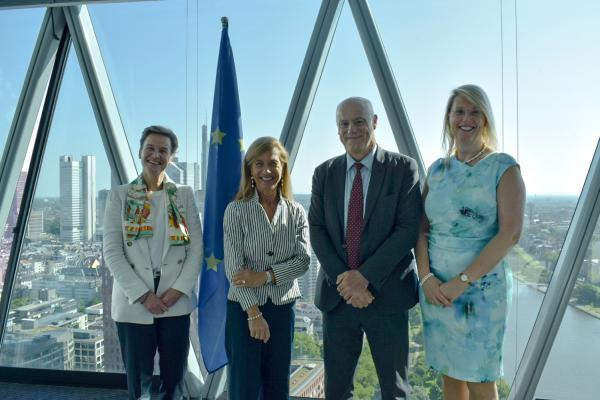
Frankfurt: The OLAF AMLA cooperation took a formal step on 21 October 2026, when the European Anti-Fraud Office and the new Anti-Money Laundering Authority signed a working arrangement to share information. OLAF announced the signature in a press release, and the document gives the two bodies a common basis for exchanging intelligence on financial crime that touches the EU budget.
The arrangement matters because fraud against the budget rarely stays in one country or one legal category. Money stolen from EU programmes must move through accounts, shell companies and cross-border payments before anyone can use it. An authority that watches money laundering across the Union and an office that investigates fraud against EU funds hold different pieces of the same puzzle, and the OLAF AMLA cooperation is meant to put those pieces together.
The summary OLAF published focuses on information sharing and does not list case numbers, deadlines or technical channels. Readers should therefore treat the signature of the OLAF AMLA cooperation as the start of the practical work rather than as proof of results. The details will emerge when the two bodies begin to exchange data and when they report on what the exchange produced.
The timing fits a busy October for the office. On 20 and 21 October, OLAF joined the Cyprus Customs and Excise authorities in Larnaca for its annual conference on tobacco smuggling. On 23 October, enforcement authorities met in Brussels for the second meeting of the Waste Shipment Enforcement Group, which OLAF co-chairs with Dublin City Council. Earlier in the month, more than 120 anti-fraud experts from member states and enlargement countries gathered for the AFCOS conference to discuss protecting the next multiannual budget.
The figures from the latest annual report show the scale of the work. In 2025, OLAF recommended that almost €600 million, precisely €597 million, return to the EU budget, and it opened 254 new investigations while closing 209. Over the past decade it has helped recover or protect €6.8 billion. Director-General Petr Klement said that the office needs adequate resources and independence to carry out its mandate, and the report notes that OLAF has lost 110 permanent positions over 15 years.
Those resource limits explain why partnerships carry weight. The report also refers to an ongoing review of the European anti-fraud architecture, in which OLAF works with the European Court of Auditors, the European Public Prosecutor’s Office, Europol and Eurojust. The OLAF AMLA cooperation adds another actor to that network, and each added link raises the question of who leads when a case crosses several mandates.
For now, the OLAF AMLA cooperation gives investigators a legal route to share what they know, and that is a practical gain. The test will come in the next annual report, which should show whether shared intelligence led to new investigations, faster recoveries or both. Anyone who handles EU funds should expect closer scrutiny of payment flows as the OLAF AMLA cooperation matures.