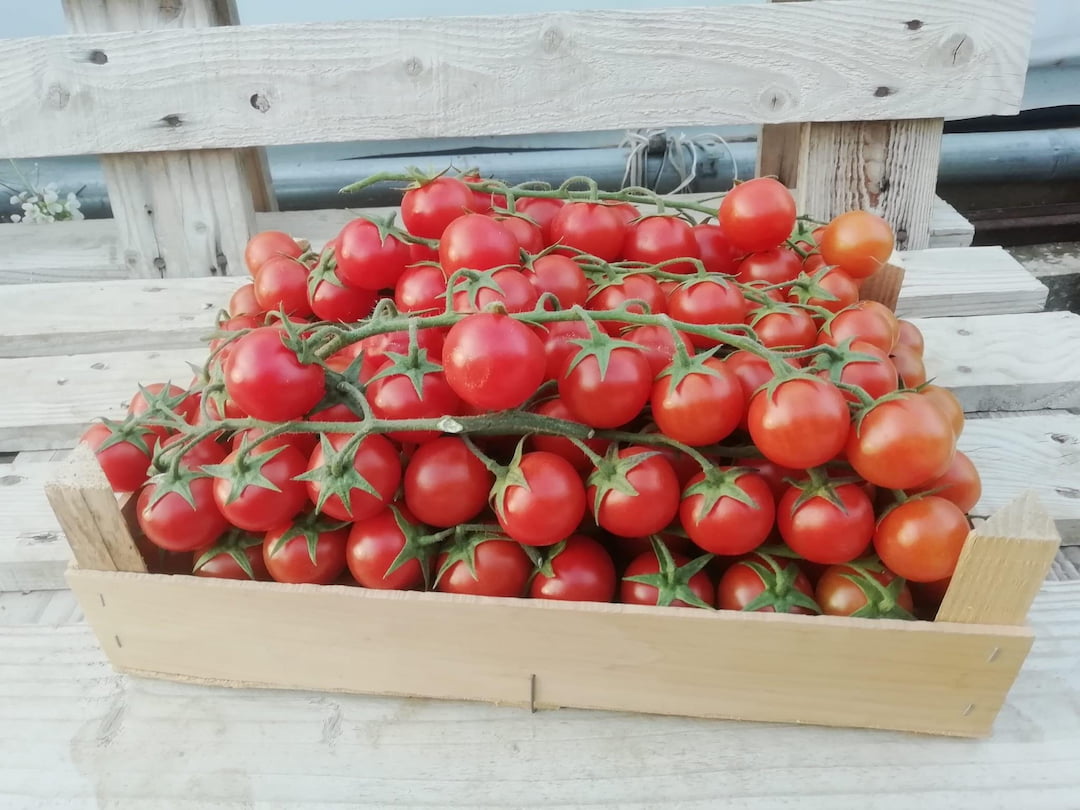
Ragusa: The Salmonella Strathcona outbreak linked to small tomatoes from Sicily is still spreading through Europe, and the latest weekly threats report from the European Centre for Disease Prevention and Control shows no sign that the risk has passed. In its report covering 3 to 9 October 2026, the agency counted more than 160 new cases this year across ten EU and EEA countries, with most patients falling ill between July and September.
The Salmonella Strathcona outbreak is far from new. ECDC says about 670 confirmed cases were reported for the years 2023 to 2025, and more than 800 cases have now been recorded since January 2023. The latest onset dates again cluster in the warm months, which fits a pattern tied to the seasonal tomato harvest rather than to a single contaminated batch.
Investigators have pointed to the same suspect for years. Austrian inquiries in 2025 traced infections to small tomatoes grown in Sicily, matching earlier clusters in Italy in 2024 and Austria in 2023. The strain itself has circulated in the EU and EEA for more than a decade, and the first recorded outbreak, in Denmark in 2011, was also linked to Sicilian tomatoes. Italian authorities have since detected the bacterium in irrigation water at a primary production site, which points to environmental contamination at the farm level.
ECDC and the European Food Safety Authority have asked national public health bodies to keep sequencing human isolates and to work with food safety agencies to trace and contain the source. Their joint assessment of the Salmonella Strathcona outbreak recommended verifying whether Sicilian tomatoes remain the vehicle for newly reported infections and guiding pre-harvest controls, including the quality of irrigation water. In that assessment Italy, Germany and Austria carried the heaviest burden among EU states, although cases also appeared in the United Kingdom, Canada and the United States.
For ordinary households the advice has not changed. ECDC urges people to wash their hands, rinse fresh produce thoroughly and keep raw and cooked foods apart. The agency stresses that the risk from this Salmonella Strathcona outbreak continues for as long as contaminated seasonal produce keeps reaching shops and restaurants, which makes the coming weeks of harvest and distribution a real test for food safety authorities.
Whether the Salmonella Strathcona outbreak fades with the end of the tomato season or returns next summer will depend on whether the recommended controls on irrigation water and traceability take hold in Sicilian production. ECDC says it continues to monitor the situation with its national partners and will update its assessment as new cases are confirmed.