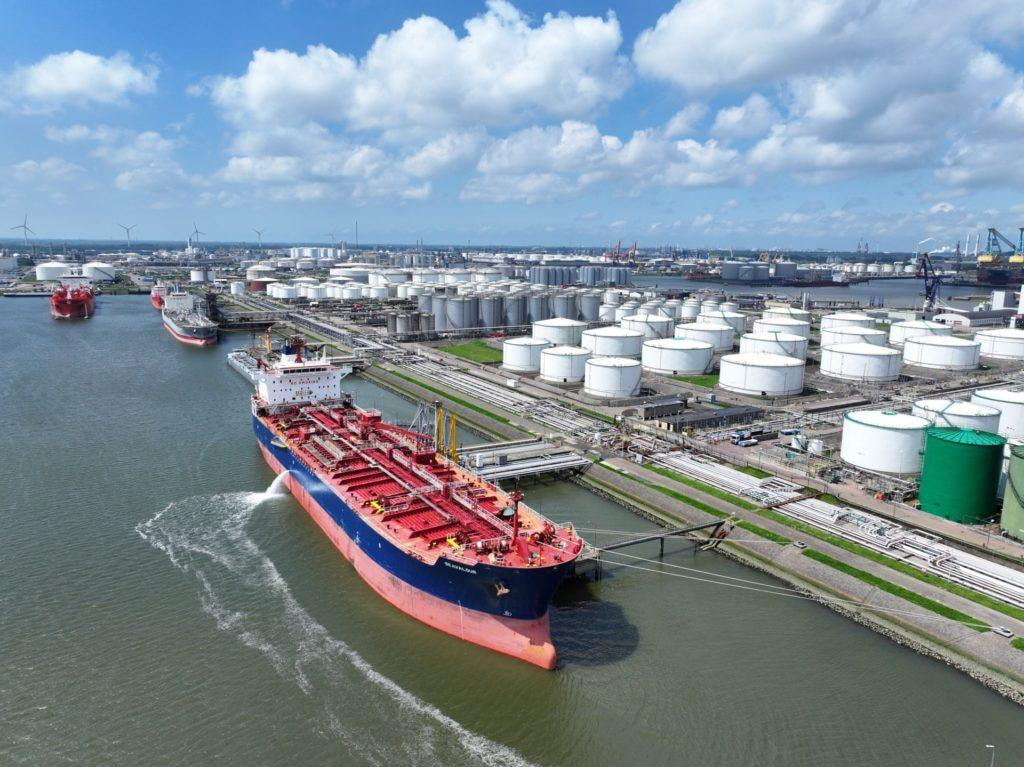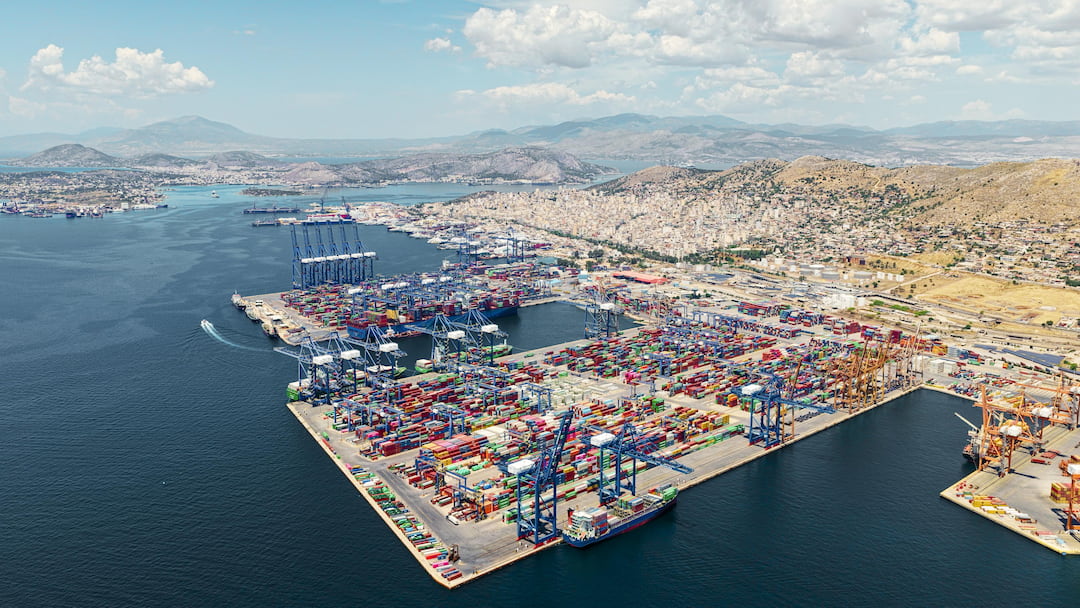
Piraeus: Sea freight imports carried 1.1 billion tonnes of goods into the European Union in 2025, worth €1,270 billion, according to Eurostat data published on 24 September 2026. Exports by sea were smaller at 0.5 billion tonnes, but they were worth €1,069 billion, which confirms that ships remain the backbone of EU trade with the rest of the world.
By weight the dominance is overwhelming. Sea freight imports accounted for 73.3 percent of all tonnes brought into the Union from non-EU countries, and sea routes carried 72.6 percent of exports. By value the picture is more balanced. Ships delivered 50.2 percent of the value of imports and 40.4 percent of the value of exports, because bulk cargoes such as fuels, ores and grain weigh heavily but cost relatively little per tonne.
Air transport tells the opposite story. Planes moved only 0.3 percent of imports by weight, yet they handled 20.7 percent of imports by value. On the export side air freight carried 2.9 percent of the weight and 29.1 percent of the value, a sign of the high-priced goods, such as pharmaceuticals and electronics, that Europe sells abroad.
Road and rail fill the remaining space beside sea freight imports. Lorries carried 6.0 percent of imports and 17.4 percent of exports by weight, equal to 19.5 percent and 24.9 percent of value. Rail accounted for 2.6 percent of imports and 2.9 percent of exports by weight, but only about 1.2 and 1.3 percent by value, which shows how limited its role is in trade with distant partners.
The figures matter for trade policy because they show where disruption would hurt most. Any closure of a shipping lane, port strike or surge in freight rates would hit the sea freight imports that supply half of the Union’s imported value. Other Eurostat releases from September point in the same direction, with the value of oil imports rising 55.8 percent in the second quarter of 2026 while volumes grew only 1.2 percent to 36.7 million tonnes, and fuel prices for personal transport standing 23.8 percent higher than a year earlier in August.
For Commission negotiators and shipping regulators alike, the lesson is clear. Port capacity, maritime security and open sea lanes underpin the single market’s supply chains as much as any tariff schedule. As the EU concludes new trade agreements, the weight of sea freight imports is a reminder that logistics are trade policy, and that a resilient maritime network is part of the Union’s economic security.