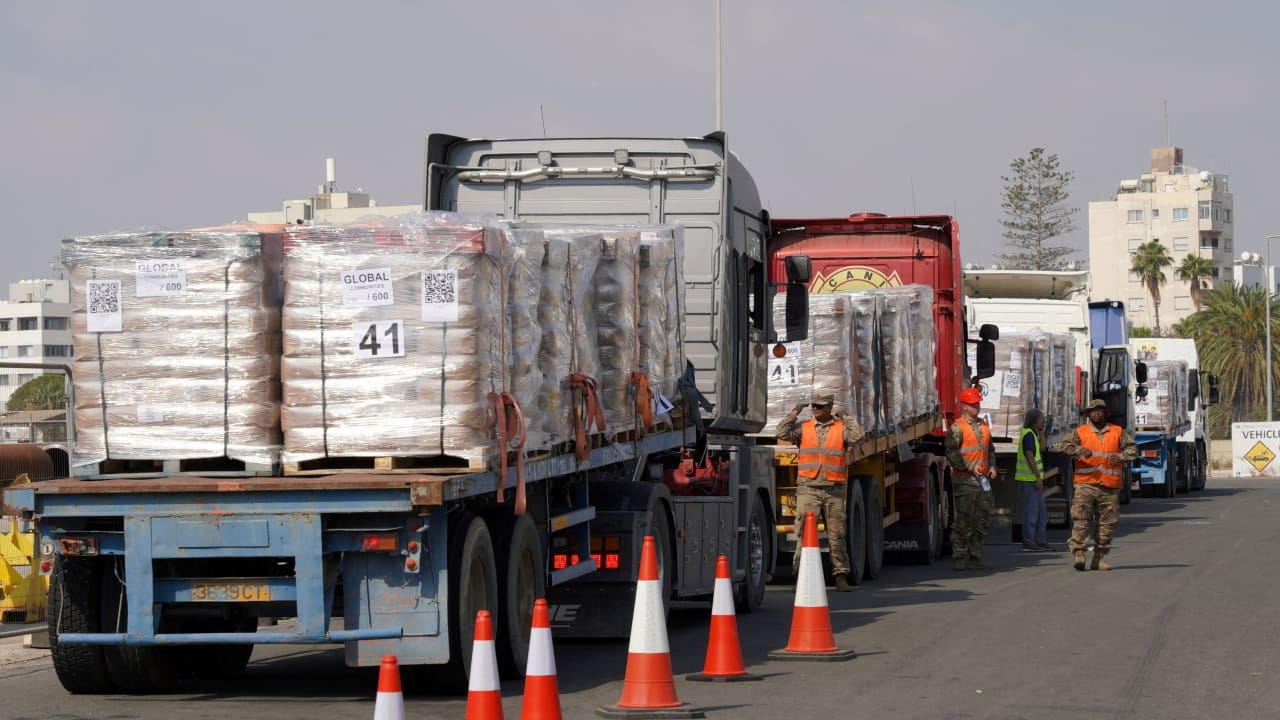
Amman: From the Jordanian capital that serves as a staging post for relief bound across the region, a new European push is changing the shape of humanitarian aid to a shattered Gaza. At a July meeting, the Palestine Donor Group agreed to scale up support and launched a Team Gaza Initiative that will channel some 883.6 million euros toward early recovery.
The move sits inside a far larger commitment. The European Commission set a humanitarian budget of about 1.9 billion euros for this year, drawn on to meet needs that agencies describe as the highest on record, with hundreds of millions of people worldwide requiring assistance. Of the sums earmarked for the Middle East, a substantial share is directed to Palestine to fund food, health, protection, shelter and education.
What distinguishes the Team Gaza approach is its focus on recovery rather than pure relief. Money routed through the long-standing PEGASE mechanism is meant to move beyond emergency rations toward rebuilding the basic systems, from clinics to schools to water supply, that a functioning society depends on. The bet is that early investment now prevents a deeper, costlier collapse later.
The shift reflects a broader rethink under way in the Commission’s aid machinery. Officials have signalled that the model of open-ended emergency response cannot keep pace with a world of overlapping, protracted crises, and that donors must plan for years rather than months. Bridging the gap between short-term rescue and long-term development has become the central design problem.
Delivery remains the hardest part. Getting supplies and reconstruction funds into Gaza depends on access, security and the cooperation of many parties, and even the best-funded plan can stall at a closed crossing. The Commission’s humanitarian and civil protection arm has stressed that funding pledges mean little without safe passage on the ground.
Aid groups broadly welcome the recovery emphasis while warning against neglecting immediate lifesaving needs. Food assistance, medical care and shelter still command the bulk of spending because the population’s survival depends on them day to day. The challenge is to run rescue and rebuilding at the same time, from the same strained budget.
For the logisticians in Amman who load and route the convoys, the Team Gaza Initiative offers a clearer horizon than the usual scramble from one appeal to the next. Whether the money reaches the families it is meant for will depend, as ever, on what happens at the border rather than in the donor room.