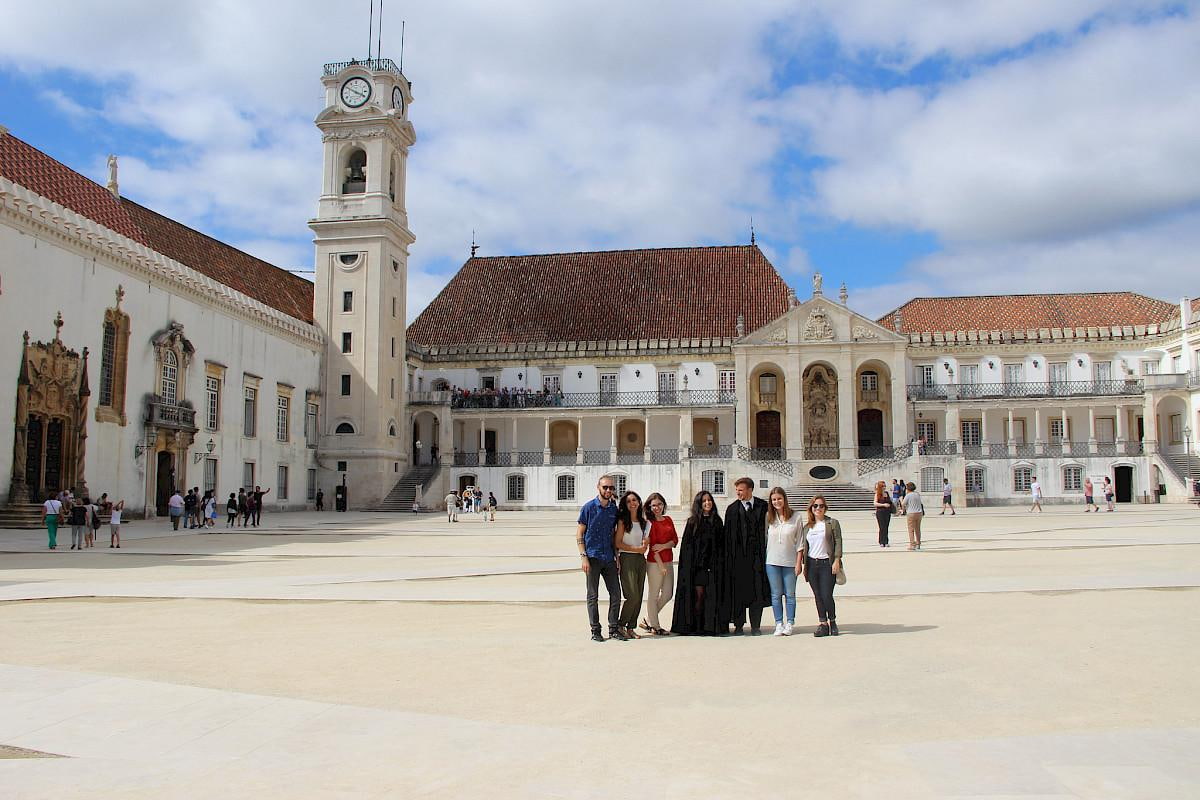
Coimbra: Portuguese universities have run joint programmes with French, Spanish and Italian partners for two decades, and their registrars can recite the accreditation problems from memory. Two national quality agencies, two sets of credit rules, two definitions of a thesis defence. The European degree label is supposed to help. Whether it does depends on how much it actually certifies.
The Council adopted its recommendation on the label in May 2025, together with a resolution mapping the route towards a possible full European degree. The roadmap runs in three phases. The first finalises preparations so the label can launch during 2026. Member states then gather evidence from its use. A decision on whether to create an actual European degree, a qualification awarded under European rather than national law, is scheduled for 2029.
The label itself is a certificate attached to an existing joint programme. To qualify, a programme must be delivered by universities from different countries, including at least two EU member states, and must meet criteria the Council set out on transnational delivery, joint design and recognition. A graduate receives a national degree plus the label. Nothing about the underlying qualification changes.
Sceptics inside universities call this a sticker on a problem. The genuine obstacles to joint programmes sit in national statute: rules on who may confer a degree, how many credits a student must complete at the awarding institution, whether a foreign supervisor may examine, and how tuition revenue splits across borders. A label does not amend any of that. Its defenders make a narrower claim. Universities have said for years that they cannot justify the administrative cost of joint programmes when the resulting qualification stays invisible to employers and to national recognition authorities. Visibility is precisely what a recognised European mark provides.
The Commission was invited to set up a policy lab to build the framework, covering a common compliance verification method and the label’s visual identity, with results due to the Council by mid-2026 so the rollout could complete by year end. The education area portal hosts the criteria, and the Council set out the political sequence in its May 2025 statement.
Competence explains the caution. Education belongs to the member states, and the Union may only support and coordinate. Several capitals reserve degree-awarding powers to national authorities in statute or constitution, and treat any European qualification as a treaty question rather than a policy one. The 2029 decision point exists because nobody expects that argument to resolve sooner.
The practical test in Coimbra will be simple. If a student on a four-country programme finishes with a label, and a Portuguese employer or a German doctoral admissions committee treats it as meaningful, the instrument earns its place. If the label reads as decoration on a diploma that still needs the same recognition paperwork it always did, universities will conclude that the administrative effort bought them very little.
Three years of evidence gathering will tell. That is a long time in a sector that has been waiting since the Bologna declaration.