September 16, 2026
LATEST
Software Makers Face Europe’s Product Liability Deadline in DecemberCage-Free Promises Land Before the Transport File Is FinishedTwo New Calls Will Test How Flexible Horizon Europe Really IsEurope’s Innovation Act Counts 10 Billion It Has Not Found YetProcurement Is the Chapter That Could Stall the Thailand DealMobility Week Returns With a Test of Intergenerational FairnessMinisters Debate the Chips Act Next Week With No Money AttachedTaiwan Wants Tax Treaties That Brussels Has No Power to SignNorth Korea Now Earns From Europe Without Shipping AnythingPalm Oil Is the Last Hard Question Before the Indonesia SigningCan One Year Deliver Both a Trade Deal and a Sea CodeVietnam Reached Europe’s Top Partnership Tier With Little DetailLeaked Draft Puts Europe’s Social Media Age Limit at FifteenA Ceuta Debate Whose Title Has Already Reached a VerdictFP10 Clears Committee and the Budget Gap Stays Wide OpenEurope’s New Merger Guidelines Face a Council Test Next WeekEurope’s Culture Capitals Face Their Biggest Rewrite Since 1985Only Italy Has a Bill as Platform Work Deadline NearsCustoms Fraud Charges Land in Germany Over Wrecked CarsCar Tariffs Show Why the India Deal Still Needs Two VotesSoftware Makers Face Europe’s Product Liability Deadline in DecemberCage-Free Promises Land Before the Transport File Is FinishedTwo New Calls Will Test How Flexible Horizon Europe Really IsEurope’s Innovation Act Counts 10 Billion It Has Not Found YetProcurement Is the Chapter That Could Stall the Thailand DealMobility Week Returns With a Test of Intergenerational FairnessMinisters Debate the Chips Act Next Week With No Money AttachedTaiwan Wants Tax Treaties That Brussels Has No Power to SignNorth Korea Now Earns From Europe Without Shipping AnythingPalm Oil Is the Last Hard Question Before the Indonesia SigningCan One Year Deliver Both a Trade Deal and a Sea CodeVietnam Reached Europe’s Top Partnership Tier With Little DetailLeaked Draft Puts Europe’s Social Media Age Limit at FifteenA Ceuta Debate Whose Title Has Already Reached a VerdictFP10 Clears Committee and the Budget Gap Stays Wide OpenEurope’s New Merger Guidelines Face a Council Test Next WeekEurope’s Culture Capitals Face Their Biggest Rewrite Since 1985Only Italy Has a Bill as Platform Work Deadline NearsCustoms Fraud Charges Land in Germany Over Wrecked CarsCar Tariffs Show Why the India Deal Still Needs Two Votes
September 16, 2026
LATEST
Software Makers Face Europe’s Product Liability Deadline in DecemberCage-Free Promises Land Before the Transport File Is FinishedTwo New Calls Will Test How Flexible Horizon Europe Really IsEurope’s Innovation Act Counts 10 Billion It Has Not Found YetProcurement Is the Chapter That Could Stall the Thailand DealMobility Week Returns With a Test of Intergenerational FairnessMinisters Debate the Chips Act Next Week With No Money AttachedTaiwan Wants Tax Treaties That Brussels Has No Power to SignNorth Korea Now Earns From Europe Without Shipping AnythingPalm Oil Is the Last Hard Question Before the Indonesia SigningCan One Year Deliver Both a Trade Deal and a Sea CodeVietnam Reached Europe’s Top Partnership Tier With Little DetailLeaked Draft Puts Europe’s Social Media Age Limit at FifteenA Ceuta Debate Whose Title Has Already Reached a VerdictFP10 Clears Committee and the Budget Gap Stays Wide OpenEurope’s New Merger Guidelines Face a Council Test Next WeekEurope’s Culture Capitals Face Their Biggest Rewrite Since 1985Only Italy Has a Bill as Platform Work Deadline NearsCustoms Fraud Charges Land in Germany Over Wrecked CarsCar Tariffs Show Why the India Deal Still Needs Two VotesSoftware Makers Face Europe’s Product Liability Deadline in DecemberCage-Free Promises Land Before the Transport File Is FinishedTwo New Calls Will Test How Flexible Horizon Europe Really IsEurope’s Innovation Act Counts 10 Billion It Has Not Found YetProcurement Is the Chapter That Could Stall the Thailand DealMobility Week Returns With a Test of Intergenerational FairnessMinisters Debate the Chips Act Next Week With No Money AttachedTaiwan Wants Tax Treaties That Brussels Has No Power to SignNorth Korea Now Earns From Europe Without Shipping AnythingPalm Oil Is the Last Hard Question Before the Indonesia SigningCan One Year Deliver Both a Trade Deal and a Sea CodeVietnam Reached Europe’s Top Partnership Tier With Little DetailLeaked Draft Puts Europe’s Social Media Age Limit at FifteenA Ceuta Debate Whose Title Has Already Reached a VerdictFP10 Clears Committee and the Budget Gap Stays Wide OpenEurope’s New Merger Guidelines Face a Council Test Next WeekEurope’s Culture Capitals Face Their Biggest Rewrite Since 1985Only Italy Has a Bill as Platform Work Deadline NearsCustoms Fraud Charges Land in Germany Over Wrecked CarsCar Tariffs Show Why the India Deal Still Needs Two Votes

Leaked Draft Puts Europe’s Social Media Age Limit at Fifteen

A draft that nobody was supposed to read yet has settled the number at fifteen. The Commission will present its long-promised initiative on children and social media on Thursday, and the leaked text sets fifteen as the age below which a minor cannot open an account without a parent saying yes. Parliament asked for sixteen. That single year now carries most of the political weight in the file.

The proposal goes further than an age gate. According to the draft reported this week, it would impose safety-by-design obligations on services that regulators treat as risky for children, a category that stretches beyond social feeds to AI chatbots and video games. Platforms including Meta and Google would have to verify a user’s age at the moment an account is created rather than accept a typed birthday.

Verification is where the proposal meets physics. Checking an age accurately usually means collecting more data about a child, which is the opposite of what child protection law is meant to achieve. The Commission’s answer points to its own age verification app and the European digital identity wallet, which return a yes-or-no signal to the platform without handing over a document. MEPs have backed that route and insisted the result stay both accurate and private, which is easier to write into a resolution than into working software.

Parliament staked out its position last November. In a non-legislative report adopted by 483 votes to 92 with 86 abstentions, MEPs called for a harmonised digital minimum age of sixteen, with thirteen as an absolute floor and parental consent required for everyone in between. The margin was wide enough that co-legislators will remember it when the text reaches committee.

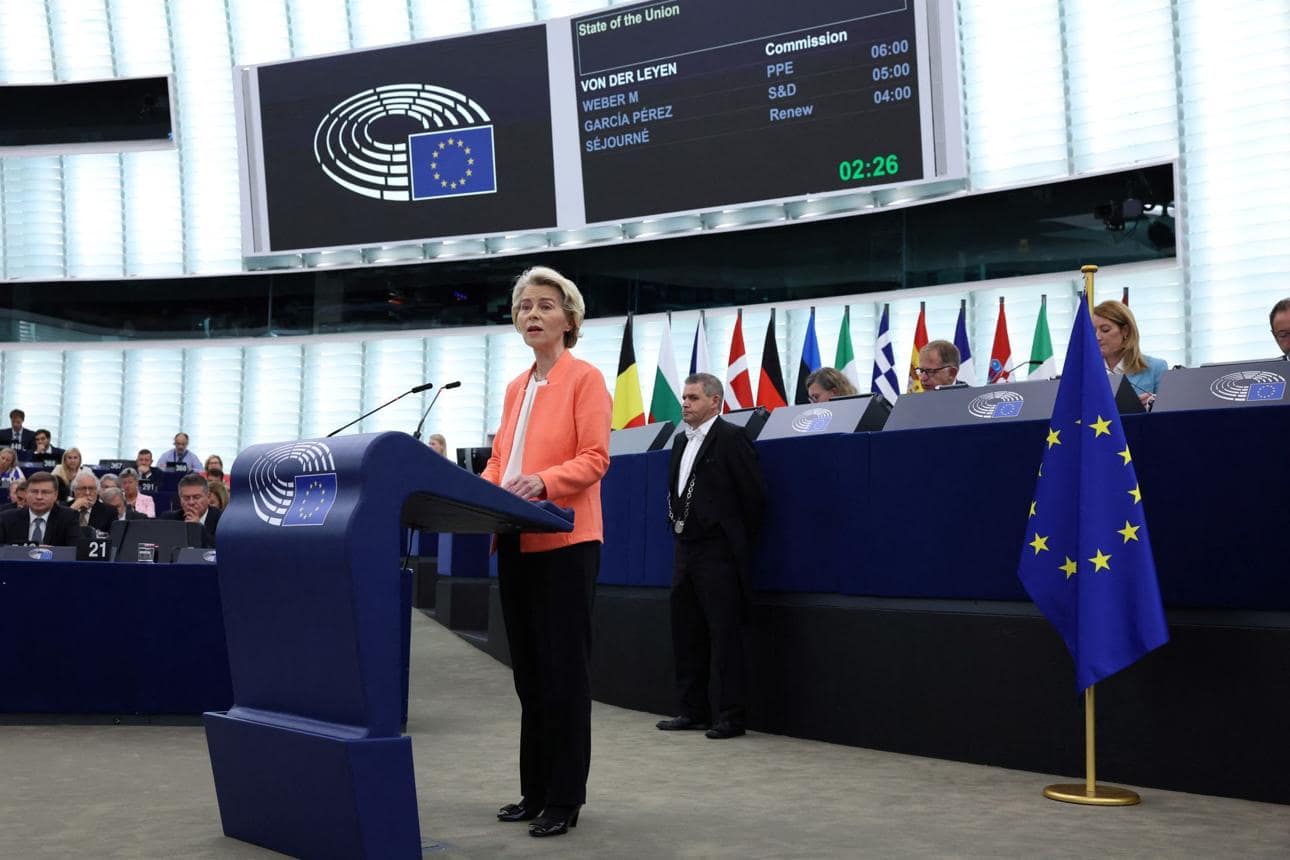
Ursula von der Leyen returns to the hemicycle today with the proposal already half-public, and she confirmed months ago that a legislative text would land before the year ends. Several capitals pushed hard for it, and a handful legislated at national level while Brussels deliberated, which is the pattern that usually forces the Commission to act on a single market file.

The industry objection writes itself. A platform cannot distinguish a fourteen-year-old from a twenty-four-year-old without an identity layer, and an identity layer for minors becomes an identity layer for everyone. Civil liberties groups reach the same conclusion from the opposite direction and worry about anonymous speech disappearing along with the anonymous teenager.

Enforcement poses a quieter problem. The Digital Services Act already obliges large platforms to protect minors, and regulators have spent two years proving how slow that machinery runs. Adding a numerical threshold does not accelerate an investigation, and a rule that arrives with a weak enforcement chain mostly produces compliance theatre and a consent pop-up.

The fight ahead will look narrow and matter more than it looks. Fifteen or sixteen decides whether an entire school year sits inside or outside the rule. Member states with national laws already on the books will ask whether the EU text overrides theirs or sits on top. And every parent following the file will ask the question the draft does not answer, which is what happens when a determined teenager borrows an adult’s wallet credentials.