
September 16, 2026
LATEST
Software Makers Face Europe’s Product Liability Deadline in DecemberCage-Free Promises Land Before the Transport File Is FinishedTwo New Calls Will Test How Flexible Horizon Europe Really IsEurope’s Innovation Act Counts 10 Billion It Has Not Found YetProcurement Is the Chapter That Could Stall the Thailand DealMobility Week Returns With a Test of Intergenerational FairnessMinisters Debate the Chips Act Next Week With No Money AttachedTaiwan Wants Tax Treaties That Brussels Has No Power to SignNorth Korea Now Earns From Europe Without Shipping AnythingPalm Oil Is the Last Hard Question Before the Indonesia SigningCan One Year Deliver Both a Trade Deal and a Sea CodeVietnam Reached Europe’s Top Partnership Tier With Little DetailLeaked Draft Puts Europe’s Social Media Age Limit at FifteenA Ceuta Debate Whose Title Has Already Reached a VerdictFP10 Clears Committee and the Budget Gap Stays Wide OpenEurope’s New Merger Guidelines Face a Council Test Next WeekEurope’s Culture Capitals Face Their Biggest Rewrite Since 1985Only Italy Has a Bill as Platform Work Deadline NearsCustoms Fraud Charges Land in Germany Over Wrecked CarsCar Tariffs Show Why the India Deal Still Needs Two VotesSoftware Makers Face Europe’s Product Liability Deadline in DecemberCage-Free Promises Land Before the Transport File Is FinishedTwo New Calls Will Test How Flexible Horizon Europe Really IsEurope’s Innovation Act Counts 10 Billion It Has Not Found YetProcurement Is the Chapter That Could Stall the Thailand DealMobility Week Returns With a Test of Intergenerational FairnessMinisters Debate the Chips Act Next Week With No Money AttachedTaiwan Wants Tax Treaties That Brussels Has No Power to SignNorth Korea Now Earns From Europe Without Shipping AnythingPalm Oil Is the Last Hard Question Before the Indonesia SigningCan One Year Deliver Both a Trade Deal and a Sea CodeVietnam Reached Europe’s Top Partnership Tier With Little DetailLeaked Draft Puts Europe’s Social Media Age Limit at FifteenA Ceuta Debate Whose Title Has Already Reached a VerdictFP10 Clears Committee and the Budget Gap Stays Wide OpenEurope’s New Merger Guidelines Face a Council Test Next WeekEurope’s Culture Capitals Face Their Biggest Rewrite Since 1985Only Italy Has a Bill as Platform Work Deadline NearsCustoms Fraud Charges Land in Germany Over Wrecked CarsCar Tariffs Show Why the India Deal Still Needs Two Votes
September 16, 2026
LATEST
Software Makers Face Europe’s Product Liability Deadline in DecemberCage-Free Promises Land Before the Transport File Is FinishedTwo New Calls Will Test How Flexible Horizon Europe Really IsEurope’s Innovation Act Counts 10 Billion It Has Not Found YetProcurement Is the Chapter That Could Stall the Thailand DealMobility Week Returns With a Test of Intergenerational FairnessMinisters Debate the Chips Act Next Week With No Money AttachedTaiwan Wants Tax Treaties That Brussels Has No Power to SignNorth Korea Now Earns From Europe Without Shipping AnythingPalm Oil Is the Last Hard Question Before the Indonesia SigningCan One Year Deliver Both a Trade Deal and a Sea CodeVietnam Reached Europe’s Top Partnership Tier With Little DetailLeaked Draft Puts Europe’s Social Media Age Limit at FifteenA Ceuta Debate Whose Title Has Already Reached a VerdictFP10 Clears Committee and the Budget Gap Stays Wide OpenEurope’s New Merger Guidelines Face a Council Test Next WeekEurope’s Culture Capitals Face Their Biggest Rewrite Since 1985Only Italy Has a Bill as Platform Work Deadline NearsCustoms Fraud Charges Land in Germany Over Wrecked CarsCar Tariffs Show Why the India Deal Still Needs Two VotesSoftware Makers Face Europe’s Product Liability Deadline in DecemberCage-Free Promises Land Before the Transport File Is FinishedTwo New Calls Will Test How Flexible Horizon Europe Really IsEurope’s Innovation Act Counts 10 Billion It Has Not Found YetProcurement Is the Chapter That Could Stall the Thailand DealMobility Week Returns With a Test of Intergenerational FairnessMinisters Debate the Chips Act Next Week With No Money AttachedTaiwan Wants Tax Treaties That Brussels Has No Power to SignNorth Korea Now Earns From Europe Without Shipping AnythingPalm Oil Is the Last Hard Question Before the Indonesia SigningCan One Year Deliver Both a Trade Deal and a Sea CodeVietnam Reached Europe’s Top Partnership Tier With Little DetailLeaked Draft Puts Europe’s Social Media Age Limit at FifteenA Ceuta Debate Whose Title Has Already Reached a VerdictFP10 Clears Committee and the Budget Gap Stays Wide OpenEurope’s New Merger Guidelines Face a Council Test Next WeekEurope’s Culture Capitals Face Their Biggest Rewrite Since 1985Only Italy Has a Bill as Platform Work Deadline NearsCustoms Fraud Charges Land in Germany Over Wrecked CarsCar Tariffs Show Why the India Deal Still Needs Two Votes

Serbia’s Cluster 3 Is Still Waiting on Capitals That Will Not Move

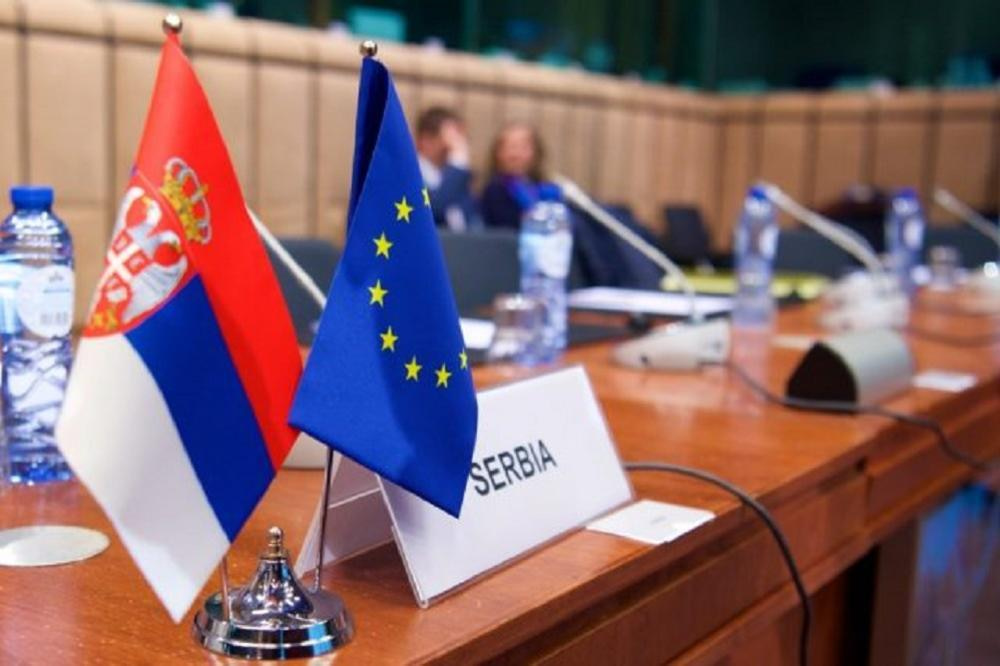
Niš: Serbia’s negotiating team has prepared for the same moment three times now, and three times the Council has failed to deliver it. Cluster 3 remains closed, and the autumn that was supposed to open it has arrived without the unanimity that opening requires.

The cluster covers competitiveness and inclusive growth, which bundles chapters on company law, research, education, social policy and industrial strategy. Serbia last opened a cluster in December 2021. Everything since has moved through technical screening and benchmark drafting rather than formal negotiation, which leaves the process alive on paper and static in practice.

The Commission has recommended opening the cluster, and Enlargement Commissioner Marta Kos has repeated that recommendation publicly, pointing to what she has described as recent positive developments in Belgrade. That recommendation carries weight but not authority. Opening a cluster requires every member state to agree, and eight governments have refused, citing rule of law and alignment with Union foreign policy.

Ambassadors tested the question in July and found no unanimity. Nothing has shifted the blocking group since, and events in Belgrade over the summer moved several capitals in the opposite direction. A former Croatian prime minister publicly urged the Commission to suspend the talks outright after a large public commemoration for Ratko Mladić, which hardened positions in states that were already sceptical.

Two arguments now run against each other inside the Council. The first holds that accession conditionality only works if it bites, and that opening a cluster while media freedom and electoral standards remain contested would tell every other candidate that criticism carries no consequence. The Commission’s own country reporting has documented a slowdown in reform since the protest wave that began in late 2024, which strengthens that case.

The second argument runs on geopolitics. A negotiation that never advances loses its grip. Serbian governments have discovered that the process costs them politically at home and delivers nothing visible in return, which makes the alternative partners in Moscow and Beijing look cheaper. Freezing accession does not hold a candidate in place. It pushes the candidate toward whoever asks less.

Both arguments are serious, and the Council has resolved them by doing nothing, which functionally endorses the first. Officials in Belgrade read the outcome as a veto without a stated benchmark, because no blocking state has published the specific conditions it wants met. That opacity is the real complaint. A candidate can meet a benchmark it can read.

The next enlargement package gives the process its scheduled moment. The Commission publishes country assessments each autumn, and those documents set the tone for the winter ministerials. Serbia’s chapter will note whatever progress the technical work has produced and whatever regression the political situation has caused, and capitals will quote the half that supports the position they already hold.

Watch the Irish presidency’s handling of the file in the General Affairs Council, and watch whether any blocking state converts its objection into a written benchmark. Until one of them does, Cluster 3 stays shut and the negotiation stays formally open, which is the most expensive combination available.