November 13, 2026
LATEST
Armenia Economic Resilience Pledge Tests Europe Against MoscowCaribbean Citizenship by Investment Faces Its Schengen ReckoningAI and Democracy Vote Gives MEPs Their Own AI Oversight BodyGlobal Talent Shapes 2026 ERC Synergy Grants of €500 MillionQuality Jobs Act Meets Cool Response From National Labour MinistersReal Household Consumption Expenditure Rose 1.6% Across the BlocSecond EU Enlargement Forum Gathers Sandu, Rama and KoretskyiEducation and Skills Package Puts AI Literacy in SchoolsRail Ticket Sellers Face Split on Digital Booking RegulationSatellite Firms Await EU Space Act Vote After Cyber DealEU-Israel Association Agreement Petition Puts Brussels on a DeadlineClimate Health Risks Expose Uneven Readiness Across EU Member StatesAgri-Food Promotion Policy Wins 476 MEP Votes Against 2027 Funding CutPlatform Counts Face EU Court Test Over DSA Supervisory FeeGoogle AdSense Fine Should Return, EU Court Adviser ArguesCar CO2 Targets Soften as MEPs Back a 95 percent Cut for 2035COP31 Climate Talks in Antalya Test the EU Electrification PitchPayment Fraud Rules Near the Finish Line as MEPs Face the Final VoteVietnam Trade Policy Review Shows EU Pressing Hanoi on Rule ClarityDamascus Forum Puts the EU Syria Partnership on an Investment FootingArmenia Economic Resilience Pledge Tests Europe Against MoscowCaribbean Citizenship by Investment Faces Its Schengen ReckoningAI and Democracy Vote Gives MEPs Their Own AI Oversight BodyGlobal Talent Shapes 2026 ERC Synergy Grants of €500 MillionQuality Jobs Act Meets Cool Response From National Labour MinistersReal Household Consumption Expenditure Rose 1.6% Across the BlocSecond EU Enlargement Forum Gathers Sandu, Rama and KoretskyiEducation and Skills Package Puts AI Literacy in SchoolsRail Ticket Sellers Face Split on Digital Booking RegulationSatellite Firms Await EU Space Act Vote After Cyber DealEU-Israel Association Agreement Petition Puts Brussels on a DeadlineClimate Health Risks Expose Uneven Readiness Across EU Member StatesAgri-Food Promotion Policy Wins 476 MEP Votes Against 2027 Funding CutPlatform Counts Face EU Court Test Over DSA Supervisory FeeGoogle AdSense Fine Should Return, EU Court Adviser ArguesCar CO2 Targets Soften as MEPs Back a 95 percent Cut for 2035COP31 Climate Talks in Antalya Test the EU Electrification PitchPayment Fraud Rules Near the Finish Line as MEPs Face the Final VoteVietnam Trade Policy Review Shows EU Pressing Hanoi on Rule ClarityDamascus Forum Puts the EU Syria Partnership on an Investment Footing

AI and Democracy Vote Gives MEPs Their Own AI Oversight Body

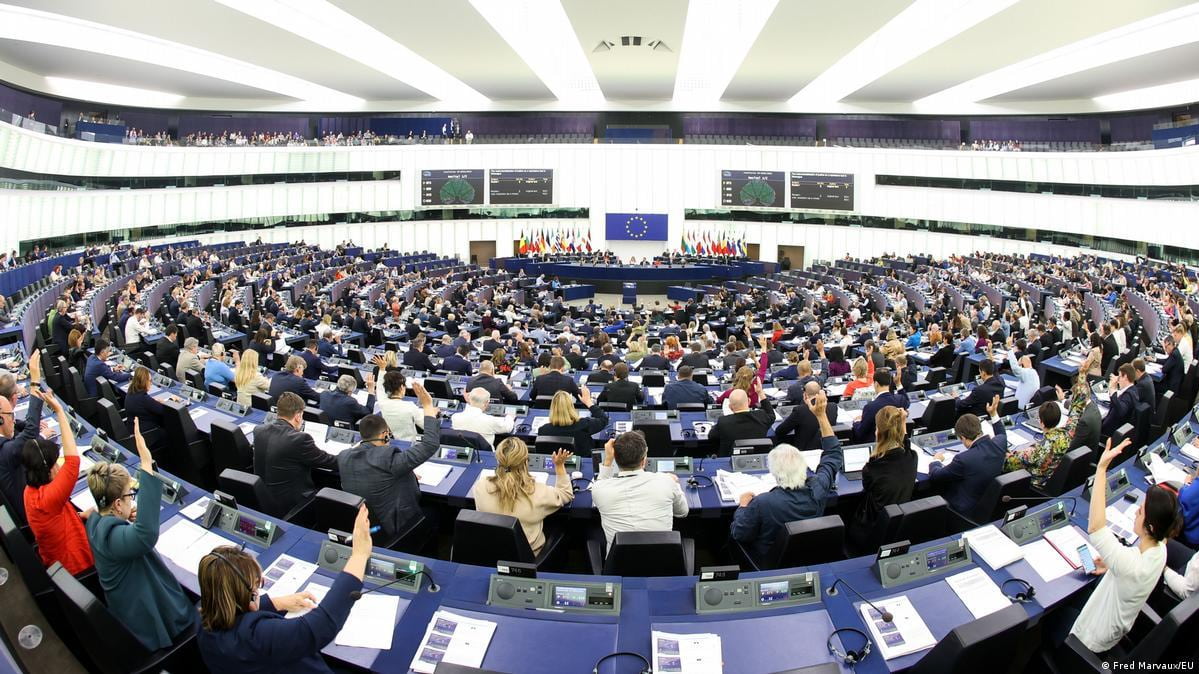
Members of the European Parliament have voted to put AI and democracy at the centre of EU institutional reform, backing a resolution that calls for strict human control over artificial intelligence in lawmaking. The text passed on Thursday 12 November by 405 votes to 133, with 60 abstentions.

The resolution on AI and democracy, drafted for the Constitutional Affairs Committee by Greek EPP member Emmanouil Kefalogiannis, deals with the institutional aspects of artificial intelligence in European integration. It insists that AI used by EU bodies must stay human-centred and under human oversight, and that no algorithm can ever replace political responsibility. Kefalogiannis argued that AI advances in leaps and that Europe must lead in shaping it rather than react after the fact.

The most concrete proposal is a budget-neutral European Parliament AI observatory. Built from staff and expertise the institution already has, the observatory would support committees with ex post evaluation of AI laws and with analysis of how the technology shifts the balance between the institutions. It would hold no regulatory or enforcement powers, a design choice that should ease objections from budget hawks.

Elections form the second pillar of the text on AI and democracy. MEPs want a systematic parliamentary assessment of AI risks and a reform of European electoral law, warning that the current patchwork of national rules leaves voters exposed to deepfakes, microtargeting and coordinated manipulation. The committee report that preceded the vote, adopted by 21 votes to 3, also pressed for stronger safeguards against synthetic content during campaigns.

Lawmakers also link AI and democracy to fundamental rights. The resolution suggests adding new guarantees to the EU Charter of Fundamental Rights, covering personal identity and likeness and algorithmic transparency. Any treaty-level change of that kind would need unanimity among the 27 governments, so the proposal works more as a marker for the next reform debate than as an immediate plan.

On the international stage, the text calls for a global agreement on AI governance modelled on nuclear non-proliferation, with the EU taking a leading role. It also urges EU institutions to prioritise European AI tools and to scale up home-grown technology in the name of strategic autonomy, echoing concerns that leaders raised at their informal summit in Dublin this week.

The resolution is not binding, and the Commission is under no obligation to follow it. Still, the size of the majority gives the Parliament a clear mandate to set up its observatory internally and to push electoral safeguards into the review of the AI Act and the Digital Services Act enforcement agenda in 2026 and 2027.

The vote shows that the debate over AI and democracy has moved from abstract principle to institutional plumbing. Whether the new observatory can track fast-moving models with no new money will decide if Parliament’s oversight ambition holds up in practice.