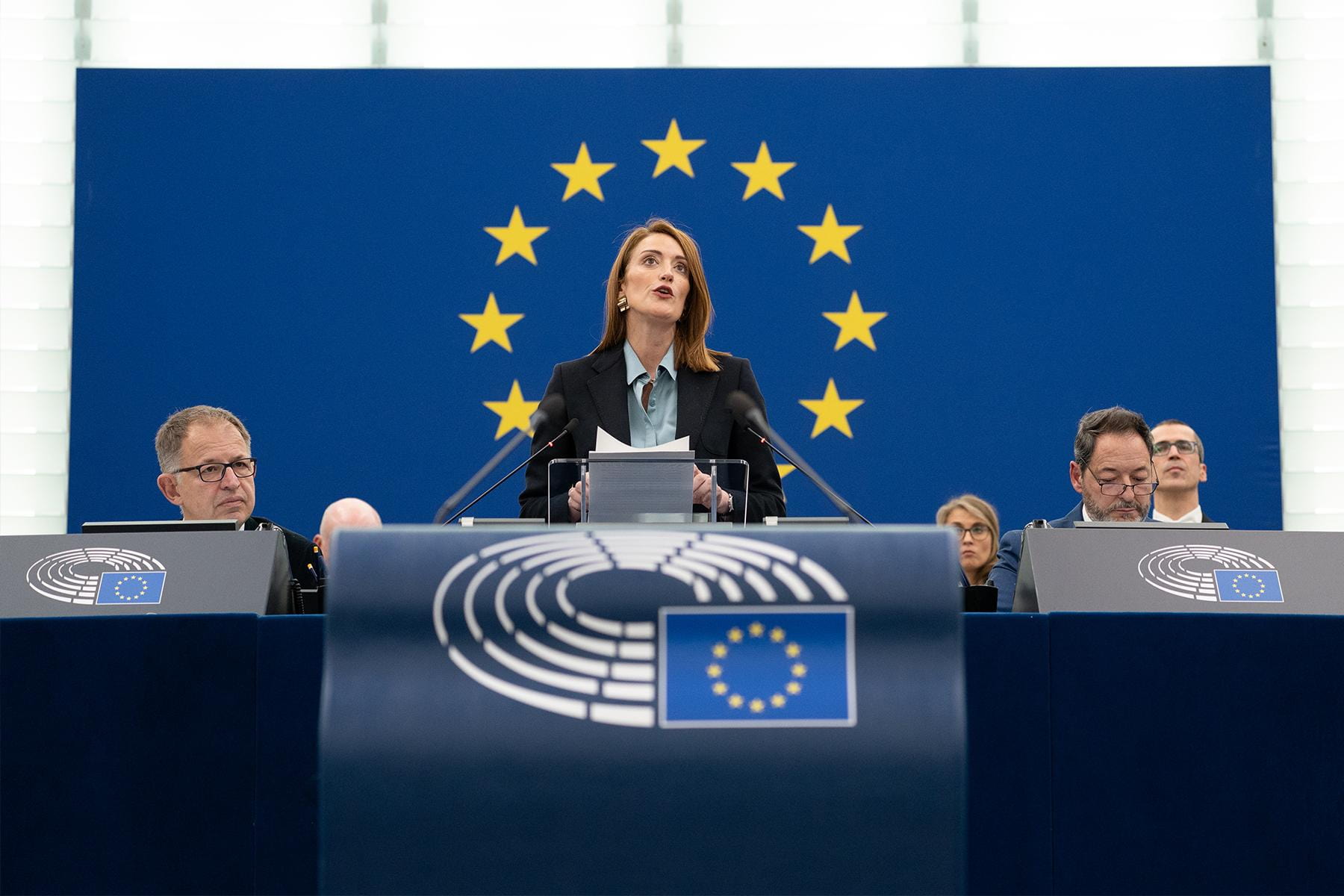
The 2027 EU budget reached the floor of the European Parliament in Strasbourg on Tuesday, with MEPs debating the conciliation deal from 13:00 alongside Budget Commissioner Piotr Serafin and Charlie McConalogue for the Irish Council Presidency. The vote that follows is the last annual budget decision of the 2021-2027 Multiannual Financial Framework, and Parliament President Roberta Metsola is due to sign the text into law on Wednesday 25 November.
The numbers were settled on 11 November, when negotiators from Parliament and the Council closed the conciliation round. The 2027 EU budget totals €199.7 billion in commitments and €211.5 billion in payments, equal to 0.99% and 1.05% of EU gross national income. A margin of €710.1 million stays unallocated under the MFF ceilings to cover needs nobody can yet foresee.
That payments figure deserves attention. In the 2027 EU budget, payments outrun commitments by almost €12 billion because the bills from 2021-2027 programmes now arrive in bulk. Cohesion projects launched late in the cycle are reaching completion, and member states will present invoices that the EU must settle before the framework closes.
Heading by heading, the 2027 EU budget shows where Brussels puts its money in a year of tight national budgets. Cohesion, Resilience and Values takes €75.8 billion in commitments and €81.8 billion in payments, the largest single block. Natural Resources and Environment, which funds farm payments, receives €57.1 billion, while the Single Market, Innovation and Digital heading gets €22 billion.
Smaller lines tell their own story. Migration and Border Management receives €5.8 billion in commitments, Security and Defence €3.1 billion, and Neighbourhood and the World €15.5 billion. European Public Administration, which pays for the institutions themselves, costs €13.9 billion, and a separate €650 million line services the Ukraine loan.
Parliament can claim several wins in the 2027 EU budget. Negotiators reversed €1 billion of commitment cuts that the Council had sought, returning those lines to the level the Commission proposed. MEPs then added €300 million on top of the Commission draft, spread across priorities they championed during the year.
Those add-ons are modest but targeted. Horizon Europe gains €21.5 million, transport and energy networks €22.5 million, and Erasmus+ €14 million. The LIFE programme picks up €10 million, the Civil Protection Mechanism €13.5 million, humanitarian aid €30 million, and the Southern and Eastern Neighbourhood €39 million, while asylum and border funds share €30 million.
Military mobility receives an extra €10 million, a small sum that nonetheless signals how defence has crept into every corner of EU spending. Simon Harris, Ireland’s finance minister and the Council’s chief negotiator, said the agreement struck “the right balance” between ambition and restraint.
Two issues sit outside the headline totals. The special borrowing facility for Ukraine stays dormant, but both institutions signed a joint statement promising to keep it available throughout 2027. Extra interest costs of €4.9 billion linked to NextGenerationEU borrowing will be absorbed through the cascade mechanism agreed earlier in the cycle.
The political context makes this vote more than a formality. Leaders gather in Brussels on 26 and 27 November for a special European Council on the 2028-2034 framework and on financing for Ukraine. Every euro that the 2027 EU budget leaves unspent or rolls over will shape the starting point for that much harder negotiation.
For Parliament, the lesson of this final annual round is that leverage works best on small sums. MEPs could not change the overall envelope, which the MFF ceilings fix, but they could redirect a few hundred million euros toward research, students and crisis response.
Once Metsola signs, the 2027 EU budget becomes the closing chapter of a seven-year framework shaped by a pandemic, a war and an inflation shock. Its successor, now under negotiation, will decide whether the Union enters 2028 with the same priorities or a very different map of spending.