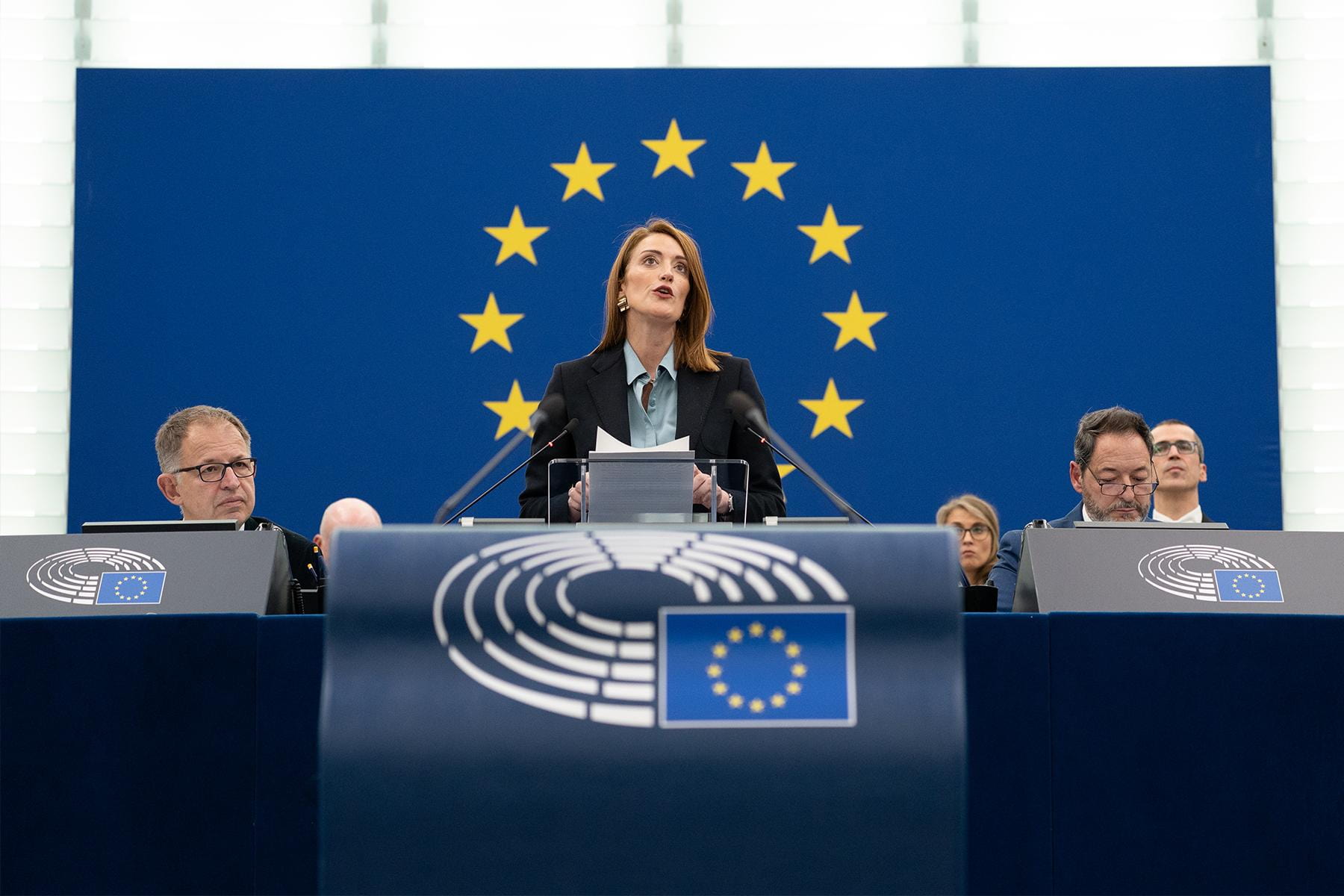
The rising cost of living dominated the European Parliament’s Tuesday session in Strasbourg on 24 November 2026, as MEPs demanded urgent EU action on energy, housing and wages. The debate took place against a backdrop of street protests in several European countries over household bills.
Executive Vice-President Roxana Mînzatu spoke for the Commission and framed the protests as a signal of real anxiety over the cost of living. She said one in 12 workers in Europe lives in poverty. She urged member states to implement the Minimum Wage Directive fully and effectively.
Mînzatu also pointed to the proposed Affordable Housing Act. She asked that the text include a provision allowing national governments to support households hit by rising energy costs. That request links two policy files that Brussels has so far handled separately.
Charlie McConalogue, Irish Minister of State, represented the Council under Ireland’s presidency. He called the debate timely and said talks on the Education and Skills Package would continue in the coming months. His intervention offered few new commitments.
The political groups split along familiar lines. Liesje Schreinemacher of the EPP called for measures to protect European jobs and production, noting that household electricity costs have risen by nearly a third over five years. Iratxe García Pérez, leader of the Socialists and Democrats, described the protests as evidence of a social emergency.
García Pérez asked for investment in affordable housing, social vouchers, quality jobs and stronger collective bargaining. She also defended the European Child Guarantee as a frontline tool against the cost of living crisis. Her group has made social spending, and a direct response to the cost of living, a red line in budget talks.
On the right, Antonin Stanek of Patriots for Europe argued that young people need opportunities rather than new EU restrictions. He called for a review of the rules on combustion-engine cars after 2035. Stefano Cavedagna of the ECR focused on public order and said citizens should not pay for damage caused during demonstrations.
Renew’s Brigitte van den Berg warned that many young Europeans struggle to see a future. She criticised Council proposals for the next long-term budget as too weak on employment, housing and energy. Marie Toussaint of the Greens linked poverty reduction to working conditions in essential public services and school renovation.
Manon Aubry of The Left defended the right to protest and criticised police action against demonstrators. In the budget debate later the same day, she said 40 million Europeans cannot afford to heat their homes. Milan Uhrik of the ESN group turned the discussion towards migration and security.
Energy bills remain the sharpest pressure point. Several speakers tied the cost of living squeeze to electricity and heating prices, which have climbed again in 2026 and weigh hardest on low-income and young households across the Union.
The debate carried no vote, but its timing matters. EU leaders meet in Brussels on 26 and 27 November for a Special European Council on the 2028-2034 multiannual financial framework. MEPs used Tuesday’s exchange to signal that social cohesion funding will shape Parliament’s consent to any budget deal.
Housing is the clearest test. The Affordable Housing Act gives the Commission a concrete vehicle, and Mînzatu’s energy proposal could broaden its reach. Whether member states accept that link will show how seriously the EU treats the cost of living as a shared European responsibility rather than a purely national one.