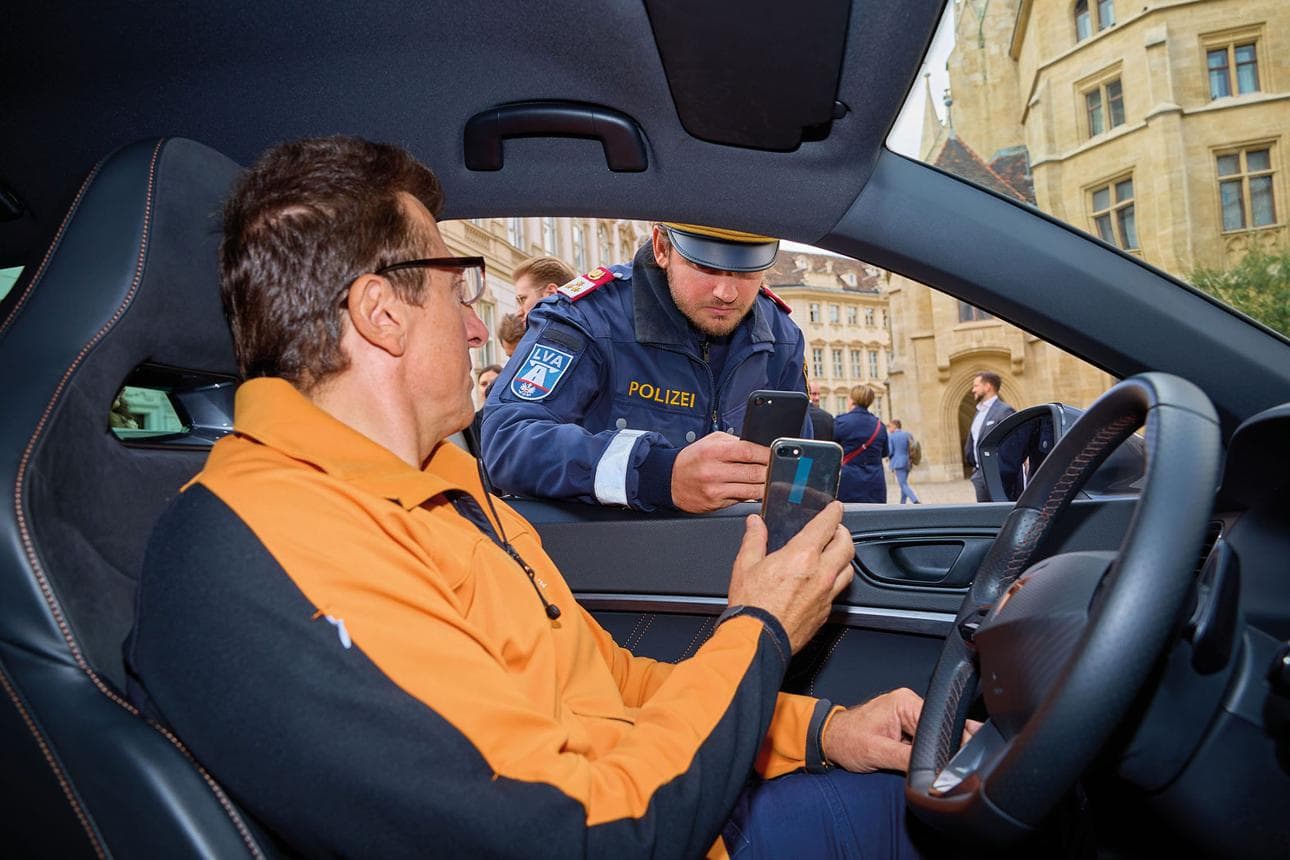
Drivers will one day carry their licence on a phone, and the legal scaffolding for that promise is still going up. Directive (EU) 2025/2205 entered into force on 25 November 2025 and hands member states until 26 November 2028 to write it into national law, with the rules applying from 26 November 2029 at the latest. In July the Commission published its implementation strategy for that directive and for its companion text on cross-border driving disqualifications, setting out guidance documents, technical exchanges, peer learning and a queue of implementing acts.
The queue is the problem. Transposition may sit three years away, but several of the technical decisions that determine what national administrations actually build fall due much sooner. The directive obliges the Commission to adopt implementing acts governing the operation of the EU driving licence network, and a further set covering the visual appearance, interoperability, testing, data standards, record updating and security of the mobile driving licence by 26 November 2026. Rules on licence validity follow by 26 November 2027. Ministries cannot procure systems against specifications that do not yet exist.
The mobile licence is the part most citizens will notice. It lives inside the European Digital Identity Wallet and rests on the ISO/IEC 18013-5 and 18013-7 standards, which means a Dutch police officer checking a Portuguese licence needs both wallets to speak the same cryptographic language on the roadside. Anyone who prefers plastic keeps the right to request a physical card, a concession Parliament fought for and one that quietly doubles the number of issuance channels each national authority must run.
Road hauliers have their own reasons to watch the calendar. The directive lowers the minimum age for a truck licence from 21 to 18 and for a bus licence from 24 to 21, provided the applicant holds a certificate of professional competence. Freight operators across the Union have spent years arguing that the age floor, rather than pay or working conditions, keeps young people out of the cab. They are about to find out whether that argument holds. The answer will not arrive until 2029, by which point the current driver cohort will be three years older.
National implementation will not move at one speed. Countries that already issue digital identity credentials at scale can bolt a licence onto existing infrastructure. Others still maintain paper registers in regional offices and face a rebuild rather than an upgrade. The Commission strategy leans on cross-border cooperation projects to close that gap, which works when capitals volunteer and does little when they do not.
The disqualification directive raises a sharper question. A driving ban imposed in one member state currently stops at the border in most cases, and the new text aims to make exclusions follow the driver. That requires trusted data exchange between authorities that have historically shared very little about individual motorists, and it requires each of them to accept another country’s assessment of dangerous driving. Mutual trust is cheap to legislate and expensive to build.
Three years of lead time looked generous when negotiators agreed it. With the first hard technical deadline now less than three months out, the schedule looks less like a cushion and more like a sequence that only works if nothing slips.