July 27, 2026
LATEST
Cohesion Funds Pivot to Defence While Housing Pressures MountTobacco Tax Revamp Reaches Vapes as Council Nears a DealWildfire Response Tests Europe’s Shared Rescue FleetEU Population Climbs to 452 Million as Migration HoldsRule of Law Report Finds Slow but Steady EU GainsParliament Digs In for a Bigger EU Budget Before AutumnUneven Progress Marks Europe’s Latest Rule of Law CheckResearchers Fight to Keep Horizon Europe Standing AloneEurope Deepens Its Central Asia Bet as a 2027 Summit NearsWhy Armenia Is Quietly Rewiring Its Trade Away From RussiaOcean Act Moves From Consultation Toward a Late-2026 VoteBrussels Widens Its Antitrust Net Over a Giant Subsea MergerGoogle Pays Europe’s Largest Digital Markets Act Penalty YetDigital Euro Heads Into Trilogue as Lawmakers Push for a DealGreece Draws First SAFE Defence Loan as Europe Rearms in EarnestCustoms Reform Gives Europe One Digital Gateway for TradeElectric Buses Reshape How Brussels Moves Each DayMinisters Test Europe’s Nerve on the 2040 Climate TargetIndia and Europe Broaden Their Research Ties Past a Trade DealVietnam Joins Europe’s Highest Rank of Strategic PartnershipCohesion Funds Pivot to Defence While Housing Pressures MountTobacco Tax Revamp Reaches Vapes as Council Nears a DealWildfire Response Tests Europe’s Shared Rescue FleetEU Population Climbs to 452 Million as Migration HoldsRule of Law Report Finds Slow but Steady EU GainsParliament Digs In for a Bigger EU Budget Before AutumnUneven Progress Marks Europe’s Latest Rule of Law CheckResearchers Fight to Keep Horizon Europe Standing AloneEurope Deepens Its Central Asia Bet as a 2027 Summit NearsWhy Armenia Is Quietly Rewiring Its Trade Away From RussiaOcean Act Moves From Consultation Toward a Late-2026 VoteBrussels Widens Its Antitrust Net Over a Giant Subsea MergerGoogle Pays Europe’s Largest Digital Markets Act Penalty YetDigital Euro Heads Into Trilogue as Lawmakers Push for a DealGreece Draws First SAFE Defence Loan as Europe Rearms in EarnestCustoms Reform Gives Europe One Digital Gateway for TradeElectric Buses Reshape How Brussels Moves Each DayMinisters Test Europe’s Nerve on the 2040 Climate TargetIndia and Europe Broaden Their Research Ties Past a Trade DealVietnam Joins Europe’s Highest Rank of Strategic Partnership
July 27, 2026
LATEST
Cohesion Funds Pivot to Defence While Housing Pressures MountTobacco Tax Revamp Reaches Vapes as Council Nears a DealWildfire Response Tests Europe’s Shared Rescue FleetEU Population Climbs to 452 Million as Migration HoldsRule of Law Report Finds Slow but Steady EU GainsParliament Digs In for a Bigger EU Budget Before AutumnUneven Progress Marks Europe’s Latest Rule of Law CheckResearchers Fight to Keep Horizon Europe Standing AloneEurope Deepens Its Central Asia Bet as a 2027 Summit NearsWhy Armenia Is Quietly Rewiring Its Trade Away From RussiaOcean Act Moves From Consultation Toward a Late-2026 VoteBrussels Widens Its Antitrust Net Over a Giant Subsea MergerGoogle Pays Europe’s Largest Digital Markets Act Penalty YetDigital Euro Heads Into Trilogue as Lawmakers Push for a DealGreece Draws First SAFE Defence Loan as Europe Rearms in EarnestCustoms Reform Gives Europe One Digital Gateway for TradeElectric Buses Reshape How Brussels Moves Each DayMinisters Test Europe’s Nerve on the 2040 Climate TargetIndia and Europe Broaden Their Research Ties Past a Trade DealVietnam Joins Europe’s Highest Rank of Strategic PartnershipCohesion Funds Pivot to Defence While Housing Pressures MountTobacco Tax Revamp Reaches Vapes as Council Nears a DealWildfire Response Tests Europe’s Shared Rescue FleetEU Population Climbs to 452 Million as Migration HoldsRule of Law Report Finds Slow but Steady EU GainsParliament Digs In for a Bigger EU Budget Before AutumnUneven Progress Marks Europe’s Latest Rule of Law CheckResearchers Fight to Keep Horizon Europe Standing AloneEurope Deepens Its Central Asia Bet as a 2027 Summit NearsWhy Armenia Is Quietly Rewiring Its Trade Away From RussiaOcean Act Moves From Consultation Toward a Late-2026 VoteBrussels Widens Its Antitrust Net Over a Giant Subsea MergerGoogle Pays Europe’s Largest Digital Markets Act Penalty YetDigital Euro Heads Into Trilogue as Lawmakers Push for a DealGreece Draws First SAFE Defence Loan as Europe Rearms in EarnestCustoms Reform Gives Europe One Digital Gateway for TradeElectric Buses Reshape How Brussels Moves Each DayMinisters Test Europe’s Nerve on the 2040 Climate TargetIndia and Europe Broaden Their Research Ties Past a Trade DealVietnam Joins Europe’s Highest Rank of Strategic Partnership

Farmers Await Europe’s Gene Editing Rules for Crops

Brussels: The European Union has moved a step closer to allowing gene editing on its farms, after the Council adopted new rules on gene editing, formally known as new genomic techniques, on 21 April 2026 and sent the file to the European Parliament for a final green light expected this summer. Supporters cast the reform as a food-security measure, while critics fear it loosens Europe’s guard on genetically modified plants.

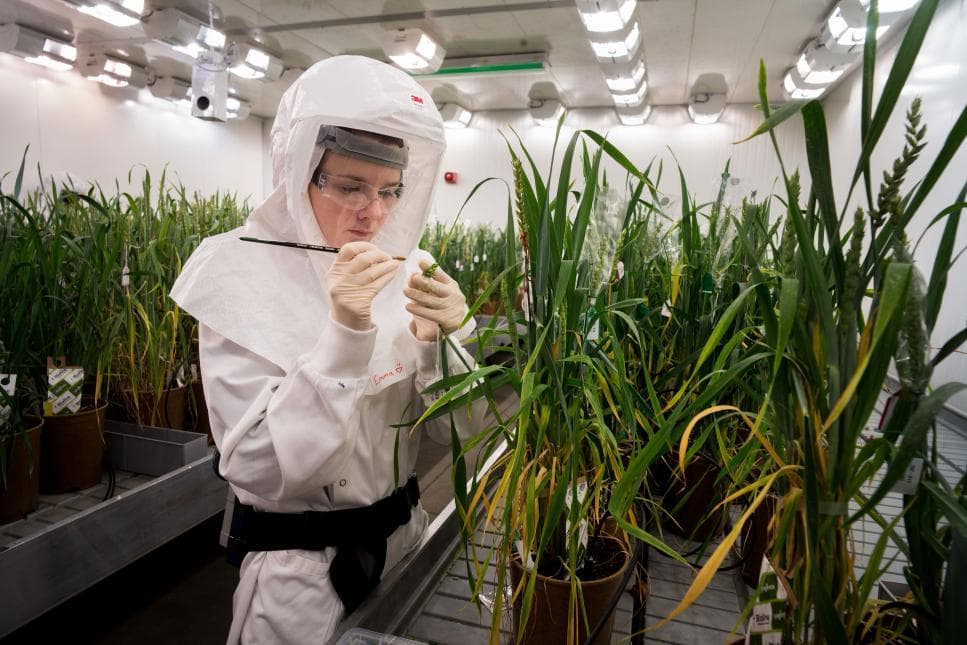
The regulation on new genomic techniques, or NGTs, sets the first dedicated EU framework for plants whose DNA has been precisely edited rather than crossbred over generations. Brussels argues the tools can deliver crops that resist drought, floods, pests and disease faster than conventional breeding, cutting the bloc’s reliance on imports and chemical inputs.

The new rules split edited plants into two classes. NGT-1 plants, judged equivalent to conventional varieties because they carry changes that could have occurred naturally or through traditional breeding, escape the heavy authorisation and labelling regime that governs older GMOs. NGT-2 plants face stricter assessment closer to the existing GMO rules.

The Council framed the gene editing reform as a bet on competitiveness and sustainability rather than a rollback of safety standards.

“The new rules will help make our food systems more sustainable and competitive, while keeping high standards for health and the environment,” the Council said in adopting its position.

The details still spark fierce argument. Under the agreed text, most NGT-1 products will not carry a GMO label on the shelf, though seeds and other reproductive material will be marked so farmers know what they are planting. Organic farming will stay off-limits to all NGT plants, a carve-out that organic producers had demanded to protect their brand.

Environmental groups and some consumer organisations argue the label exemption strips shoppers of the right to choose, and they question whether regulators can reliably distinguish shallow edits from deeper genetic changes. Patents are a second flashpoint, as smaller breeders worry that a handful of large firms could lock up edited traits and squeeze independent seed producers.

Biotech developers and many farm groups take the opposite view, saying Europe has fallen behind the United States, China and Latin America in a technology that could help the continent grow more food on less land while spraying fewer pesticides.

The framework is not law yet. The Parliament must formally adopt the same text before it can take effect, and the rules are expected to apply from around mid-2028 after a transition period that gives authorities time to write the technical and implementing details. Guidance published by EU health and food-safety officials in June 2026 set out how the two-tier system will work in practice.

The stakes reach well beyond the laboratory. The Commission has tied gene editing to its wider push on food security and open strategic autonomy, arguing that climate stress and geopolitical shocks have exposed how much Europe depends on imported feed, fertiliser and seed. For farmers weighing another difficult season the promise of hardier varieties is tempting, while for the organic sector and sceptical consumers the fear of an unlabelled gene-edited harvest remains. Readers can consult the Council’s announcement of the new rules and the Council’s policy overview for the full framework.