Residence Palace: EU foreign policy chief Kaja Kallas opens the fourth Ukraine Mine Action Conference in Brussels on Monday 16 November 2026, putting Ukraine demining at the centre of a three-day gathering of governments, international organisations, researchers, industry and clearance operators. The European Union and Ukraine co-host the event, known as UMAC 2026, in partnership with Belgium.
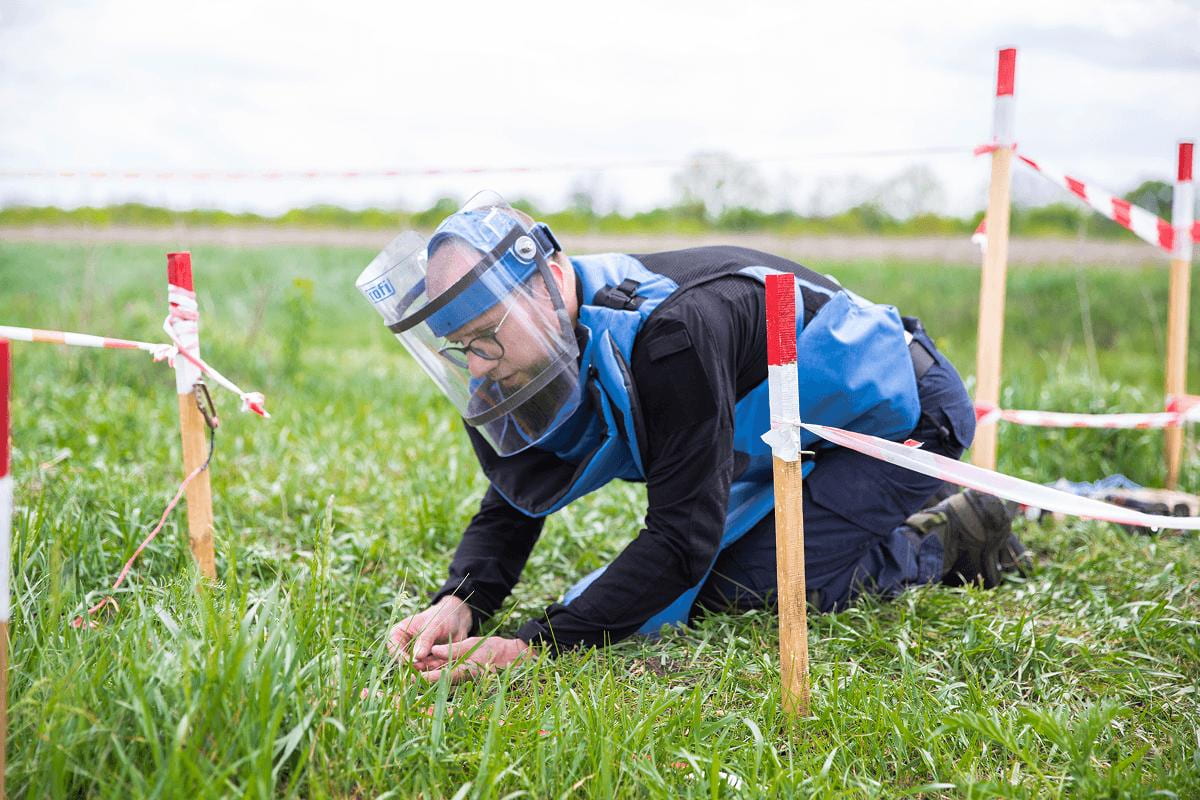
The scale of the task explains the urgency. Up to 132,000 square kilometres of Ukrainian territory may be contaminated by mines and explosive remnants of war, according to the Commission’s Service for Foreign Policy Instruments, which organises the conference. Around 42,000 square kilometres, an area roughly the size of the Netherlands, have already returned to productive use.
Money has followed the need. The EU and its member states have mobilised more than €500 million for Ukraine demining since 2022, funding equipment, training and survey work that lets farmers return to fields and families return to towns. Contaminated farmland also threatens food security beyond Ukraine, since the country remains a major grain exporter.
Organisers chose the theme “Clearing the way in partnership” and split the agenda into three strands. The first, shared safety, deals with protecting civilians and deminers. The second, shared expertise, covers drones, demining machines, AI-driven prioritisation, data systems and innovative financing. The third, shared responsibility, focuses on national ownership and locally led clearance systems.
That last strand reflects a clear policy choice. Brussels wants Kyiv to run a country-led mine action system that can absorb donor money efficiently and keep working for decades, because clearance on this scale will outlast any ceasefire. The FPI announcement of UMAC 2026 says the conference aims to build partnerships with global partners and draw lessons from new approaches to Ukraine demining.
Kallas speaks publicly at 17:30 CET after doorstep remarks, and thematic sessions continue on 17 November, according to the EEAS media advisory. The conference sits inside a busy week for EU policy on Ukraine, as foreign ministers meet in Brussels to discuss winter preparedness and Russia’s hybrid campaign.
Belgium’s role as partner host also carries weight for Ukraine demining. Belgian experts have long worked on humanitarian demining, and the country presents mine action as a field where smaller states can offer specialised knowledge rather than heavy weapons.
For civil protection planners, the conference matters beyond the battlefield. Every square kilometre cleared reduces casualties among children, farmers and emergency workers, and it reopens roads for aid deliveries. Success in Ukraine demining will depend on steady funding after 2027, on shared data standards and on whether new technologies can cut the time and cost of each cleared hectare.