September 16, 2026
LATEST
Europe’s Innovation Act Counts 10 Billion It Has Not Found YetProcurement Is the Chapter That Could Stall the Thailand DealMobility Week Returns With a Test of Intergenerational FairnessMinisters Debate the Chips Act Next Week With No Money AttachedTaiwan Wants Tax Treaties That Brussels Has No Power to SignNorth Korea Now Earns From Europe Without Shipping AnythingPalm Oil Is the Last Hard Question Before the Indonesia SigningCan One Year Deliver Both a Trade Deal and a Sea CodeVietnam Reached Europe’s Top Partnership Tier With Little DetailFP10 Clears Committee and the Budget Gap Stays Wide OpenA Ceuta Debate Whose Title Has Already Reached a VerdictEurope’s New Merger Guidelines Face a Council Test Next WeekEurope’s Culture Capitals Face Their Biggest Rewrite Since 1985Only Italy Has a Bill as Platform Work Deadline NearsCustoms Fraud Charges Land in Germany Over Wrecked CarsCar Tariffs Show Why the India Deal Still Needs Two VotesA Committee Cleared the Swiss Package in Under Ten MinutesSpace Debris Is Growing Faster Than Europe Can Clear ItCan Cohesion Policy Pay for Results and Still Close GapsFour Capitals Met the Pay Transparency Deadline and 23 Did NotEurope’s Innovation Act Counts 10 Billion It Has Not Found YetProcurement Is the Chapter That Could Stall the Thailand DealMobility Week Returns With a Test of Intergenerational FairnessMinisters Debate the Chips Act Next Week With No Money AttachedTaiwan Wants Tax Treaties That Brussels Has No Power to SignNorth Korea Now Earns From Europe Without Shipping AnythingPalm Oil Is the Last Hard Question Before the Indonesia SigningCan One Year Deliver Both a Trade Deal and a Sea CodeVietnam Reached Europe’s Top Partnership Tier With Little DetailFP10 Clears Committee and the Budget Gap Stays Wide OpenA Ceuta Debate Whose Title Has Already Reached a VerdictEurope’s New Merger Guidelines Face a Council Test Next WeekEurope’s Culture Capitals Face Their Biggest Rewrite Since 1985Only Italy Has a Bill as Platform Work Deadline NearsCustoms Fraud Charges Land in Germany Over Wrecked CarsCar Tariffs Show Why the India Deal Still Needs Two VotesA Committee Cleared the Swiss Package in Under Ten MinutesSpace Debris Is Growing Faster Than Europe Can Clear ItCan Cohesion Policy Pay for Results and Still Close GapsFour Capitals Met the Pay Transparency Deadline and 23 Did Not
September 16, 2026
LATEST
Europe’s Innovation Act Counts 10 Billion It Has Not Found YetProcurement Is the Chapter That Could Stall the Thailand DealMobility Week Returns With a Test of Intergenerational FairnessMinisters Debate the Chips Act Next Week With No Money AttachedTaiwan Wants Tax Treaties That Brussels Has No Power to SignNorth Korea Now Earns From Europe Without Shipping AnythingPalm Oil Is the Last Hard Question Before the Indonesia SigningCan One Year Deliver Both a Trade Deal and a Sea CodeVietnam Reached Europe’s Top Partnership Tier With Little DetailFP10 Clears Committee and the Budget Gap Stays Wide OpenA Ceuta Debate Whose Title Has Already Reached a VerdictEurope’s New Merger Guidelines Face a Council Test Next WeekEurope’s Culture Capitals Face Their Biggest Rewrite Since 1985Only Italy Has a Bill as Platform Work Deadline NearsCustoms Fraud Charges Land in Germany Over Wrecked CarsCar Tariffs Show Why the India Deal Still Needs Two VotesA Committee Cleared the Swiss Package in Under Ten MinutesSpace Debris Is Growing Faster Than Europe Can Clear ItCan Cohesion Policy Pay for Results and Still Close GapsFour Capitals Met the Pay Transparency Deadline and 23 Did NotEurope’s Innovation Act Counts 10 Billion It Has Not Found YetProcurement Is the Chapter That Could Stall the Thailand DealMobility Week Returns With a Test of Intergenerational FairnessMinisters Debate the Chips Act Next Week With No Money AttachedTaiwan Wants Tax Treaties That Brussels Has No Power to SignNorth Korea Now Earns From Europe Without Shipping AnythingPalm Oil Is the Last Hard Question Before the Indonesia SigningCan One Year Deliver Both a Trade Deal and a Sea CodeVietnam Reached Europe’s Top Partnership Tier With Little DetailFP10 Clears Committee and the Budget Gap Stays Wide OpenA Ceuta Debate Whose Title Has Already Reached a VerdictEurope’s New Merger Guidelines Face a Council Test Next WeekEurope’s Culture Capitals Face Their Biggest Rewrite Since 1985Only Italy Has a Bill as Platform Work Deadline NearsCustoms Fraud Charges Land in Germany Over Wrecked CarsCar Tariffs Show Why the India Deal Still Needs Two VotesA Committee Cleared the Swiss Package in Under Ten MinutesSpace Debris Is Growing Faster Than Europe Can Clear ItCan Cohesion Policy Pay for Results and Still Close GapsFour Capitals Met the Pay Transparency Deadline and 23 Did Not

September Was the Deadline for Europe’s Minors Online Bill

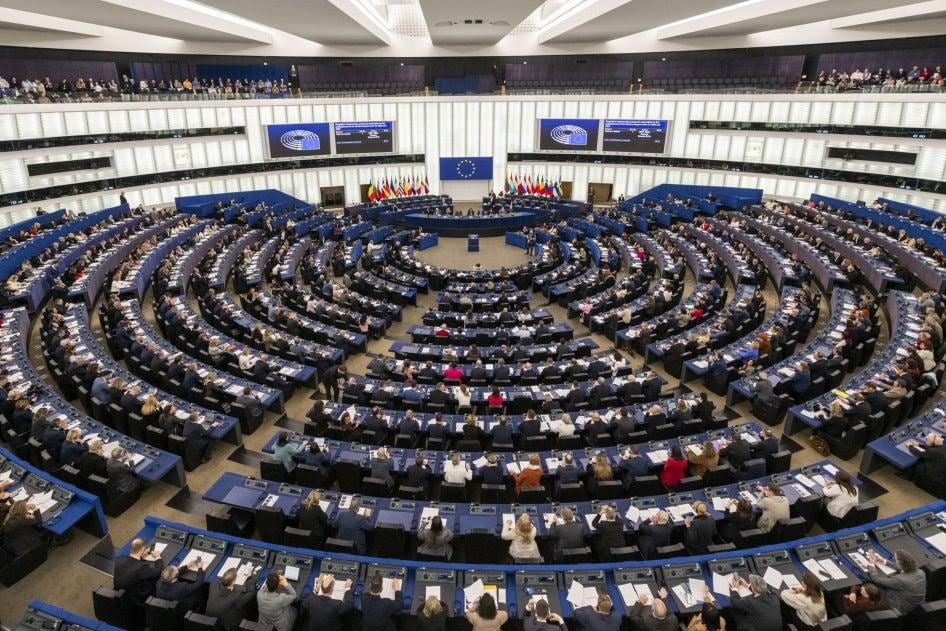
Ghent: The Commission has still not tabled the bill on minors online that President Ursula von der Leyen promised for after the summer, and the September plenary that opened on 14 September 2026 will debate the online environment and young people without a legislative text in front of it. MEPs will also vote on the EU youth strategy, the framework that expires at the end of 2027.

Von der Leyen made the commitment on 13 July 2026, when the special panel on child safety online handed her its final report. That document, titled Protecting and empowering minors in a digital world, brought together youth representatives with specialists in health, neuroscience, psychology, computer science, child rights and digital literacy.

The panel findings gave the Commission its evidence base. Young Europeans spend four to six hours a day on screens. Almost 60 percent of young children report emotional or psychosocial problems online. One in three young people say social media leaves them feeling stressed, sad or excluded.

A Eurobarometer survey the Commission published on 16 June 2026 confirmed the link between screen time and wellbeing that the panel documented. The Commission has been building an age verification app to make any future restriction enforceable, since a legal age floor without a technical means of checking age would collapse on contact with the market.

"A bill will be tabled in September," von der Leyen said in July, setting a deadline the Commission has yet to meet.

Parliament already stated its position. In November 2025 MEPs adopted a non-legislative report by 483 votes to 92 with 86 abstentions, calling for a minimum age of 16 for social media access. That report demanded bans on engagement-based recommender algorithms and on loot boxes in games, plus action against deepfake and nudity applications.

Member states have not converged. Some capitals back the under-16 line Parliament endorsed, others argue for 15, and a third group wants the question left to national family law rather than settled at Union level.

  • Special panel report presented 13 July 2026
  • Eurobarometer on screen time and wellbeing published 16 June 2026
  • Parliament non-legislative report adopted November 2025, 483 votes in favour
  • EU youth strategy runs to the end of 2027

The youth strategy vote matters more than its procedural status suggests. The Culture and Education Committee produced an implementation report on the 2019 to 2027 framework, assessing the 11 European Youth Goals and whether youth mainstreaming reached other policy areas. Its recommendations will feed directly into whatever replaces the strategy after 2027.

Research by Parliament own service found that one in four minors now shows problematic smartphone use comparable to addiction, and that autoplay video and personalised recommendation systems erode concentration and sleep. The Parliament study on the youth strategy argues the current framework was written before those patterns hardened.

Existing law already gives the Commission tools it has not fully used. The Digital Services Act requires very large platforms to assess and mitigate systemic risks to minors, and the Commission has opened proceedings against several services on exactly that ground. The Commission policy page on protecting young people online lists the guidelines it issued under Article 28.

That leaves an awkward question for the debate in Strasbourg. If the Digital Services Act can already compel platforms to redesign feeds for minors online, a new age threshold may add political clarity without adding much enforcement power, and the bill that has not yet arrived carries the burden of proving otherwise.