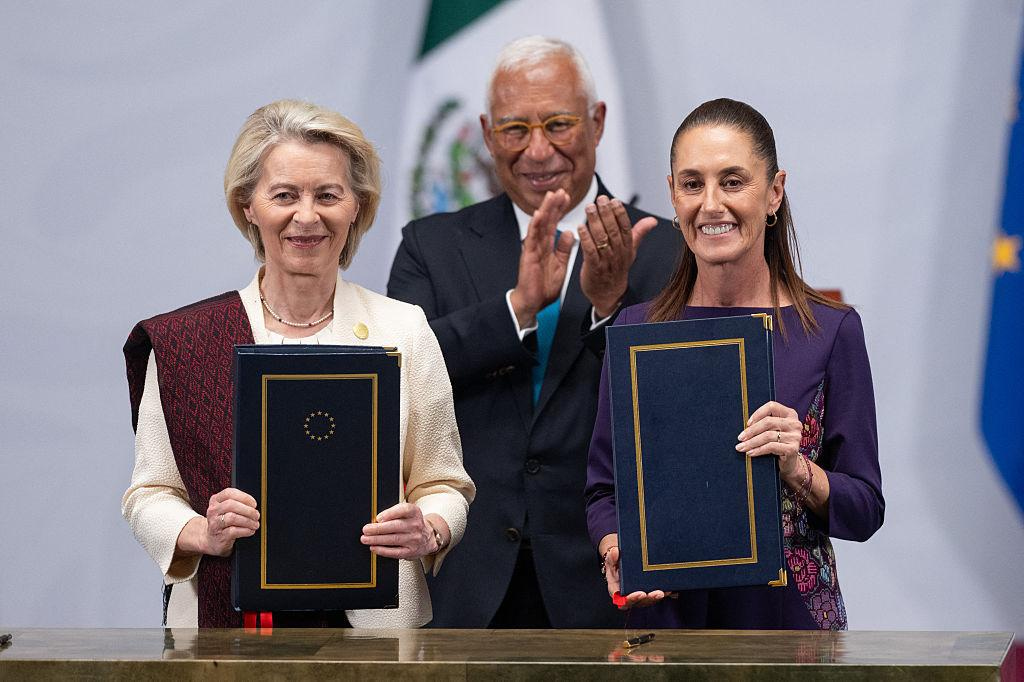
Mexico City: The Mexico trade agreement between the European Union and Mexico is signed, approved by the European Parliament and waiting only for the paperwork that switches its tariff cuts on. Signature came on 22 May 2026 at the first EU-Mexico summit in eleven years, and Parliament backed the deal on 8 July. What remains is a notification exchange that will decide when exporters actually see lower duties.
Brussels split the package in two to move faster. The Modernised Global Agreement replaces the 2000 framework and covers politics, cooperation, trade and investment, while an Interim Trade Agreement carries only the tariff and procurement parts that sit within exclusive EU competence. Parliament approved the first by 479 votes to 119 with 65 abstentions and the second by 474 to 131 with 60 abstentions, a comfortable margin for the Mexico trade agreement.
The interim text is the part that matters for business. It takes effect on the first day of the second month after both sides tell each other that their internal procedures are complete, and law firms tracking the file expect that moment in late 2026 or early 2027. Until then the Mexico trade agreement exists on paper, and exporters still pay today’s duties.
The prize is tangible. Parliament estimates that EU companies could save up to 100 million euros a year in customs duties, and that exports of goods and services could rise by as much as 75 percent in the most ambitious scenario. Mexican tariffs on cheese and pork reach 45 percent today, and almost all of them would disappear. The text also protects 568 European geographical indications for traditional food products in the Mexican market.
Investment rules carry the sharper politics. Once the full agreement enters into force, it replaces 14 bilateral investment treaties between Mexico and member states with the Investment Court System, a first-instance tribunal with a standing appeal body. The new regime narrows protections such as fair and equitable treatment and indirect expropriation, which critics will contest. If provisional application ever reaches those sections, the old treaties would be suspended without national parliamentary votes.
That points to the slower track. The Modernised Global Agreement needs ratification by all 27 member states and the Mexican Senate, a process that historically takes years, so the interim agreement will carry the trade relationship in the meantime. European firms gain a footing in a market of roughly 130 million people, which explains why the Mexico trade agreement drew such strong support in Strasbourg.
For companies, the practical advice is to watch the notification date rather than the signing ceremony. If both capitals finish their procedures on schedule, the Mexico trade agreement could cut tariffs within weeks of that exchange, and Mexico City would gain a counterweight in a trade strategy that favours several major partners. If either side delays, the Mexico trade agreement will remain a promise with a ratification clock attached.