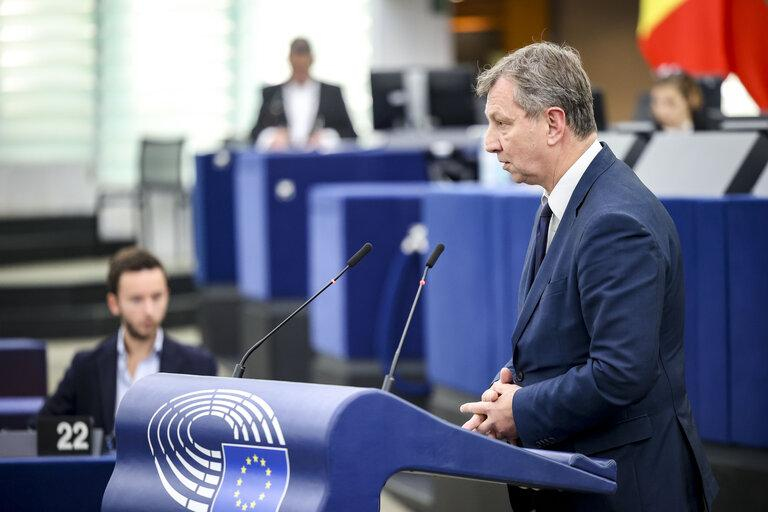
The Erasmus+ budget moved to the centre of the EU’s money debate after the European Parliament adopted its negotiating mandate for the 2028-2034 programme by 454 votes to 34, with 93 abstentions. The text, steered by Polish EPP rapporteur Bogdan Zdrojewski, asks for 47.39 billion euros, well above the 40.8 billion euros the European Commission proposed on 16 July 2025.
The gap is real, but the arithmetic deserves care. Zdrojewski said the proposals almost double the programme’s funding and welcomed the return of the United Kingdom. Measured against the Commission’s own figure, however, the increase comes to roughly 16 percent, and the Parliament’s press release does not state which baseline supports the almost double claim. Readers should treat the two numbers as different yardsticks until the institutions publish a comparison.
Parliament also divides the Erasmus+ budget by sector. Education and learning would receive at least 74.6 percent, youth and volunteering 15 percent and sport 4.1 percent. The European University Association notes that the education share would fall from 83 percent in the current programme, which could squeeze higher education even though its own slice edges up from 34.6 to 35 percent. The association also points out that the committee started from a figure near 58 billion euros before the Committee on Budgets brought it down.
The Erasmus+ budget would come with wider access in several ways. Mobility grants would reflect living costs, housing costs and inflation in the host location, with extra support for travellers heading to distant places. Grassroots athletes and vocational learners, teachers and trainers would gain more room, and the European Solidarity Corps and the European Voluntary Humanitarian Aid Corps would join the programme. Candidate countries could take part sooner without finishing the association procedure, and MEPs want closer links with the United Kingdom and Switzerland.
Universities will watch the details. The EUA argues that the cost-of-living adjustment in the committee text reaches only students with fewer opportunities and wants it extended to everyone. It also notes that extra work would fall on national agencies. Those objections show that a headline total does not settle who benefits from the Erasmus+ budget in practice.
The harder fight lies with governments. Talks with the Council can start only after member states agree their full mandate on the long-term budget, including overall funding levels. The Cypriot Presidency earlier proposed trimming 2 percent from a framework of nearly 2 trillion euros, and several capitals consider that too timid and want deeper cuts. The Council adopted a partial general approach on the programme in May 2026, and the committee text did not restore the programme committee that the Council proposed.
That sequence leaves Parliament and its Erasmus+ budget bid with a strong opening position and little leverage until finance ministers move. Higher education groups asked for 60 billion euros and now urge governments to exempt the programme from cuts. For students and youth organisations, the practical message is that the Erasmus+ budget will stay unsettled until the wider budget negotiation closes, and the 47.39 billion euro figure marks the top of the range rather than a promise.