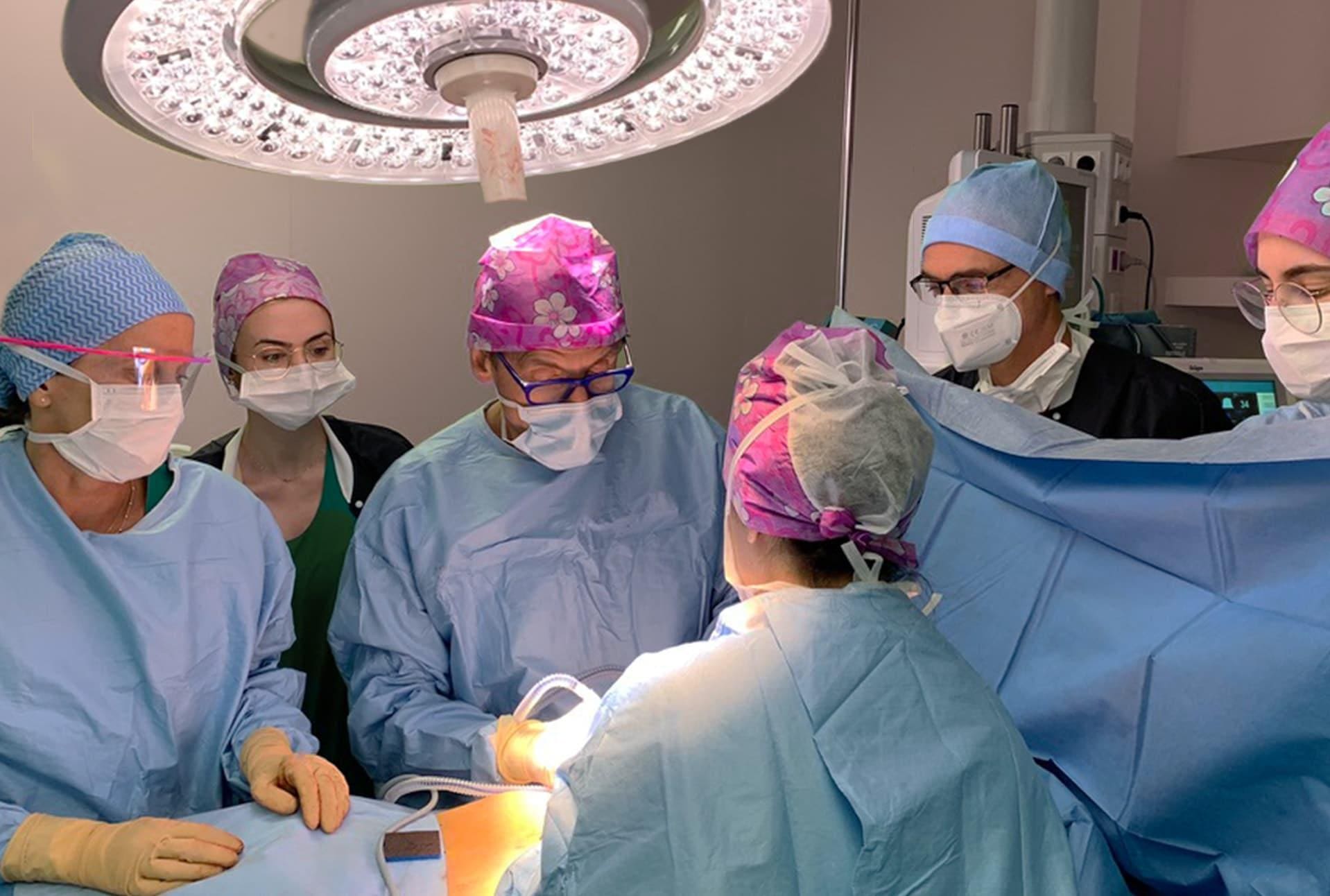
Riga: Breast cancer surgery reached a record level across the European Union in 2024, with surgeons carrying out 560,730 partial or total breast removals, according to new Eurostat data published on 20 November 2026. Most of these operations aimed to prevent or treat breast cancer, and the figures show sharp gaps between member states.
The Eurostat release on surgical procedures splits the total into two groups. Hospitals performed 160,928 total mastectomies, a rate of 70.1 per 100,000 women, and 399,802 partial mastectomies, or 174 per 100,000 women. Partial removal therefore accounts for more than seven in ten breast cancer surgery cases, which reflects the shift towards breast-conserving treatment where clinicians judge it safe.
Latvia sits at the bottom of the table for total mastectomies with 35.8 per 100,000 women. Malta follows at 43.8, Estonia at 43.9 and Czechia at 47.6. At the other end, Belgium records 138.7 total removals per 100,000 women, ahead of Greece at 123.6, Denmark at 90.5, Luxembourg at 87.4 and Croatia at 86.2. A Belgian woman is thus almost four times as likely to undergo a full mastectomy as a woman in Latvia.
The partial procedures show a similar spread. Belgium again leads with 299.2 per 100,000 women, followed by Luxembourg at 253.8 and Italy at 221.2. Poland reports only 26.5 and Romania 54.6. Italy stands out in absolute terms for breast cancer surgery, with 24,610 total and 66,576 partial mastectomies in a single year.
Rates of breast cancer surgery depend on more than disease prevalence. Screening coverage, the age profile of the female population, access to specialist breast units and clinical traditions all shape the numbers. Higher counts can signal earlier detection and strong treatment capacity, while low counts may point to gaps in screening or in data reporting rather than to healthier populations.
The new statistics arrive as the EU pursues the goals of Europe’s Beating Cancer Plan, which pushes member states to widen organised screening for breast, cervical and colorectal cancer. National health ministries can use the Eurostat series to benchmark their hospitals and to test whether screening programmes reach women in every region.
For Latvia, Estonia and Malta, the low rates raise a policy question. Health authorities in Riga, Tallinn and Valletta will want to know whether fewer operations reflect fewer cases, later diagnosis or patients travelling abroad for care. Each answer would require a different response, from better screening invitations to stronger cross-border data.
For Belgium and Luxembourg, the challenge looks different. High volumes of breast cancer surgery place pressure on surgical teams, oncology nurses and reconstruction services, and they underline the value of shared clinical guidelines across the European Reference Networks.
The 2024 data give policymakers a clearer map of where breast cancer surgery capacity sits and where it may fall short. As the Commission and member states review cancer targets for 2026 and beyond, these figures offer a practical tool to close the gaps between Europe’s best and weakest performers.