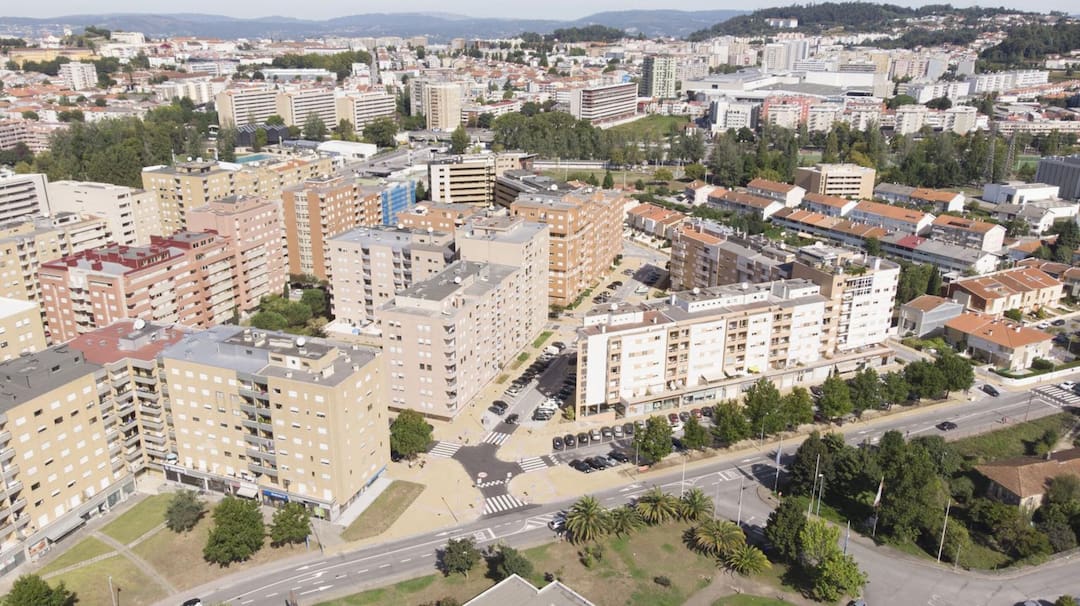
Braga: The house price-to-income ratio in the European Union stood 6.8% higher in 2025 than in 2015, Eurostat reported on 9 November 2026, but the national picture varies sharply. Portugal recorded by far the steepest climb, with the ratio up 60.8% over the decade, a trend that buyers in fast-growing northern cities such as Braga know well.
The indicator compares the change in nominal house prices with the change in disposable income per head. When the ratio rises, homes become less affordable for the typical earner. Eurostat publishes the measure as part of the scoreboard for the macroeconomic imbalance procedure, the framework the Commission uses to flag risks that could spill across the euro area.
Behind Portugal, the house price-to-income ratio in the Netherlands posted a rise of 34.3%, Hungary 26.5%, Czechia 25.8% and Spain 24.5%. In total, the house price-to-income ratio increased in 17 member states over the ten years and fell in the remaining 10. Eurostat stressed that the data show change over time rather than the absolute cost of housing, so a country with a falling ratio can still have expensive homes.
The largest declines came in Romania, where the ratio dropped 42.8%, followed by Finland at minus 25.2% and Bulgaria at minus 16.2%. In those countries, income growth outpaced property prices across the decade, which eased pressure on first-time buyers even where mortgage rates rose after 2022.
Eurostat also published a standardised version of the measure that compares each year with the long-term average since 2000. That series peaked at plus 7.9% in 2007 and again at plus 7.4% in 2022, before sliding through 2023 and 2024. It touched a low of minus 6.4% in 2014 and returned to almost exactly the long-term average, at plus 0.03%, in 2025.
For monetary policy, the data cut both ways. The European Central Bank tightened policy sharply from 2022, and higher borrowing costs helped cool valuations across much of the bloc. Yet the Portuguese and Dutch numbers show that structural shortages of supply can keep affordability stretched even after rate rises, which limits what the central bank alone can achieve.
The figures also feed into the Commission’s annual alert mechanism report, which opens each European Semester cycle and decides which member states face in-depth reviews. Countries with a persistently high house price-to-income ratio and elevated household debt usually attract closer scrutiny of mortgage lending standards and housing supply policy.
Governments are already responding to a rising house price-to-income ratio. Lisbon has expanded public rental schemes, and the Dutch cabinet has set targets for new construction, while several capitals are exploring how the next cohesion budget could support affordable housing.
For now, the 2025 data confirm that the house price-to-income ratio remains a central affordability gauge for Europe. Portugal’s 60.8% rise sets the benchmark that policymakers will want to reverse before the next decade of data arrives.