
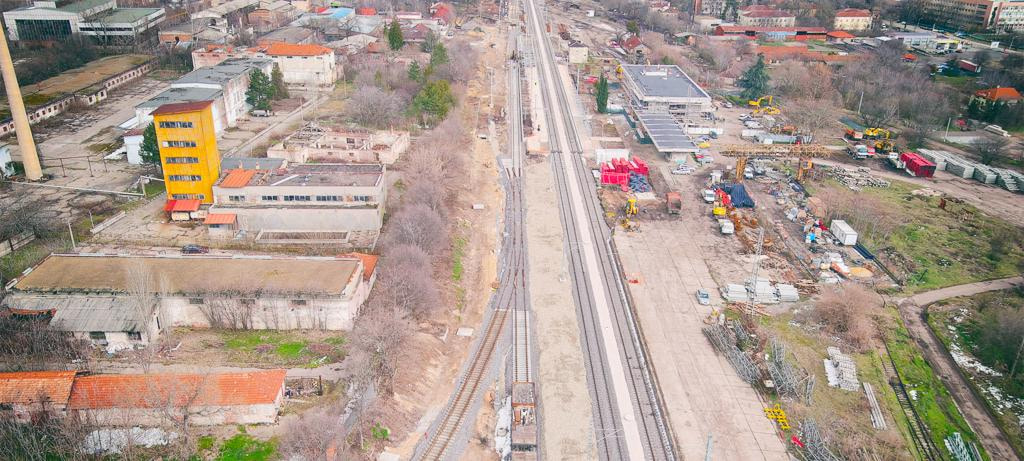
Plovdiv: A railway modernisation fraud worth more than €213.7 million in EU financing has reached the Sofia City Court, after the European Public Prosecutor’s Office indicted one suspect on 19 November 2026. The case concerns sections of the line between Sofia and Plovdiv, one of Bulgaria’s most important rail corridors.
The defendant is the legal representative of a company that belonged to a three-company consortium. In 2019 the consortium won an EU-funded grant of €213,714,235.14 to upgrade parts of the route. Between 2019 and 2024 the National Company Railway Infrastructure paid out €68,213,186.03 to the group.
According to the EPPO, the railway modernisation fraud rested on a false statement about the company’s legal status. The defendant allegedly had the consortium manager, who knew nothing of the scheme, declare that the company was not subject to insolvency proceedings. Evidence shows the company had been declared insolvent back in 2012.
That declaration matters because insolvent firms cannot normally take part in EU-funded public contracts. In a railway modernisation fraud of this kind, a single false box ticked at the tender stage can unlock tens of millions of euros over several years. The grant was co-financed by the Connecting Europe Facility and Bulgaria’s national budget, so both European and domestic taxpayers were exposed.
The European Anti-Fraud Office played a central role. OLAF filed the initial crime report and carried out a complementary investigation alongside the EPPO’s criminal case. The National Police General Directorate and the State Agency for National Security also supported the investigation in Bulgaria.
Investigators carried out searches and seizures at several locations, including company headquarters and private homes. They seized tender documents and implementation records linked to the project. All persons concerned are presumed innocent until proven guilty by the competent Bulgarian courts.
The case shows how OLAF and the EPPO now split the work on large infrastructure files. OLAF detects irregularities and refers suspected crimes, while the Luxembourg-based prosecutor’s office runs the criminal case through its European delegated prosecutors in Sofia. Bulgaria has been one of the busiest countries for EPPO investigations since the office opened in 2021.
Transport projects under the Connecting Europe Facility carry large sums and long timelines, which makes eligibility checks at the bidding stage crucial. Contracting authorities often rely on self-declarations from bidders, and checks on insolvency registers are not always repeated once work starts.
For the Commission, the file is a reminder that railway modernisation fraud can hide inside consortia, where one weak partner sits behind larger and more credible firms. Auditors have urged national rail companies to verify every consortium member, not just the lead bidder, before signing grant agreements. The railway modernisation fraud now heads to trial in Sofia, where judges will test whether the insolvency declaration was knowingly false. The outcome could also shape any recovery of the €68 million already paid.


