
November 23, 2026
LATEST
Organic Farming Rules Head Into a Decisive Plenary This WeekCoca-Cola Bottler Antitrust Probe Covers Eight Member StatesNew EU Sanctions Office Will Unite Enforcement Teams From January 2027Staff Anger Mounts Over Commission Cyberattack Kept Quiet for WeeksWestern Balkans Enlargement Gets a Greek Push at Athens MinisterialUzbekistan Critical Minerals Draw European Buyers Seeking Local ValueMiddle Corridor Talks Put Kazakhstan at the Heart of EU ConnectivityPublic Transport Use Trails the Car for Most EuropeansConsent-Based Rape Definition Still Missing From EU LawCorruption Listings Under EU Magnitsky Act Gain MEP PushCereal Harvest Drop of 9.6% Puts Maize and Food Prices on WatchGulf of Guinea Maritime Security Funding Climbs to €31 MillionMedusa Submarine Cable Extension Links Jordan to EU ScienceHousing Exclusion Tops Agenda as Ministers Convene in DublinGender Equality Strategy Faces Ministers’ Scrutiny in TraleeMission Ocean and Waters Backs 17 New Projects With €119 MillionLead Gunshot Ban Under REACH Gives EU Hunters Until 2033 to SwitchVenezuela Sanctions Debate Returns as Caracas Reform Talks Grind OnIndia EU Free Trade Agreement Heads Toward a December Signing PushDutch Chip Equipment Export Curbs Cloud the EU-China Trade ThawOrganic Farming Rules Head Into a Decisive Plenary This WeekCoca-Cola Bottler Antitrust Probe Covers Eight Member StatesNew EU Sanctions Office Will Unite Enforcement Teams From January 2027Staff Anger Mounts Over Commission Cyberattack Kept Quiet for WeeksWestern Balkans Enlargement Gets a Greek Push at Athens MinisterialUzbekistan Critical Minerals Draw European Buyers Seeking Local ValueMiddle Corridor Talks Put Kazakhstan at the Heart of EU ConnectivityPublic Transport Use Trails the Car for Most EuropeansConsent-Based Rape Definition Still Missing From EU LawCorruption Listings Under EU Magnitsky Act Gain MEP PushCereal Harvest Drop of 9.6% Puts Maize and Food Prices on WatchGulf of Guinea Maritime Security Funding Climbs to €31 MillionMedusa Submarine Cable Extension Links Jordan to EU ScienceHousing Exclusion Tops Agenda as Ministers Convene in DublinGender Equality Strategy Faces Ministers’ Scrutiny in TraleeMission Ocean and Waters Backs 17 New Projects With €119 MillionLead Gunshot Ban Under REACH Gives EU Hunters Until 2033 to SwitchVenezuela Sanctions Debate Returns as Caracas Reform Talks Grind OnIndia EU Free Trade Agreement Heads Toward a December Signing PushDutch Chip Equipment Export Curbs Cloud the EU-China Trade Thaw

Rapporteur Report on the Digital Networks Act Revives Traffic Fee Row

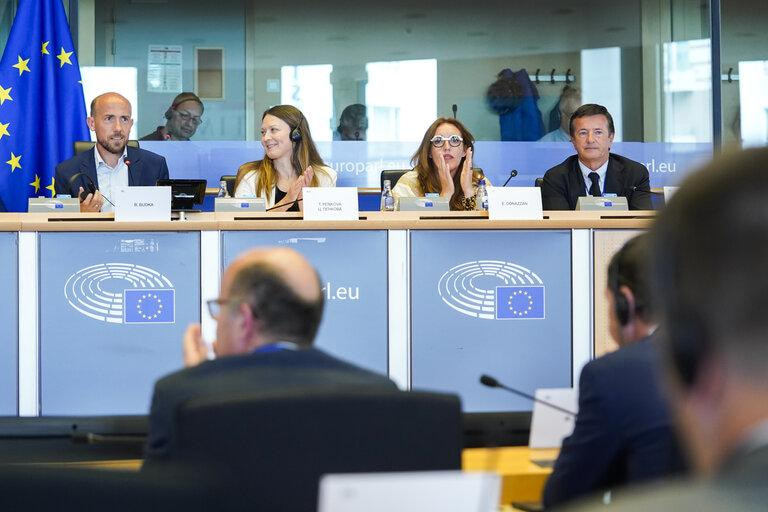
Rome: The Digital Networks Act has become the European Parliament’s sharpest telecoms battle of the autumn, after the lead rapporteur’s draft report reopened the long-running dispute over network fees. Polish MEP Michał Kobosko, who steers the file in the Industry, Research and Energy Committee (ITRE), was due to present his draft on 10 November 2026.

The Commission published its proposal for the Digital Networks Act in January 2026. Its stated aim is to modernise Europe’s connectivity rules, simplify the telecoms framework and encourage investment in fibre and 5G networks. The Kobosko draft goes considerably further on the relationship between network operators and large online services.

At the centre of the draft is a new category called the “significant traffic provider”. Any company delivering at least 2% of peak traffic to users in the EU would fall into it. Such providers would have to negotiate interconnection terms with network operators, and if talks failed, a national regulator would issue a binding decision.

Critics say this design brings back the “fair share” idea in another form. The Internet Society, in a blog post by Carl Gahnberg dated 3 November, warned that binding dispute resolution would turn interconnection into a regulated payment channel. The draft justifies the change by pointing to a “structural asymmetry in bargaining power” between operators and large platforms.

The report would also add content delivery networks to the legal definition of an electronic communications network. Opponents link this to Resolution 207 of AGCOM, the Italian communications regulator, which already applies sector rules to CDNs and which Netflix is challenging in court. Bringing that model into the Digital Networks Act would make it EU-wide.

Net neutrality is the third flashpoint. The draft would allow traffic management except for “purely” commercial reasons and would drop the necessity test that limits such measures today. It would also extend neutrality-style obligations to content providers, AI providers, operating systems and CDNs, rather than only internet access services.

The Internet Society asks MEPs to remove the binding dispute mechanism, keep CDNs out of the network definition and leave the Open Internet Regulation as a separate law. It also recommends deleting Articles 191 to 193 of the Commission proposal. ITRE members had until 12 November to table amendments, and the volume of changes will shape how quickly the committee can vote.

Telecoms operators have long argued that a few large platforms generate most traffic without contributing to network costs. Platforms and digital rights groups reply that users already pay for access and that fees could damage the open internet. The member states in the Council will also have to take a position before trilogues can begin.

The coming months will show whether the Digital Networks Act remains a simplification and investment package or becomes the vehicle for a new payment obligation. For operators, regulators and platforms across the EU, the ITRE amendments will be the first clear signal of where Parliament’s majority stands on the Digital Networks Act.