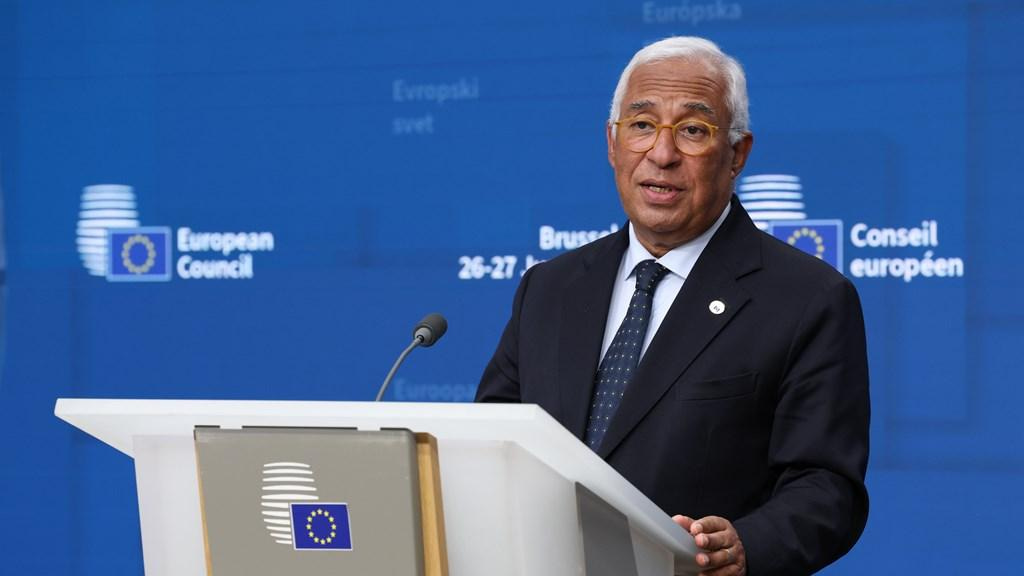
Negotiations on the MFF 2028-2034 failed to produce a deal in Brussels, as EU leaders broke up in the early hours of 27 November 2026 after roughly 15 hours of talks. European Council President António Costa said the special summit had clarified the parameters of a possible landing zone. Leaders will try again at the regular summit on 17 and 18 December, with Costa promising a revised proposal within days.
How Costa’s MFF 2028-2034 box reshapes priorities
Costa tabled his negotiating box on 21 November. It sits about €204 billion below the Commission’s July 2025 proposal in current prices, or roughly 10% lower, and amounts to €1,582 billion in 2025 prices. The European Parliament’s co-rapporteurs, Siegfried Mureșan and Carla Tavares, put the ceiling at about 0.97% of gross national income excluding debt repayment, against 1.11% in the current framework and Parliament’s target of 1.27%.
The cuts within the MFF 2028-2034 box fall unevenly. The competitiveness heading, which also funds defence, drops to €437.6 billion, 16.2% below the Commission’s figure. Global Europe, the external action instrument, falls 23% to €150 billion. Cohesion settles at €402 billion, while the €261 billion floor for farm spending stays almost intact. In effect, the box protects the two oldest spending blocs and squeezes the newer priorities that leaders themselves championed.
Own resources and the digital levy gamble
To limit national contributions to the MFF 2028-2034, Costa proposes a 3% digital levy on firms with global turnover above €750 million and EU digital revenue above €50 million. It would cover online advertising, marketplaces and data monetisation, and raise about €5 billion a year. Ireland strongly opposes it, and any new own resource needs unanimity.
The box also re-times repayment of NextGenerationEU debt. Payments still start in 2028 and run to 2058, but principal falls due more slowly, freeing about €9 billion. German Chancellor Friedrich Merz warned that interest on the recovery fund debt, above €150 billion over its lifetime, will weigh on any future framework.
Why the frugal bloc and the cohesion camp collide
Seven net payers, Germany, the Netherlands, Sweden, Austria, Denmark, Finland and Belgium, refused Costa’s small-group format and now call themselves modernisers. They want a leaner MFF 2028-2034 focused on competitiveness and defence. Merz said the cut would not stop at €204 billion.
On the other side, Italian Prime Minister Giorgia Meloni and Romanian President Nicușor Dan led the Friends of Cohesion. Meloni said the Union remained light years away from a deal. Parliament President Roberta Metsola called the cohesion cut hard to explain to citizens.
The French calendar
Emmanuel Macron added a hard deadline. The French president said he could not decide on the MFF 2028-2034 after 31 December because of France’s election calendar, and he insisted on full farm funding. That gives Costa one summit to bridge positions that remain far apart.
What happens next
Three outcomes now look possible. Leaders could strike a political deal in December on a smaller envelope, perhaps with the digital levy diluted. They could postpone into 2027 and risk a French veto dynamic after the election. Or they could agree headline figures and leave own resources open, which would shift the fight to Parliament, whose consent remains mandatory.
Parliament has already signalled that it may withhold that consent if the ceiling stays near 0.97% of GNI and debt repayment eats into programmes. The December summit will therefore test not only national red lines but the institutional balance of the MFF 2028-2034, the first framework that must finance defence, enlargement preparation and debt service at the same time.