
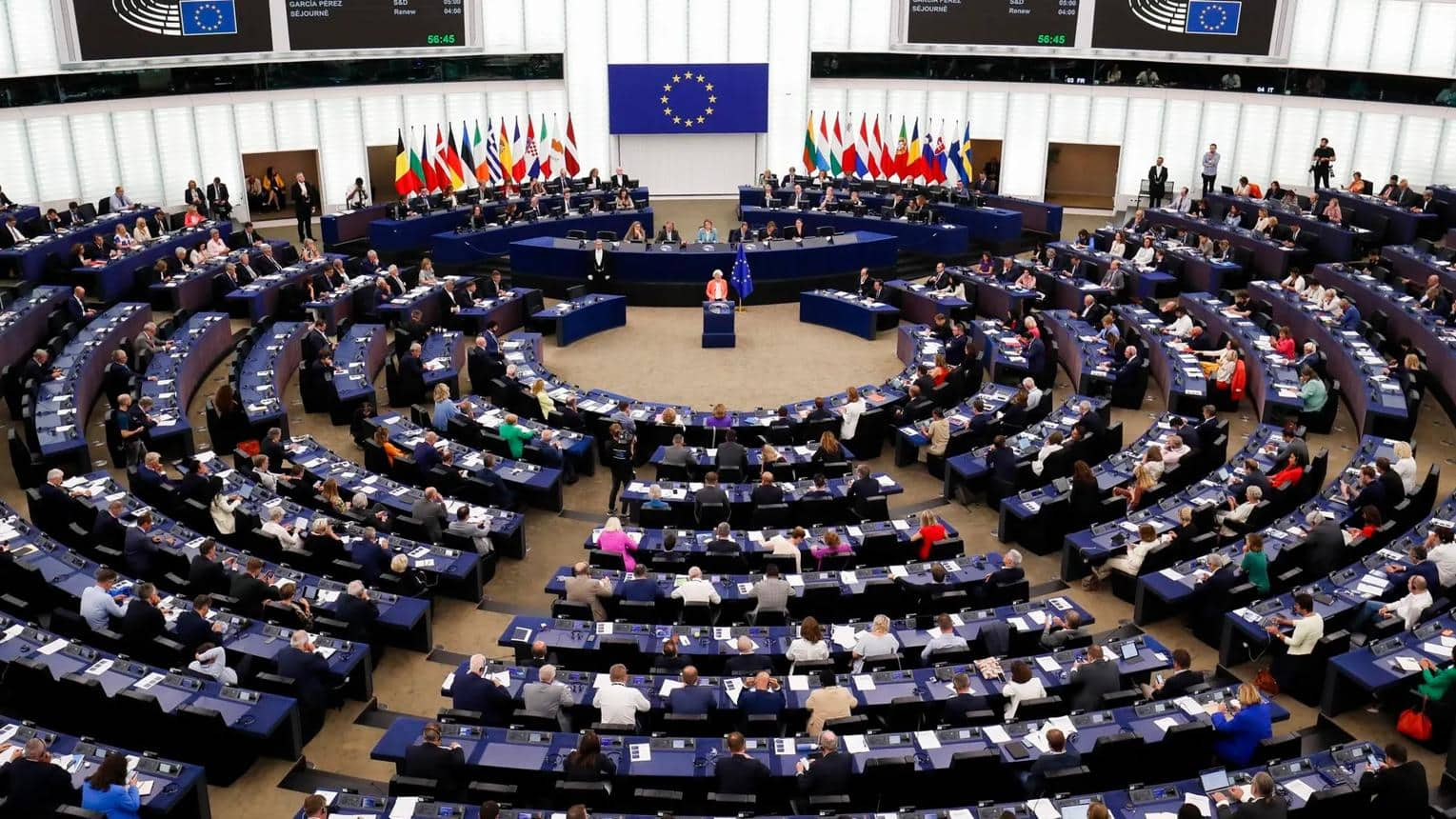
Strasbourg: The rule of law in Hungary returns to the European Parliament’s agenda on Tuesday 24 November, when MEPs hold a plenary debate on the reforms launched by Prime Minister Péter Magyar’s government. It is the first full test in the chamber of whether Budapest’s change of course since the April 2026 election runs deep enough to close one of the EU’s longest institutional disputes.
Why the rule of law in Hungary is back before MEPs
For most of the past decade, Parliament was the institution pressing hardest on the rule of law in Hungary. In September 2018 it triggered the Article 7(1) procedure, the treaty mechanism for a clear risk of a serious breach of EU values. In December 2022 the Council suspended about €6.3 billion in cohesion funding under the rule-of-law conditionality regulation, the first time that tool was used.
The political ground shifted in April 2026, when Magyar’s Tisza party won a landslide and ended Viktor Orbán’s 16 years in power. The debate in Strasbourg is therefore less about documenting backsliding and more about measuring repair.
EPPO membership as the clearest signal
The most concrete change to the rule of law in Hungary so far is the decision to join the European Public Prosecutor’s Office. Budapest applied in May, and the Commission confirmed its participation on 10 July 2026. The decision entered into force on 2 August, making Hungary the 25th participating state. With only Denmark and Ireland outside under their justice and home affairs opt-outs, the EPPO Regulation now forms part of the EU acquis that future members must accept.
Membership carries a retroactive edge. The EPPO can investigate fraud against EU funds committed in Hungary since 1 June 2021, the date it began operations. That opens spending decisions taken under the previous government to scrutiny. Operational work still depends on the Council appointing a European Prosecutor for Hungary from three national candidates, and on Budapest naming European Delegated Prosecutors and funding their offices.
What reformers and sceptics will argue
Ahead of the session, Renew Europe credited the new government with progress on the courts, LGBTIQ+ rights, EPPO membership and a new asset recovery office. In its briefing, the group said the budgetary conditionality measures had been lifted and argued that EU conditionality had worked.
Sceptics are likely to argue that the rule of law in Hungary depends on institutional practice as much as on legislation. Cardinal laws adopted during the Orbán years cannot always be undone by a simple majority. The media landscape, public procurement networks and appointments to oversight bodies also take longer to rebalance than a statute takes to amend.
The precedent question
The Hungarian case matters beyond Budapest. If suspended funds can be shown to have helped restore the rule of law in Hungary, the Commission gains a stronger argument for linking money to values in the 2028-2034 long-term budget. Critics will reply that the decisive change came at the ballot box, not from Brussels.
What happens next
Tuesday’s debate will not end in a binding decision, but the tone of the main political groups will shape the Council’s next steps on the Article 7 file, which only member states can close. It will also inform the Commission’s 2027 Rule of Law Report.
The milestones to watch are the appointment of Hungary’s European Prosecutor and the first EPPO cases opened on Hungarian soil. Together they will show whether progress on the rule of law in Hungary has become durable or remains a work in progress.


