August 11, 2026
LATEST
Air Passenger Rights Get Their First Overhaul in Two DecadesDeforestation Regulation Nears Its December Compliance DeadlineHealth Data Space Enters Its First Operational PhaseBroken Appliances Now Come With a Right to Be FixedScorched Fields Leave Europe Counting Its Harvest LossesEurope Courts Central Asia to Break Its Reliance on Russian TransitMercosur Deal Takes Effect in Limbo as Judges Weigh Its FateEurope’s Air Quality Improves but WHO Limits LoomTwelve New EU Medicines Win a Green Light from EMAFIFA Agent Rules Must Answer to Europe’s CourtsTachograph Rules Now Reach Vans Crossing Europe’s BordersNature Restoration Plans Come Due as a Hard Deadline NearsBrussels Opens a State Aid Probe Into Spain’s Renewables PayoutBrussels Extends Its Tariff Suspension on US Goods IndefinitelyFarmers Win Stronger Contract Rights Across the EU Supply ChainEurope Finally Locks In Its 348-Satellite Answer to StarlinkPlatform Work Rules Face a National Scramble Before DecemberDuty-Free Parcels Reach the End of the Line for EU ShoppersAfter Nine Years, Europe and Australia Seal a Trade PactBeijing Answers Europe’s Russia Sanctions in KindAir Passenger Rights Get Their First Overhaul in Two DecadesDeforestation Regulation Nears Its December Compliance DeadlineHealth Data Space Enters Its First Operational PhaseBroken Appliances Now Come With a Right to Be FixedScorched Fields Leave Europe Counting Its Harvest LossesEurope Courts Central Asia to Break Its Reliance on Russian TransitMercosur Deal Takes Effect in Limbo as Judges Weigh Its FateEurope’s Air Quality Improves but WHO Limits LoomTwelve New EU Medicines Win a Green Light from EMAFIFA Agent Rules Must Answer to Europe’s CourtsTachograph Rules Now Reach Vans Crossing Europe’s BordersNature Restoration Plans Come Due as a Hard Deadline NearsBrussels Opens a State Aid Probe Into Spain’s Renewables PayoutBrussels Extends Its Tariff Suspension on US Goods IndefinitelyFarmers Win Stronger Contract Rights Across the EU Supply ChainEurope Finally Locks In Its 348-Satellite Answer to StarlinkPlatform Work Rules Face a National Scramble Before DecemberDuty-Free Parcels Reach the End of the Line for EU ShoppersAfter Nine Years, Europe and Australia Seal a Trade PactBeijing Answers Europe’s Russia Sanctions in Kind
August 11, 2026
LATEST
Air Passenger Rights Get Their First Overhaul in Two DecadesDeforestation Regulation Nears Its December Compliance DeadlineHealth Data Space Enters Its First Operational PhaseBroken Appliances Now Come With a Right to Be FixedScorched Fields Leave Europe Counting Its Harvest LossesEurope Courts Central Asia to Break Its Reliance on Russian TransitMercosur Deal Takes Effect in Limbo as Judges Weigh Its FateEurope’s Air Quality Improves but WHO Limits LoomTwelve New EU Medicines Win a Green Light from EMAFIFA Agent Rules Must Answer to Europe’s CourtsTachograph Rules Now Reach Vans Crossing Europe’s BordersNature Restoration Plans Come Due as a Hard Deadline NearsBrussels Opens a State Aid Probe Into Spain’s Renewables PayoutBrussels Extends Its Tariff Suspension on US Goods IndefinitelyFarmers Win Stronger Contract Rights Across the EU Supply ChainEurope Finally Locks In Its 348-Satellite Answer to StarlinkPlatform Work Rules Face a National Scramble Before DecemberDuty-Free Parcels Reach the End of the Line for EU ShoppersAfter Nine Years, Europe and Australia Seal a Trade PactBeijing Answers Europe’s Russia Sanctions in KindAir Passenger Rights Get Their First Overhaul in Two DecadesDeforestation Regulation Nears Its December Compliance DeadlineHealth Data Space Enters Its First Operational PhaseBroken Appliances Now Come With a Right to Be FixedScorched Fields Leave Europe Counting Its Harvest LossesEurope Courts Central Asia to Break Its Reliance on Russian TransitMercosur Deal Takes Effect in Limbo as Judges Weigh Its FateEurope’s Air Quality Improves but WHO Limits LoomTwelve New EU Medicines Win a Green Light from EMAFIFA Agent Rules Must Answer to Europe’s CourtsTachograph Rules Now Reach Vans Crossing Europe’s BordersNature Restoration Plans Come Due as a Hard Deadline NearsBrussels Opens a State Aid Probe Into Spain’s Renewables PayoutBrussels Extends Its Tariff Suspension on US Goods IndefinitelyFarmers Win Stronger Contract Rights Across the EU Supply ChainEurope Finally Locks In Its 348-Satellite Answer to StarlinkPlatform Work Rules Face a National Scramble Before DecemberDuty-Free Parcels Reach the End of the Line for EU ShoppersAfter Nine Years, Europe and Australia Seal a Trade PactBeijing Answers Europe’s Russia Sanctions in Kind

Europe and Japan Join Forces on the Next Chip Generation

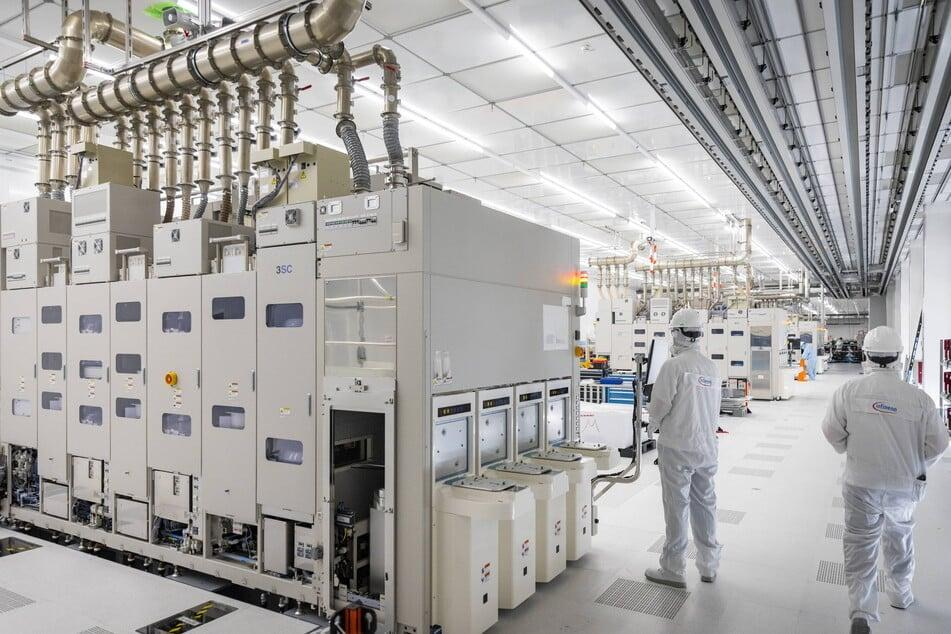
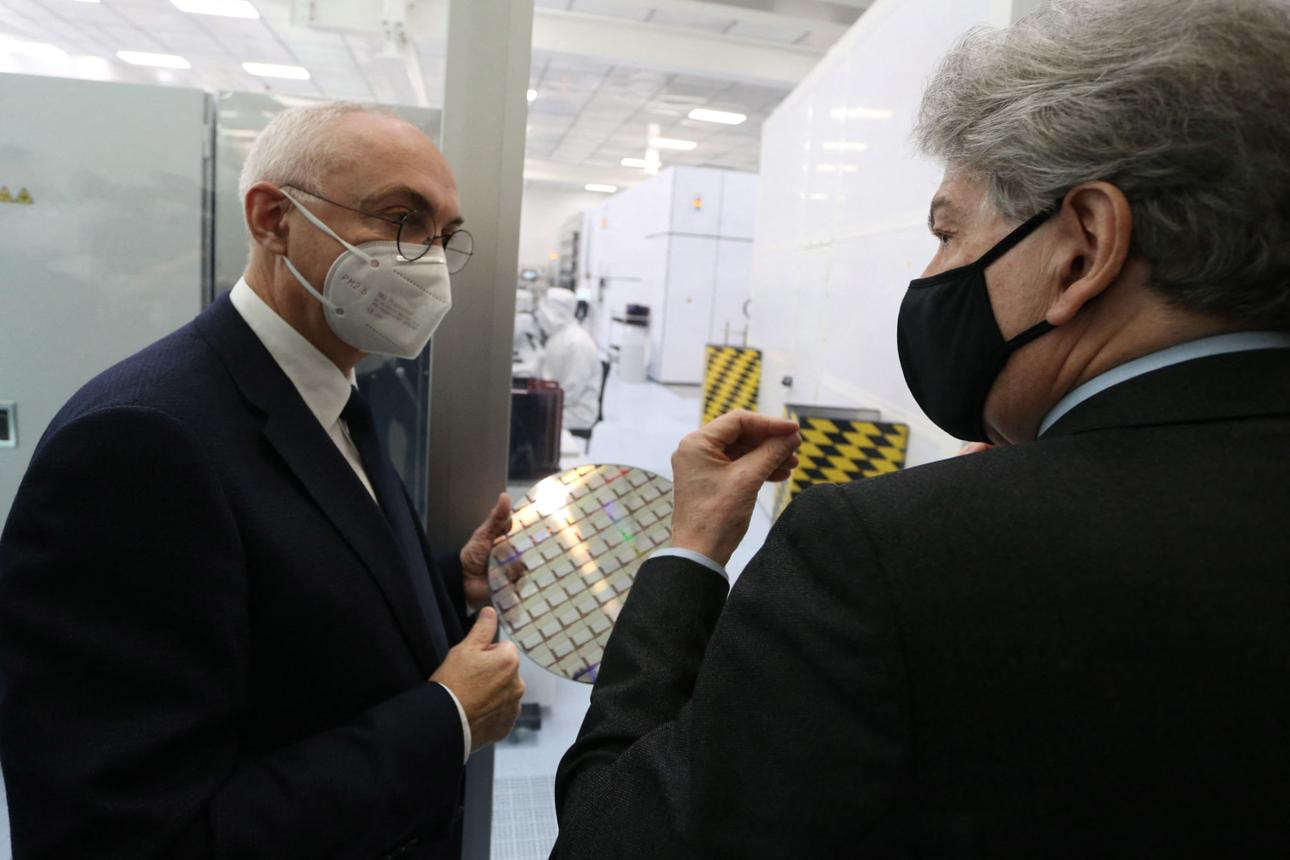
Leuven: Europe and Japan are pooling their engineers to chase the semiconductors that will power the next decade of computing. The European Commission has opened a new round of joint EU-Japan research grants worth three to five million euros each, with applications due in late September. The money targets next-generation chip technologies, advanced packaging and the industrial steps needed to turn laboratory designs into working products.

The logic behind the partnership is complementarity. Europe holds world-leading positions in chip design tools, research institutes and lithography, while Japan excels in materials science, manufacturing equipment and the chemistry of advanced packaging. Neither region can rebuild a full supply chain alone, and both have watched the United States and China pour public money into their own fabs. Cooperation lets each side play to its strengths rather than duplicate the other’s.

A flagship project already frames the effort. JASMINE, a coordination action under Horizon Europe, is designed to align research agendas across the two partners and to feed into the European Chips Act. It focuses on the hard, unglamorous work of standard-setting and joint roadmaps, the kind of groundwork that decides whether later collaboration runs smoothly or stalls in mismatched specifications.

The technical menu is ambitious. Grant winners will work on chiplets, three-dimensional integration and integrated photonics, the techniques that let designers stack and connect tiny circuits when shrinking transistors further becomes impossibly costly. These approaches now sit at the frontier of the industry, and progress there matters more than headline claims about ever-smaller nodes.

Politics gives the science urgency. Both Brussels and Tokyo learned during recent shortages that a single disrupted plant on the other side of the world can halt car factories and delay medical devices. Building shared research ties with a trusted partner is a hedge against that fragility. It also keeps two democracies close as chip technology becomes a tool of statecraft as much as commerce.

The framework did not appear overnight. The EU-Japan Digital Partnership, agreed at a 2022 summit, set out cooperation on semiconductors, data governance, artificial intelligence and supercomputing. The new grants turn that broad agenda into funded projects with deadlines and deliverables. That shift, from declaration to disbursement, is where many partnerships either mature or quietly fade.

Money on this scale will not build a factory, and no one pretends it will. What it can do is knit together university labs, national institutes and companies into teams that keep working after the grant ends. Those relationships often outlast the projects that created them, and they seed the start-ups and patents that decide industrial advantage years later.

Success will be hard to measure and slow to arrive. A wafer breakthrough in a Japanese lab may only show its worth in a European product half a decade on. Yet the direction is deliberate. Europe has decided it cannot win the chip race by spending alone, so it is choosing partners with care. Japan, with its deep materials expertise and shared strategic outlook, was the natural first call.