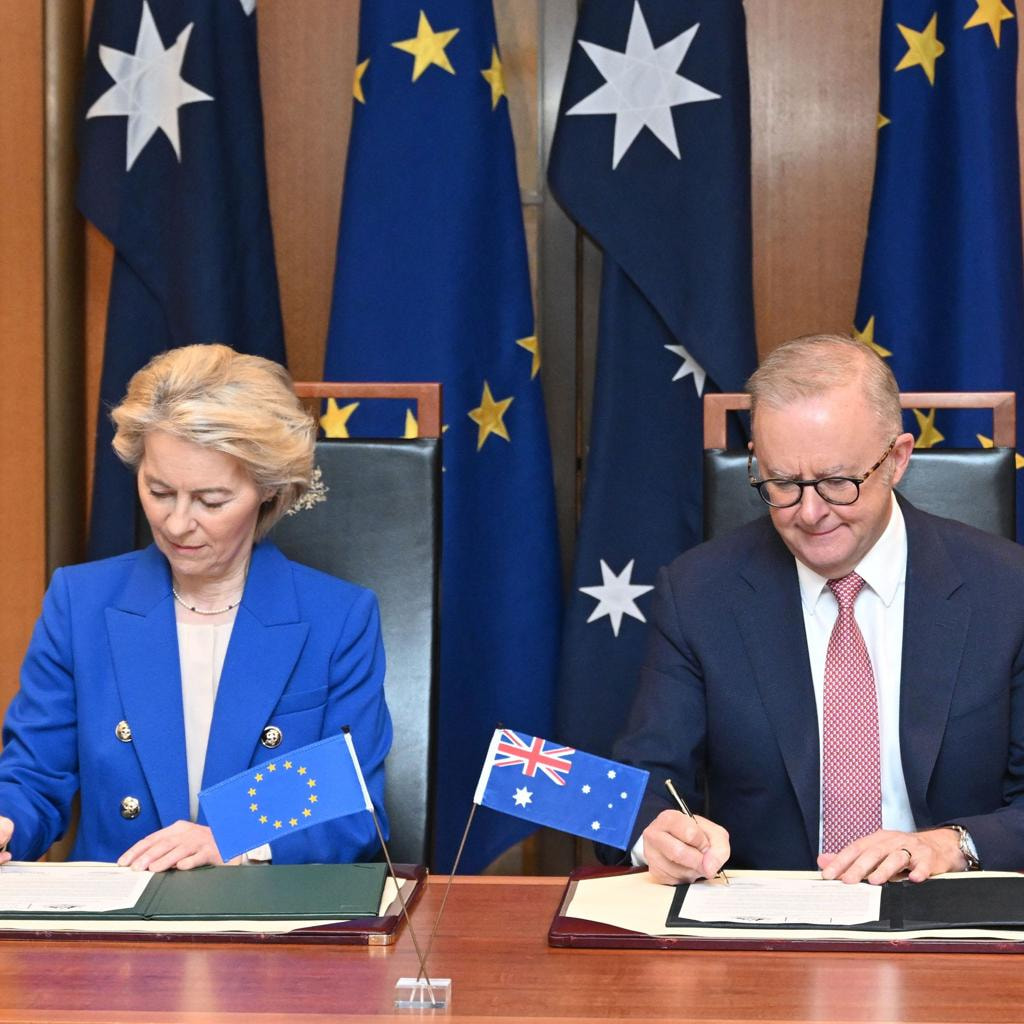
Canberra: After almost nine years of stop-start talks, Europe and Australia have finally agreed the terms of a free trade agreement, closing one of the longest negotiations in either side’s history.
Negotiators concluded the deal in March 2026, reviving talks that had collapsed in 2023 over farm access. The pact will scrap tariffs on more than ninety-nine percent of EU exports to Australia, while letting around ninety-eight percent of Australian exports enter the European market duty free.
The immediate winners are European makers of machinery, cars and chemicals, whose goods lose their tariffs from day one. Australian miners and farmers gain steadier access to a market of some four hundred and fifty million consumers, and both governments frame the agreement as an anchor for Europe in the Indo-Pacific.
Critical raw materials sit at the heart of the bargain. Australia holds large reserves of lithium, cobalt and rare earths that Europe needs for batteries, wind turbines and defence hardware. The European Commission presents the deal as a way to diversify those supplies away from a single dominant supplier.
Agriculture nearly sank the talks again. Sensitive sectors such as beef, sheepmeat, sugar, rice and dairy will open only through limited quotas at zero or reduced tariffs, paired with a safeguard clause that lets Brussels act quickly if Australian imports surge. European farm groups won those limits after years of lobbying.
Canberra had its own price. Australian negotiators pushed back on geographical indications, the rules that reserve names such as feta and prosecco for European producers, and pressed for room to grow its farm exports. The final balance gave each side enough to sell the deal at home.
The timeline stretches ahead. Signature is expected in late 2026 or early 2027, followed by ratification in the European Parliament, member states and the Australian legislature. Officials caution that the agreement may not enter into force until around the end of 2027.
Services and investment round out the package. Beyond goods, the agreement opens public procurement markets, eases rules for European investors in Australia, and sets common standards on digital trade and sustainability. Negotiators say those chapters matter as much as tariff lines for firms that trade in expertise rather than in containers.
The strategic logic runs deeper than tariffs. For Europe, the pact signals that it can still close ambitious trade deals as protectionism rises and Washington leans toward unilateral tariffs. For Australia, it widens the export map beyond Asia and trims its exposure to any single trading partner. Nine years on, both capitals seem to have decided that a flawed deal beats no deal at all.