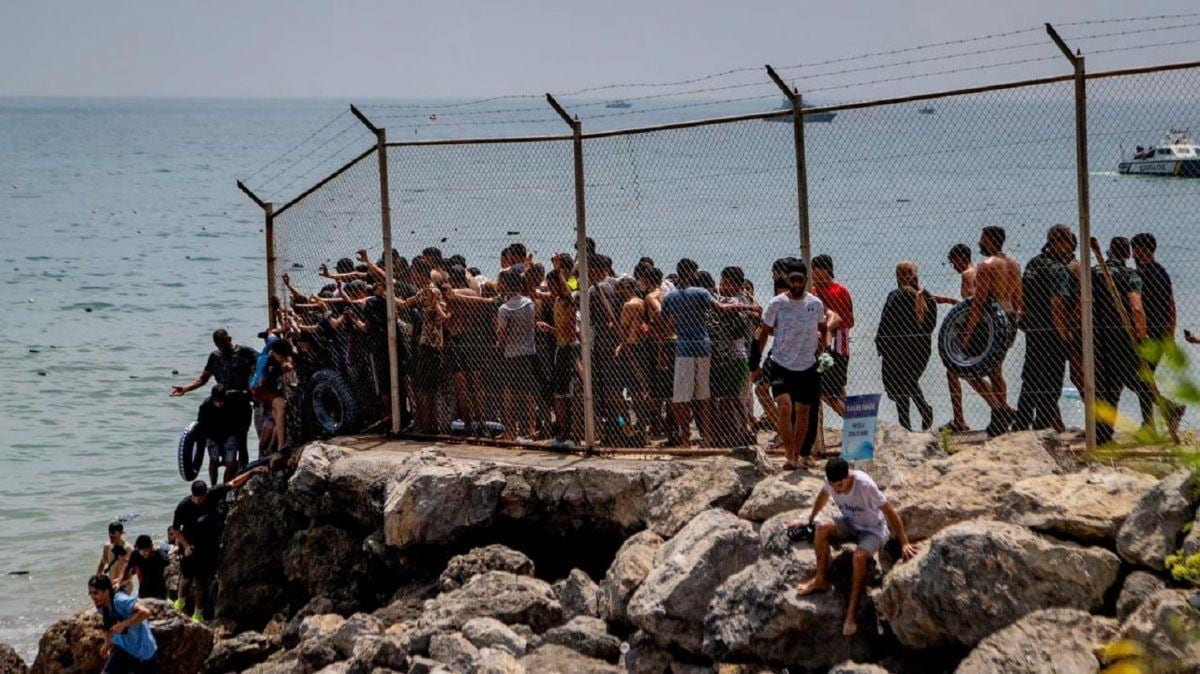
Ceuta: The Spanish enclave on the North African coast has become the reference point for a proposed EU emergency returns framework, after European Commission President Ursula von der Leyen told MEPs in Strasbourg on 16 September 2026 that the Union needs the means to suspend standard return procedures, for a limited time, when a member state faces a sudden mass arrival of irregular migrants. Her address came 48 days after more than 72,000 people crossed from Morocco into Ceuta on 30 and 31 July, the largest influx ever recorded at the Union’s only land border with Africa.
In her State of the Union speech, von der Leyen described the plan as a European Emergency Response Framework offering time-limited and clearly delimited flexibility from ordinary procedures, triggered only under strictly defined criteria. She tied it to cases in which movements of people are engineered and used as a weapon, and told the city’s residents that its border was a European border. What she did not provide was a legal text, a list of the procedures that could be suspended, or a date for a legislative proposal. Most of those who crossed in July were sent back within days, but according to reports between 5,000 and 10,000 people are still believed to be in the city.
The political direction is nevertheless clear. Von der Leyen called for member states to apply the Pact on Migration and Asylum in full, noting that it should already have been written into national law, and for solidarity from every capital. She also asked for a further strengthening of Frontex so that returns can be carried out faster, and for better early warning systems, including through cooperation with countries outside the bloc. A separate initiative on skills and jobs for young people around the Mediterranean was announced without measures or a timetable.
The numbers explain why returns have moved to the centre of the agenda. Frontex reported on 7 September that it helped member states return more than 33,000 people to third countries in the first half of 2026, up from about 30,000 a year earlier. Around two-thirds of those returns, some 21,000, were voluntary. Irregular crossings of the external borders fell to about 49,000 over the same six months, 37 per cent lower than in the first half of 2025. Frontex Executive Director Hans Leijtens argues that returns lend credibility to the whole system, and Home Affairs Commissioner Magnus Brunner has said the figure must increase dramatically. The agency expects the Commission to propose a stronger returns mandate this autumn.
Any emergency returns framework will run into difficult legal terrain. Derogations from ordinary return procedures touch on safeguards that the Court of Justice of the European Union has repeatedly defended, including individual assessment and access to effective remedies, and rights organisations will scrutinise how narrowly the triggering criteria are drawn. Madrid, for its part, has complained that European solidarity was slow to arrive over the summer, and Spanish Prime Minister Pedro Sánchez said in early September that he had seen no proof of Moroccan responsibility for the crossings.
The next milestones fall within weeks. By 30 September the EU mechanism for preparedness and management of crises related to migration is due to meet as part of the Pact’s annual solidarity cycle, and the Commission’s autumn proposals on Frontex are expected soon after. Whether the emergency returns framework arrives as a standalone regulation or as part of that package will determine how quickly the ideas sketched in Strasbourg are turned into rules that can be tested in the next crisis.