Geneva: International humanitarian law, codified in the conventions that bear this city’s name, is being disregarded on a scale that makes protection and assistance more necessary than ever, according to the European Union’s latest report on how it promotes compliance with the rules of war. The ninth annual report on the EU Guidelines on Promoting Compliance with International Humanitarian Law, published on 18 September 2026 as a joint staff working document, covers the period from 1 January to 31 December 2025 and records a year in which civilians were targeted, aid access was deliberately obstructed and humanitarian workers were increasingly in the line of fire.
The report notes that more than 130 armed conflicts are under way worldwide, a context in which applying the law to new forms of warfare and new technologies has become a pressing concern. It does not claim to be exhaustive. Its stated purpose is to give a concise, transparent and factual overview of the most relevant EU action taken in 2025, to monitor that action, raise its visibility and make it easier to assess the Union’s record.
One change is institutional. Until now the yearly implementation report was published by the Council’s Working Party on Public International Law, known as COJUR. From this year it is issued jointly by Hadja Lahbib, Commissioner for Equality, Preparedness and Crisis Management, and Kaja Kallas, High Representative for Foreign Affairs and Security Policy. The shift brings the humanitarian and diplomatic arms of the Union behind a single document, and gives the report a higher political profile than a working party text.
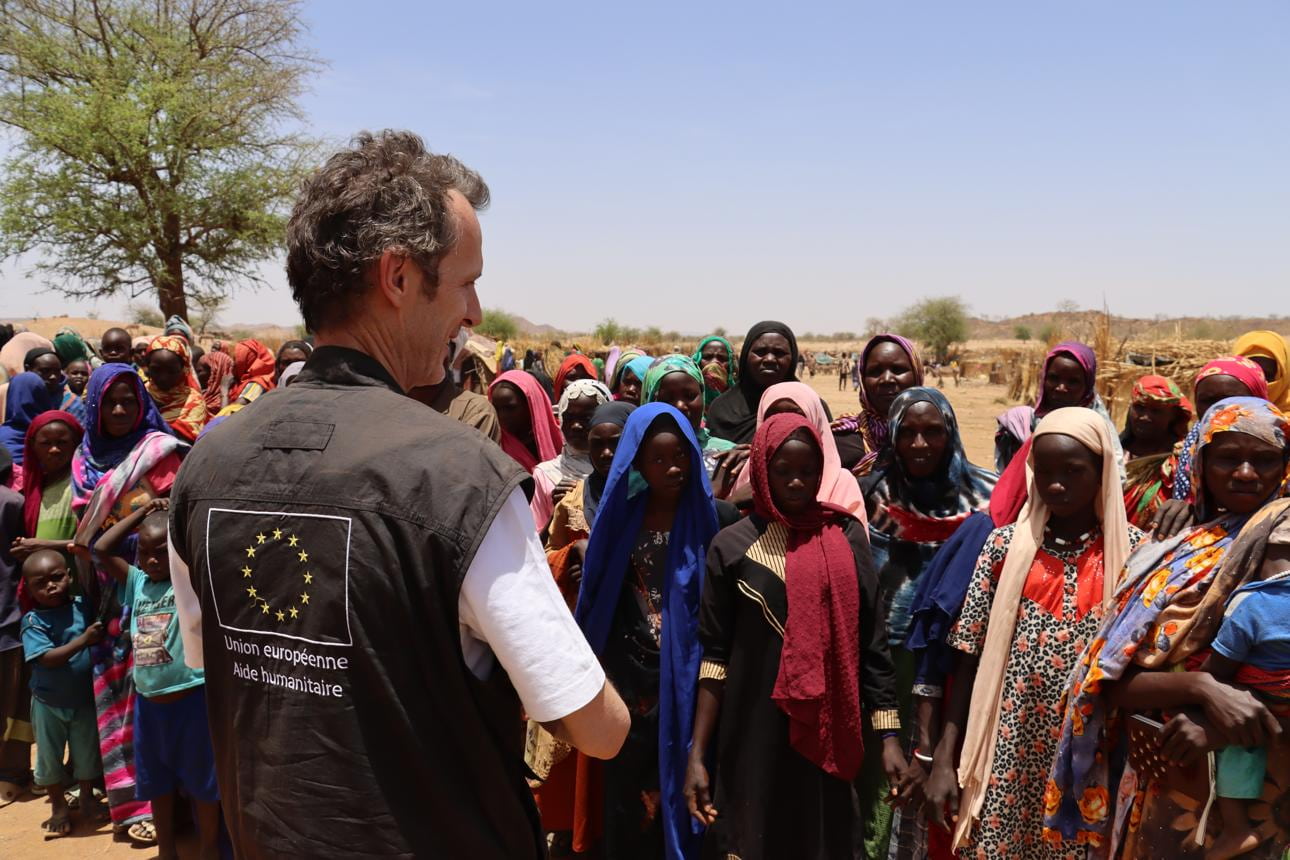
Both signatories used the publication to press the point. Lahbib said the law exists to protect civilians, aid workers and healthcare staff, and pointed to people sheltering in Ukrainian metro stations, families fleeing drones in Sudan and civilians caught in conflicts from Myanmar to the Democratic Republic of the Congo. Kallas stressed accountability, arguing that it cannot be selective without calling the rules-based order into question, and listed Russia’s war against Ukraine, Gaza, Sudan, Myanmar, the DRC, the Central African Republic and Yemen as contexts in which the EU stood up for the law in 2025.
The EU’s guidelines date from 2005 and were updated in 2009. They set out the operational tools the Union can use to encourage respect for international humanitarian law in its relations with third states and international actors, and invite the EU to report on what it does with them. According to the report, the EU continued in 2025 to back its commitments with Council conclusions, declarations, operational activities and funding, to encourage accession to relevant treaties, and to promote special protection for humanitarian personnel, health infrastructure and medical staff.
The harder question, which the report leaves largely to its readers, is whether those tools are changing behaviour on the ground. Humanitarian organisations have long argued that statements matter less than consistent consequences for violations, and consistency is where the Union’s credibility is most often tested. With the Commission also managing a steady stream of emergency operations, from flood aid in the Philippines to wildfire deployments inside Europe, the annual review of international humanitarian law is likely to be read not only as a record of what the EU said in 2025, but as a benchmark for how firmly it acts in 2026.