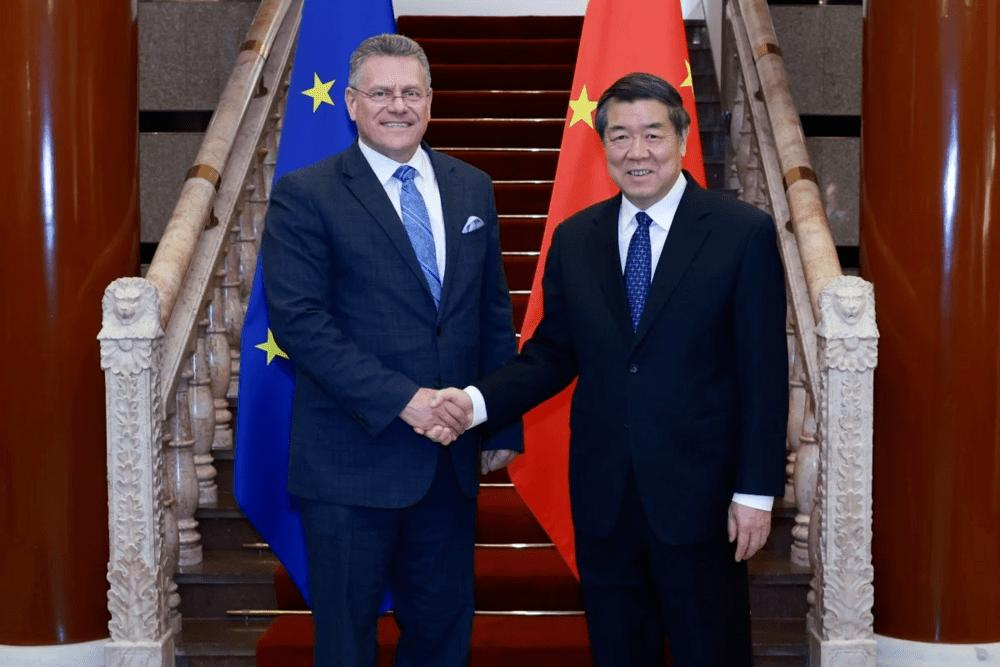
Manila: The EU Philippines free trade agreement reached a political milestone on 22 September 2026, when Trade Commissioner Maroš Šefčovič and Philippine Trade Secretary Maria Cristina Aldeguer-Roque announced a substantial agreement after a video call. Negotiations began in 2015, stalled after two rounds, and restarted in March 2024. Six rounds have taken place since, which makes the September announcement the clearest sign yet that both sides want a result.
Brussels describes the understanding as preliminary, and that caution matters. Commission President Ursula von der Leyen first signalled on social media that a deal had been agreed after speaking with President Ferdinand Marcos Jr., but EU officials then explained that more negotiation is needed. The text still requires legal review, approval by member states and consent from the European Parliament before it can apply.
The numbers explain the appeal. The EU Philippines free trade agreement would liberalise more than 94 percent of tariff lines, covering over 97 percent of bilateral goods trade. Goods trade reached 17.6 billion euros in 2025, services trade stood at 10.3 billion euros in 2024, and the Union holds an investment stock of 15.4 billion euros in the country, against 2.4 billion euros of Philippine investment in Europe. The Union ranked as the fourth-largest trading partner of Manila in 2025, with 8.3 percent of its goods trade.
Agriculture and industry both feature in the EU Philippines free trade agreement. European pigmeat producers would gain tariff preferences, and almost 200 geographical indications would receive protection. Commissioner Christophe Hansen called the outcome good news for European farmers. The negotiators also point to semiconductors in supply chains and to renewable energy as areas where lower barriers could attract investment.
Public procurement remains the open question in the EU Philippines free trade agreement. The Commission plans Buy European rules for public tenders, and those plans sit awkwardly beside a chapter that would open government contracts to a partner economy. Resolving that tension will test how far Brussels is willing to trade preference at home for access abroad.
Time pressure also shapes the talks. Philippine duty-free access under the GSP Plus scheme, which covers more than 6,000 products, is due to expire in 2027, according to Philippine press cited by Brussels Signal. A signing of the EU Philippines free trade agreement before that cliff would protect exporters, yet the same report says signing is not expected before 2027, so a gap in preferences cannot be ruled out.
The strategic frame is Southeast Asia. The Philippines would become the third member of the Association of Southeast Asian Nations to hold a bilateral deal with the Union, after Singapore and Vietnam. Indonesia concluded its negotiations in September 2025, and talks with Thailand and Malaysia continue, so each new text builds a patchwork that Brussels hopes will one day support a region-wide agreement.
What happens next depends on the procurement chapter and on the legal calendar. If negotiators close the gap this winter, the EU Philippines free trade agreement could reach signature in 2027 and give both sides a lasting trade anchor. If procurement talks drag on, the September announcement will look like a staging post rather than a conclusion.