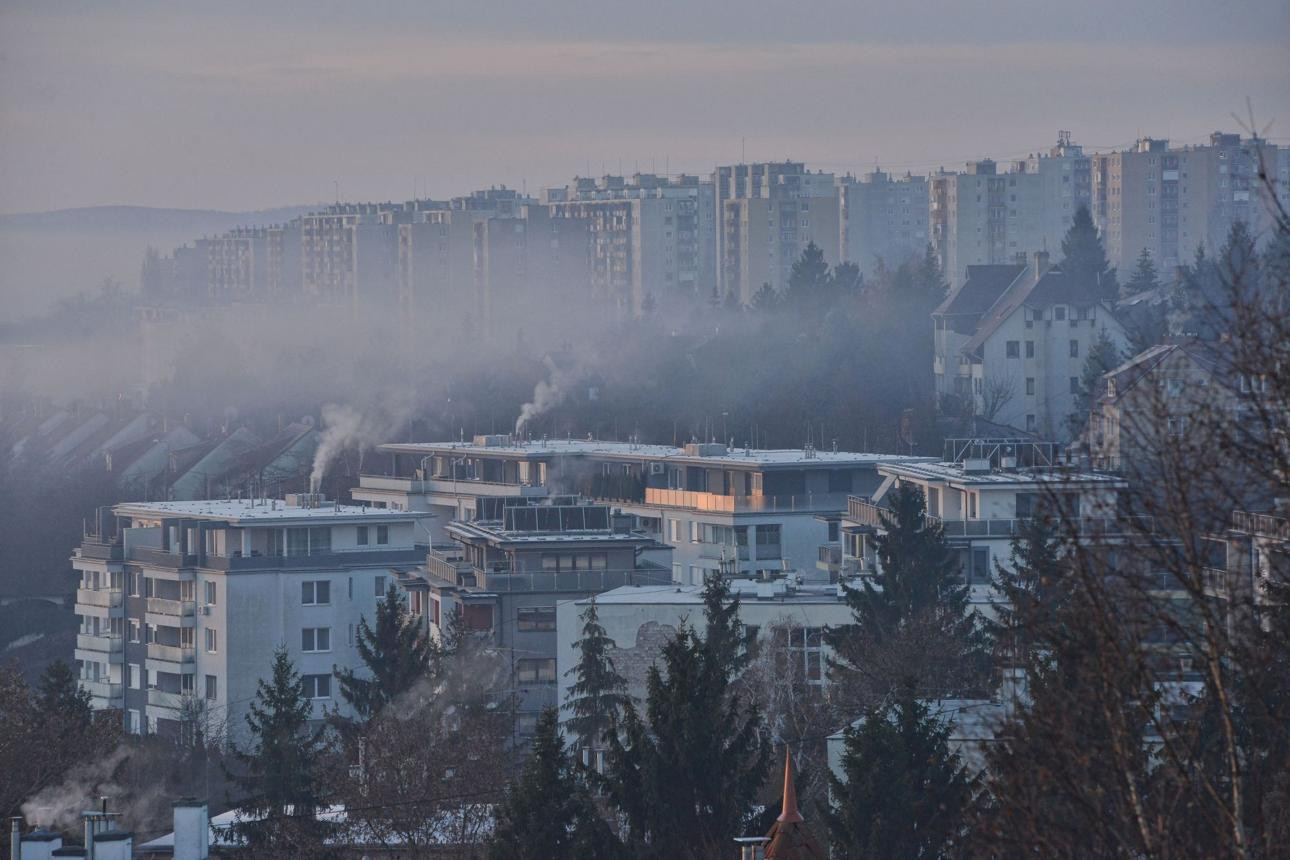
Miskolc: Hungary has failed to update its national air pollution control programme, the European Commission said on 19 November 2026 as it sent Budapest a reasoned opinion under the National Emission Reduction Commitments Directive. The case, INFR(2025)2086, gives the Hungarian government two months to act before the Commission may refer it to the Court of Justice.
The directive, Directive (EU) 2016/2284 and known as the NEC Directive, sets national limits on five major air pollutants. They are sulphur dioxide, nitrogen oxides, non-methane volatile organic compounds, ammonia and fine particulate matter. Each member state has reduction commitments for the period 2020 to 2029, with tighter targets that apply from 2030.
To reach those targets, every country must adopt a national air pollution control programme and update it at least every four years. An earlier update is required when emission inventories or projections show that a country is missing its commitments or risks doing so. Each air pollution control programme sets out the policies and measures that a government will use to cut emissions from transport, farming, industry and home heating.
The Commission sent Hungary a letter of formal notice in July 2025. More than a year later, Budapest has provided neither an updated air pollution control programme nor revised policies and measures. The Commission says timely updates are essential if Hungary is to meet its emission reduction commitments, and it has now moved the case to the second formal stage.
Air quality remains a pressing problem in parts of the country. Miskolc, the industrial centre of north-eastern Hungary, has long recorded high fine particulate concentrations in winter, driven largely by household wood and coal burning. The European Environment Agency links fine particulate matter to thousands of premature deaths in Hungary every year.
Hungary has faced EU action on air quality before. In 2021 the Court of Justice ruled that the country had breached limit values for particulate matter in the Sajó valley, which includes Miskolc. That case concerned the Ambient Air Quality Directive, while the new case concerns national emission ceilings, but both point to the same sources of pollution.
The timing adds pressure. The EU revised its Ambient Air Quality Directive in 2024, setting stricter limit values that apply from 2030 and moving them closer to World Health Organization guidelines. Member states will need a credible air pollution control programme to meet both sets of rules, and the European Environment Agency’s 2026 reporting review again flagged gaps in national projections.
Hungary now has two months to respond and to take the necessary measures. If it does not, the Commission may refer the case to the Court of Justice of the European Union. For residents of Miskolc and other polluted towns, an updated air pollution control programme would be the first step toward cleaner winters and fewer health warnings.