August 10, 2026
LATEST
Europe Courts Central Asia to Break Its Reliance on Russian TransitMercosur Deal Takes Effect in Limbo as Judges Weigh Its FateEurope’s Air Quality Improves but WHO Limits LoomTwelve New EU Medicines Win a Green Light from EMAFIFA Agent Rules Must Answer to Europe’s CourtsTachograph Rules Now Reach Vans Crossing Europe’s BordersNature Restoration Plans Come Due as a Hard Deadline NearsBrussels Opens a State Aid Probe Into Spain’s Renewables PayoutBrussels Extends Its Tariff Suspension on US Goods IndefinitelyFarmers Win Stronger Contract Rights Across the EU Supply ChainEurope Finally Locks In Its 348-Satellite Answer to StarlinkPlatform Work Rules Face a National Scramble Before DecemberDuty-Free Parcels Reach the End of the Line for EU ShoppersAfter Nine Years, Europe and Australia Seal a Trade PactBeijing Answers Europe’s Russia Sanctions in KindOne Year On, the EU-Japan Alliance Faces Its First TestEurope’s Chip Ambitions Still Run Through Taiwan’s FabsWhy South Korea Bet Its Research Future on Europe’s ProgrammeEurope and Japan Deepen Their Economic Alliance as Rivals CircleFive Joint Defence Projects Launch Europe’s Military ShieldEurope Courts Central Asia to Break Its Reliance on Russian TransitMercosur Deal Takes Effect in Limbo as Judges Weigh Its FateEurope’s Air Quality Improves but WHO Limits LoomTwelve New EU Medicines Win a Green Light from EMAFIFA Agent Rules Must Answer to Europe’s CourtsTachograph Rules Now Reach Vans Crossing Europe’s BordersNature Restoration Plans Come Due as a Hard Deadline NearsBrussels Opens a State Aid Probe Into Spain’s Renewables PayoutBrussels Extends Its Tariff Suspension on US Goods IndefinitelyFarmers Win Stronger Contract Rights Across the EU Supply ChainEurope Finally Locks In Its 348-Satellite Answer to StarlinkPlatform Work Rules Face a National Scramble Before DecemberDuty-Free Parcels Reach the End of the Line for EU ShoppersAfter Nine Years, Europe and Australia Seal a Trade PactBeijing Answers Europe’s Russia Sanctions in KindOne Year On, the EU-Japan Alliance Faces Its First TestEurope’s Chip Ambitions Still Run Through Taiwan’s FabsWhy South Korea Bet Its Research Future on Europe’s ProgrammeEurope and Japan Deepen Their Economic Alliance as Rivals CircleFive Joint Defence Projects Launch Europe’s Military Shield
August 10, 2026
LATEST
Europe Courts Central Asia to Break Its Reliance on Russian TransitMercosur Deal Takes Effect in Limbo as Judges Weigh Its FateEurope’s Air Quality Improves but WHO Limits LoomTwelve New EU Medicines Win a Green Light from EMAFIFA Agent Rules Must Answer to Europe’s CourtsTachograph Rules Now Reach Vans Crossing Europe’s BordersNature Restoration Plans Come Due as a Hard Deadline NearsBrussels Opens a State Aid Probe Into Spain’s Renewables PayoutBrussels Extends Its Tariff Suspension on US Goods IndefinitelyFarmers Win Stronger Contract Rights Across the EU Supply ChainEurope Finally Locks In Its 348-Satellite Answer to StarlinkPlatform Work Rules Face a National Scramble Before DecemberDuty-Free Parcels Reach the End of the Line for EU ShoppersAfter Nine Years, Europe and Australia Seal a Trade PactBeijing Answers Europe’s Russia Sanctions in KindOne Year On, the EU-Japan Alliance Faces Its First TestEurope’s Chip Ambitions Still Run Through Taiwan’s FabsWhy South Korea Bet Its Research Future on Europe’s ProgrammeEurope and Japan Deepen Their Economic Alliance as Rivals CircleFive Joint Defence Projects Launch Europe’s Military ShieldEurope Courts Central Asia to Break Its Reliance on Russian TransitMercosur Deal Takes Effect in Limbo as Judges Weigh Its FateEurope’s Air Quality Improves but WHO Limits LoomTwelve New EU Medicines Win a Green Light from EMAFIFA Agent Rules Must Answer to Europe’s CourtsTachograph Rules Now Reach Vans Crossing Europe’s BordersNature Restoration Plans Come Due as a Hard Deadline NearsBrussels Opens a State Aid Probe Into Spain’s Renewables PayoutBrussels Extends Its Tariff Suspension on US Goods IndefinitelyFarmers Win Stronger Contract Rights Across the EU Supply ChainEurope Finally Locks In Its 348-Satellite Answer to StarlinkPlatform Work Rules Face a National Scramble Before DecemberDuty-Free Parcels Reach the End of the Line for EU ShoppersAfter Nine Years, Europe and Australia Seal a Trade PactBeijing Answers Europe’s Russia Sanctions in KindOne Year On, the EU-Japan Alliance Faces Its First TestEurope’s Chip Ambitions Still Run Through Taiwan’s FabsWhy South Korea Bet Its Research Future on Europe’s ProgrammeEurope and Japan Deepen Their Economic Alliance as Rivals CircleFive Joint Defence Projects Launch Europe’s Military Shield

Scientists Chase New 7 Million Euro Grants Under Choose Europe

Heidelberg: In the laboratories of one of Germany’s oldest universities, the talk this month is of a new kind of grant designed to keep Europe’s brightest minds from drifting abroad and to lure others in. On 2 June the European Research Council opened the first competition for its ERC Plus Grants, a pilot scheme carrying a dedicated budget of 210 million euros and a deliberately ambitious purpose, to fund research bold enough to fall outside the council’s existing programmes.

The terms are generous by European standards. Each grant offers up to 7 million euros over as long as seven years, and the council expects to award roughly thirty in this opening round, with applications closing on 2 September. The scale is meant to free researchers from the grind of chasing successive smaller pots, giving them the runway to pursue transformative ideas whose payoff is uncertain and distant. It is, in effect, a bet on the kind of high-risk inquiry that more cautious funders tend to avoid.

The political framing is unmistakable. ERC Plus sits under the Choose Europe initiative, a banner that captures the continent’s anxiety about scientific talent and where it settles. With research funding contested and politicised in parts of the world, Brussels sees an opening to position Europe as a stable, well-resourced home for ambitious science, open to outstanding researchers whether they hail from a European lab or anywhere else. The grants are pitched explicitly at people with bold ideas and a vision that goes beyond what current schemes reward, language crafted to appeal to those weighing a move.

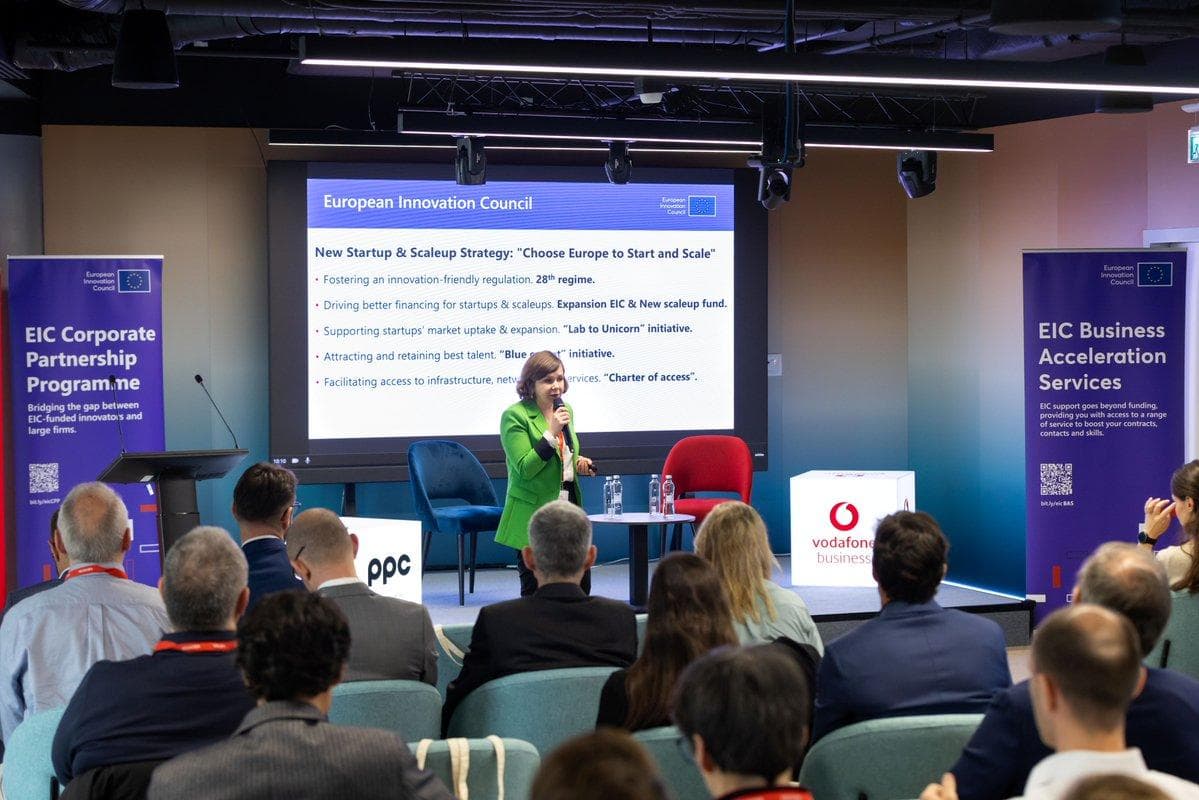
ERC Plus does not stand alone. The Commission has adopted the 2026 work programme of the European Innovation Council, unlocking more than 1.4 billion euros for strategic technologies and for scaling up the companies that turn research into products. Together the two instruments sketch a pipeline, from the frontier curiosity that the ERC prizes to the commercial deployment that the EIC chases, an attempt to ensure that European discoveries do not migrate elsewhere to be turned into businesses and jobs.

The optimism is tempered by hard arithmetic. Thirty grants, however lavish, will satisfy only a sliver of the researchers who covet them, and the council’s flagship calls are routinely oversubscribed by formidable margins. Critics also question whether headline schemes can offset deeper structural problems, from fragmented national funding to the lighter private investment in research that has long trailed the United States. A handsome grant for a fortunate few, they argue, is no substitute for the broad base of stable funding that retains talent across a whole career.

Supporters counter that flagships matter precisely because they are visible. A 7 million euro grant under a confident European banner sends a message that quieter, steadier funding cannot, telling a sought-after scientist that the continent is serious about backing the most daring work. Whether that message converts into a wave of applications, and into discoveries that justify the expense, will become clearer when the competition closes in September. For now, in research towns across the bloc, the prospect has at least put a new option on the table.