September 16, 2026
LATEST
Software Makers Face Europe’s Product Liability Deadline in DecemberCage-Free Promises Land Before the Transport File Is FinishedTwo New Calls Will Test How Flexible Horizon Europe Really IsEurope’s Innovation Act Counts 10 Billion It Has Not Found YetProcurement Is the Chapter That Could Stall the Thailand DealMobility Week Returns With a Test of Intergenerational FairnessMinisters Debate the Chips Act Next Week With No Money AttachedTaiwan Wants Tax Treaties That Brussels Has No Power to SignNorth Korea Now Earns From Europe Without Shipping AnythingPalm Oil Is the Last Hard Question Before the Indonesia SigningCan One Year Deliver Both a Trade Deal and a Sea CodeVietnam Reached Europe’s Top Partnership Tier With Little DetailLeaked Draft Puts Europe’s Social Media Age Limit at FifteenA Ceuta Debate Whose Title Has Already Reached a VerdictFP10 Clears Committee and the Budget Gap Stays Wide OpenEurope’s New Merger Guidelines Face a Council Test Next WeekEurope’s Culture Capitals Face Their Biggest Rewrite Since 1985Only Italy Has a Bill as Platform Work Deadline NearsCustoms Fraud Charges Land in Germany Over Wrecked CarsCar Tariffs Show Why the India Deal Still Needs Two VotesSoftware Makers Face Europe’s Product Liability Deadline in DecemberCage-Free Promises Land Before the Transport File Is FinishedTwo New Calls Will Test How Flexible Horizon Europe Really IsEurope’s Innovation Act Counts 10 Billion It Has Not Found YetProcurement Is the Chapter That Could Stall the Thailand DealMobility Week Returns With a Test of Intergenerational FairnessMinisters Debate the Chips Act Next Week With No Money AttachedTaiwan Wants Tax Treaties That Brussels Has No Power to SignNorth Korea Now Earns From Europe Without Shipping AnythingPalm Oil Is the Last Hard Question Before the Indonesia SigningCan One Year Deliver Both a Trade Deal and a Sea CodeVietnam Reached Europe’s Top Partnership Tier With Little DetailLeaked Draft Puts Europe’s Social Media Age Limit at FifteenA Ceuta Debate Whose Title Has Already Reached a VerdictFP10 Clears Committee and the Budget Gap Stays Wide OpenEurope’s New Merger Guidelines Face a Council Test Next WeekEurope’s Culture Capitals Face Their Biggest Rewrite Since 1985Only Italy Has a Bill as Platform Work Deadline NearsCustoms Fraud Charges Land in Germany Over Wrecked CarsCar Tariffs Show Why the India Deal Still Needs Two Votes
September 16, 2026
LATEST
Software Makers Face Europe’s Product Liability Deadline in DecemberCage-Free Promises Land Before the Transport File Is FinishedTwo New Calls Will Test How Flexible Horizon Europe Really IsEurope’s Innovation Act Counts 10 Billion It Has Not Found YetProcurement Is the Chapter That Could Stall the Thailand DealMobility Week Returns With a Test of Intergenerational FairnessMinisters Debate the Chips Act Next Week With No Money AttachedTaiwan Wants Tax Treaties That Brussels Has No Power to SignNorth Korea Now Earns From Europe Without Shipping AnythingPalm Oil Is the Last Hard Question Before the Indonesia SigningCan One Year Deliver Both a Trade Deal and a Sea CodeVietnam Reached Europe’s Top Partnership Tier With Little DetailLeaked Draft Puts Europe’s Social Media Age Limit at FifteenA Ceuta Debate Whose Title Has Already Reached a VerdictFP10 Clears Committee and the Budget Gap Stays Wide OpenEurope’s New Merger Guidelines Face a Council Test Next WeekEurope’s Culture Capitals Face Their Biggest Rewrite Since 1985Only Italy Has a Bill as Platform Work Deadline NearsCustoms Fraud Charges Land in Germany Over Wrecked CarsCar Tariffs Show Why the India Deal Still Needs Two VotesSoftware Makers Face Europe’s Product Liability Deadline in DecemberCage-Free Promises Land Before the Transport File Is FinishedTwo New Calls Will Test How Flexible Horizon Europe Really IsEurope’s Innovation Act Counts 10 Billion It Has Not Found YetProcurement Is the Chapter That Could Stall the Thailand DealMobility Week Returns With a Test of Intergenerational FairnessMinisters Debate the Chips Act Next Week With No Money AttachedTaiwan Wants Tax Treaties That Brussels Has No Power to SignNorth Korea Now Earns From Europe Without Shipping AnythingPalm Oil Is the Last Hard Question Before the Indonesia SigningCan One Year Deliver Both a Trade Deal and a Sea CodeVietnam Reached Europe’s Top Partnership Tier With Little DetailLeaked Draft Puts Europe’s Social Media Age Limit at FifteenA Ceuta Debate Whose Title Has Already Reached a VerdictFP10 Clears Committee and the Budget Gap Stays Wide OpenEurope’s New Merger Guidelines Face a Council Test Next WeekEurope’s Culture Capitals Face Their Biggest Rewrite Since 1985Only Italy Has a Bill as Platform Work Deadline NearsCustoms Fraud Charges Land in Germany Over Wrecked CarsCar Tariffs Show Why the India Deal Still Needs Two Votes

A Flower Tattoo on a Calf Now Tests EU Sex Discrimination Law

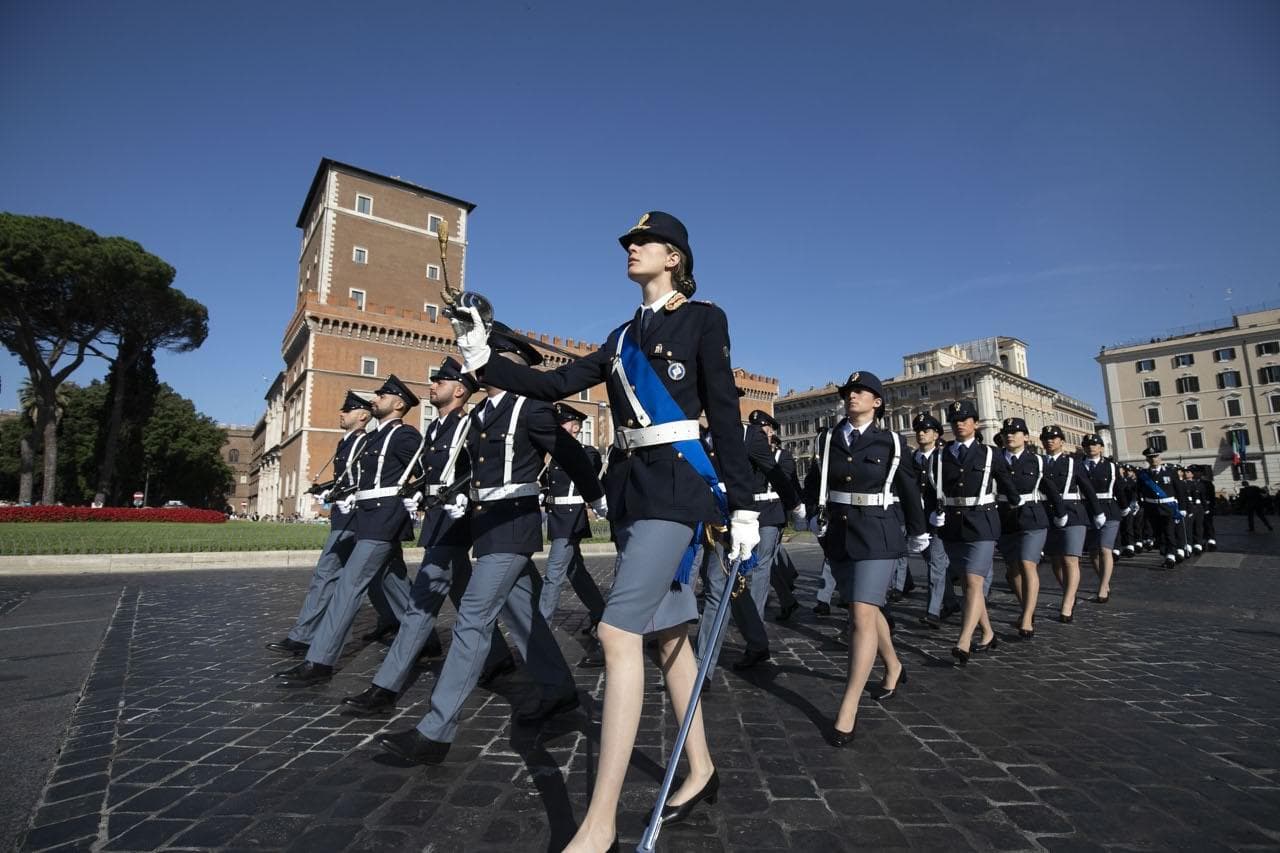
A small flower tattooed on a woman’s left calf has produced one of the sharper equality questions to reach Luxembourg this year. The mark sits below the knee. On duty, in trousers, nobody sees it. At a ceremony, in the skirt and heels that the Italian police reserve for female officers, it shows.

That difference cost the candidate her place. Italian recruitment rules bar visible tattoos, and the selection board applied the ban by reference to the ceremonial uniform. Because the women’s ceremonial dress is a skirt, her tattoo counted as visible. Had she been a man, wearing trousers at the same ceremony, it would not have counted at all.

Advocate General Tamara Capeta delivered her opinion in the case, registered as C-320/25, on 3 September. She concluded that combining the two rules amounts to direct discrimination on grounds of sex, which EU equal treatment law prohibits outright and which no proportionality test can rescue.

Her reasoning turns on how the rules interact rather than on either rule alone. A ban on visible tattoos, applied evenly, raises no obvious problem. A gender-specific ceremonial uniform might survive scrutiny on its own. Stack them, and the same tattoo on the same part of the body disqualifies a woman while leaving a man untouched. The penalty attaches to sex, not to the tattoo.

Capeta also weighed what police officers actually do. Ceremonial duties occupy a marginal share of the job. Female officers already wear trousers for operational work, which is nearly all of it. Excluding a candidate from an entire career because of how she would look during a parade struck the Advocate General as disproportionate even before the discrimination analysis begins, and she found none of the justifications offered by the Italian government persuasive.

The opinion does not bind the Court. Judges follow their Advocates General in a clear majority of cases, though the Grand Chamber has parted ways with them on sensitive national questions before, and uniform policy in a police force touches institutional traditions that governments defend energetically.

The consequences reach well beyond one recruitment competition. Police, armed forces, customs services and civil protection agencies across the Union maintain appearance codes written decades ago, many of them still built around separate male and female dress. Few of those codes have been examined for how they combine with other eligibility rules. A judgment endorsing Capeta’s approach would force human resources departments to audit the interaction, not just the individual clause.

Lawyers who work on equal treatment see a broader principle taking shape. Discrimination analysis has traditionally examined provisions one at a time, asking whether each disadvantages a protected group. Capeta invites courts to look at the combined effect of facially neutral rules, which is how most modern indirect exclusion actually operates. Commentators at EU Law Live flagged that point immediately.

Italy can respond in several ways. It could drop the tattoo ban, permit trousers at ceremonies for all officers, or assess visibility against the operational uniform rather than the ceremonial one. Each of those fixes is administratively trivial. That is precisely what makes the government’s defence awkward: when a discriminatory outcome can be removed by allowing women the same trousers men already wear, the burden of explaining why it persists grows heavy.

The Court will rule in the coming months. Whatever it decides, recruitment boards across Europe now have a reason to read their own rulebooks with fresh attention, checking not what each rule says but what any two of them do together.