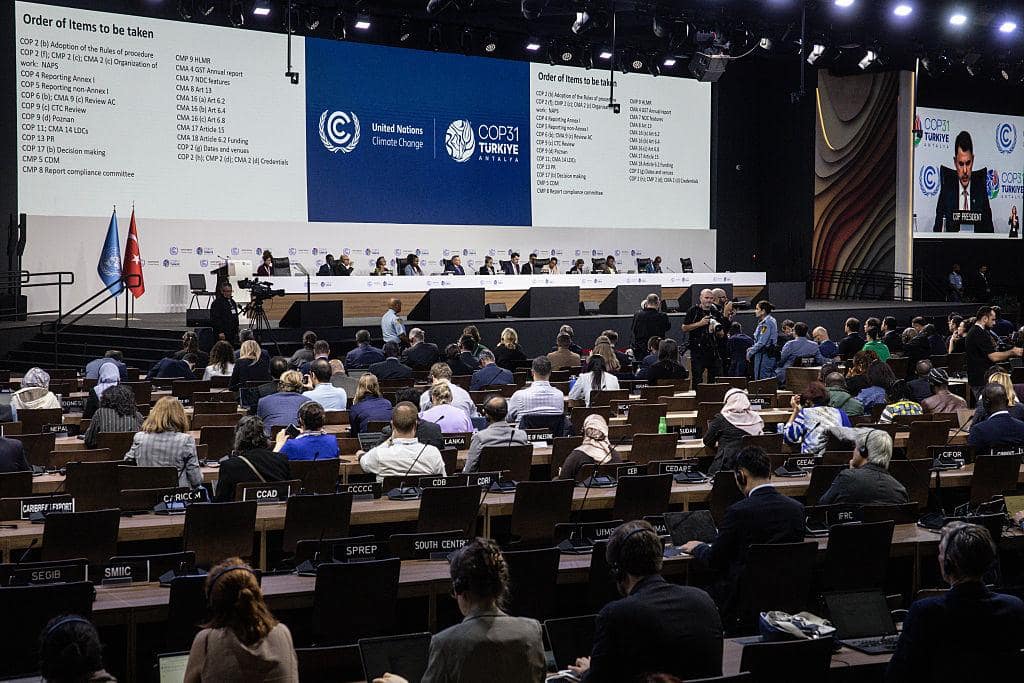
The European Parliament on Thursday 26 November 2026 adopted a resolution declaring the Turkey-Libya maritime memorandum incompatible with the law of the sea and asking Ankara and Libyan authorities to scrap it. MEPs approved the text by a show of hands in Strasbourg, closing a week in which every EU institution lined up behind Greece and Cyprus on the same legal reading.
The vote on the Turkey-Libya maritime memorandum gives political weight to a position the Commission and Council set out two days earlier. Opening Tuesday’s plenary debate, Mediterranean Commissioner Dubravka Šuica told MEPs that the Turkey-Libya maritime memorandum is null and void and cannot produce legal effects for third states. Speaking for the Irish Council Presidency, minister Charlie McConalogue said the deal violates the sovereign rights of third states and is inconsistent with UNCLOS, the UN Convention on the Law of the Sea.
Ankara and the Tripoli-based Government of National Accord signed the accord in November 2019. It draws a maritime corridor from south-west Turkey to north-east Libya and ignores the entitlements of Greek islands, including Crete and the Dodecanese. For years the eastern camp of Khalifa Haftar opposed it, which limited its practical reach. That changed on 20 October 2026, when the eastern-based House of Representatives ratified the text and handed it the backing of both rival Libyan centres of power for the first time.
Ratification of the Turkey-Libya maritime memorandum triggered a swift response in Brussels. António Costa and Ursula von der Leyen issued a joint statement of regret that same evening, and the High Representative declared the next day, on behalf of the EU, that the memorandum has no legal effect for third states. The timing of this week’s debate added a sharper edge, because Haftar made his first visit to Ankara at the invitation of President Recep Tayyip Erdoğan on the same Tuesday.
Manfred Weber, who leads the EPP group, and Greek MEP Manolis Kefalogiannis, chair of the EU-Turkey Joint Parliamentary Committee, pushed for a full resolution on the Turkey-Libya maritime memorandum rather than a debate alone. The ECR group backed that request. The adopted text recognises the right of Greek islands to maritime zones under Article 121 of UNCLOS and voices full solidarity with Athens and Nicosia.
Its demands go further than diplomatic language. MEPs call on Turkey and Libya to cancel the Turkey-Libya maritime memorandum and related hydrocarbon agreements, and to refrain from licensing surveys or drilling in waters where member states hold sovereign rights. They invite the Council to consider targeted measures against individuals or entities that implement the deal, and they ask the Commission to review EU financial cooperation with both countries so that no EU money supports it.
The resolution also criticises Turkey’s Blue Homeland doctrine, unilateral NAVTEX notices, planned marine parks beyond territorial waters and the casus belli threat over Greek territorial waters in the Aegean. It urges protection of undersea cables and of the Great Sea Interconnector power link between Greece and Cyprus.
A parliamentary resolution does not bind the Union, yet it narrows the room for ambiguity in EU policy towards Ankara and Tripoli. With Commission, Council and Parliament now aligned, any future licence issued under the Turkey-Libya maritime memorandum will collide with a single EU legal position, and the question of sanctions and funding reviews moves to member states’ foreign ministers.