August 7, 2026
LATEST
New Zealand Trade With Europe Hits a Record in Its First YearEurope Locks Chinese Medical Devices Out of Its Public TendersHow Far Can Europe and Japan Take Their New Security Pact NowSeoul’s Gamble on Europe’s Research Money Is Starting to Pay OffEurope Freezes Its Retaliatory Tariffs on the US IndefinitelyAir Passenger Rights Get Their First Big Rewrite in 20 YearsFive Joint Defence Projects Win Brussels Backing and Shared CashTobacco Tax Overhaul Stalls as Governments Block UnanimityCritical Medicines Act Heads for Final Adoption This AutumnMoldova Accession Reaches Its Foreign-Policy ChapterMercosur Tariffs Fall as Europe’s Farmers Watch the GaugesWhy Europe’s Digital Fairness Act Worries Online RetailersErasmus+ Faces a Budget Fight Before Its 2028 RelaunchMedia Freedom Rules Turn One as Enforcement LagsPlatform Work Rules Push Member States Toward a December ReckoningSingle Ticket Plan Would Let One Booking Cover Europe by RailHungary Races an August Deadline to Unlock Its Recovery FundsCapitals Race a September Deadline to Restore NatureEuro-Zone Inflation Nudges Back Up as Energy Bills ClimbRed Bull Case Tests a New Frontier in EU AntitrustNew Zealand Trade With Europe Hits a Record in Its First YearEurope Locks Chinese Medical Devices Out of Its Public TendersHow Far Can Europe and Japan Take Their New Security Pact NowSeoul’s Gamble on Europe’s Research Money Is Starting to Pay OffEurope Freezes Its Retaliatory Tariffs on the US IndefinitelyAir Passenger Rights Get Their First Big Rewrite in 20 YearsFive Joint Defence Projects Win Brussels Backing and Shared CashTobacco Tax Overhaul Stalls as Governments Block UnanimityCritical Medicines Act Heads for Final Adoption This AutumnMoldova Accession Reaches Its Foreign-Policy ChapterMercosur Tariffs Fall as Europe’s Farmers Watch the GaugesWhy Europe’s Digital Fairness Act Worries Online RetailersErasmus+ Faces a Budget Fight Before Its 2028 RelaunchMedia Freedom Rules Turn One as Enforcement LagsPlatform Work Rules Push Member States Toward a December ReckoningSingle Ticket Plan Would Let One Booking Cover Europe by RailHungary Races an August Deadline to Unlock Its Recovery FundsCapitals Race a September Deadline to Restore NatureEuro-Zone Inflation Nudges Back Up as Energy Bills ClimbRed Bull Case Tests a New Frontier in EU Antitrust
August 7, 2026
LATEST
New Zealand Trade With Europe Hits a Record in Its First YearEurope Locks Chinese Medical Devices Out of Its Public TendersHow Far Can Europe and Japan Take Their New Security Pact NowSeoul’s Gamble on Europe’s Research Money Is Starting to Pay OffEurope Freezes Its Retaliatory Tariffs on the US IndefinitelyAir Passenger Rights Get Their First Big Rewrite in 20 YearsFive Joint Defence Projects Win Brussels Backing and Shared CashTobacco Tax Overhaul Stalls as Governments Block UnanimityCritical Medicines Act Heads for Final Adoption This AutumnMoldova Accession Reaches Its Foreign-Policy ChapterMercosur Tariffs Fall as Europe’s Farmers Watch the GaugesWhy Europe’s Digital Fairness Act Worries Online RetailersErasmus+ Faces a Budget Fight Before Its 2028 RelaunchMedia Freedom Rules Turn One as Enforcement LagsPlatform Work Rules Push Member States Toward a December ReckoningSingle Ticket Plan Would Let One Booking Cover Europe by RailHungary Races an August Deadline to Unlock Its Recovery FundsCapitals Race a September Deadline to Restore NatureEuro-Zone Inflation Nudges Back Up as Energy Bills ClimbRed Bull Case Tests a New Frontier in EU AntitrustNew Zealand Trade With Europe Hits a Record in Its First YearEurope Locks Chinese Medical Devices Out of Its Public TendersHow Far Can Europe and Japan Take Their New Security Pact NowSeoul’s Gamble on Europe’s Research Money Is Starting to Pay OffEurope Freezes Its Retaliatory Tariffs on the US IndefinitelyAir Passenger Rights Get Their First Big Rewrite in 20 YearsFive Joint Defence Projects Win Brussels Backing and Shared CashTobacco Tax Overhaul Stalls as Governments Block UnanimityCritical Medicines Act Heads for Final Adoption This AutumnMoldova Accession Reaches Its Foreign-Policy ChapterMercosur Tariffs Fall as Europe’s Farmers Watch the GaugesWhy Europe’s Digital Fairness Act Worries Online RetailersErasmus+ Faces a Budget Fight Before Its 2028 RelaunchMedia Freedom Rules Turn One as Enforcement LagsPlatform Work Rules Push Member States Toward a December ReckoningSingle Ticket Plan Would Let One Booking Cover Europe by RailHungary Races an August Deadline to Unlock Its Recovery FundsCapitals Race a September Deadline to Restore NatureEuro-Zone Inflation Nudges Back Up as Energy Bills ClimbRed Bull Case Tests a New Frontier in EU Antitrust

How Far Can Europe and Japan Take Their New Security Pact Now

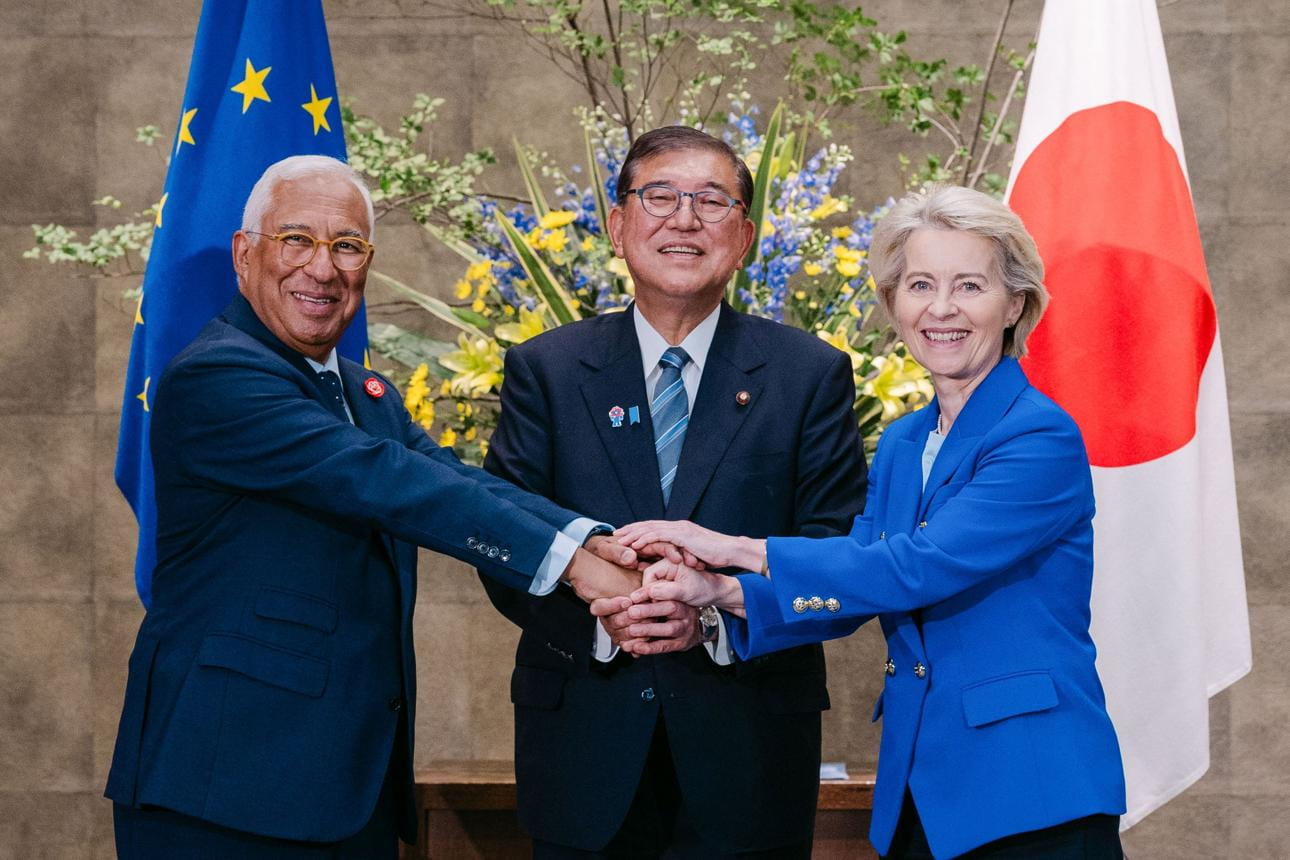
Tokyo: When the European Union and Japan signed their Security and Defence Partnership in November 2024, it was the first agreement of its kind between Brussels and any Indo-Pacific nation. Nearly two years on, the question has shifted from whether the two sides would cooperate to how far their defence pact can realistically stretch, given the distance between them and the crowded agendas of both.

The partnership was never meant to be a mutual-defence treaty on the NATO model. Instead it created a framework for regular security dialogue, joint naval exercises open to other partners, and cooperation across cyber defence, space, maritime security and the defence industry. The two also agreed to explore intelligence sharing and to coordinate on nuclear disarmament, an unusually broad menu for partners separated by the width of the Eurasian landmass.

The logic driving them together is straightforward. Japan watches China’s growing assertiveness, North Korea’s missile programme and Russia’s deepening ties with Pyongyang, and it has concluded that European engagement adds weight to its position. Europe, for its part, has decided that security in the Indo-Pacific and security in its own neighbourhood cannot be neatly separated, particularly after Russia’s war in Ukraine drew Asian powers into the calculations of both camps. The two governments set out the framework in a joint partnership document.

Turning that shared analysis into hardware and habit is the harder part. European navies operate thousands of miles from home when they sail in the Pacific, and their presence, however symbolically potent, remains episodic. Japan’s constitution and political culture still constrain how it deploys force abroad. Defence-industrial cooperation, potentially the most consequential strand, runs into export rules, differing standards and the simple fact that both sides also court the United States as their indispensable partner.

Still, momentum has built. European warships have exercised with Japan’s Maritime Self-Defense Force, defence officials meet on a regular calendar, and both governments talk openly about a shared stake in freedom of navigation and the security of the sea lanes that carry their trade. For Japan the partnership diversifies its security relationships beyond Washington. For Europe it converts lofty Indo-Pacific strategy documents into something a sailor can point to.

The constraints are equally real. Europe’s defence budgets are stretched by rearmament closer to home, and any government must justify sending scarce assets to the far side of the world. A change of leadership in a major capital could cool the enthusiasm quickly. Critics ask whether occasional exercises and warm communiques amount to strategy or merely to signalling.

The honest answer is that the partnership is still being built, and its ceiling is not yet visible. It has already achieved something that looked improbable a decade ago: a formal defence relationship between Europe and a leading Asian democracy. Whether it becomes a genuine pillar of Indo-Pacific security or settles into a habit of friendly visits will depend on choices both sides have yet to make.