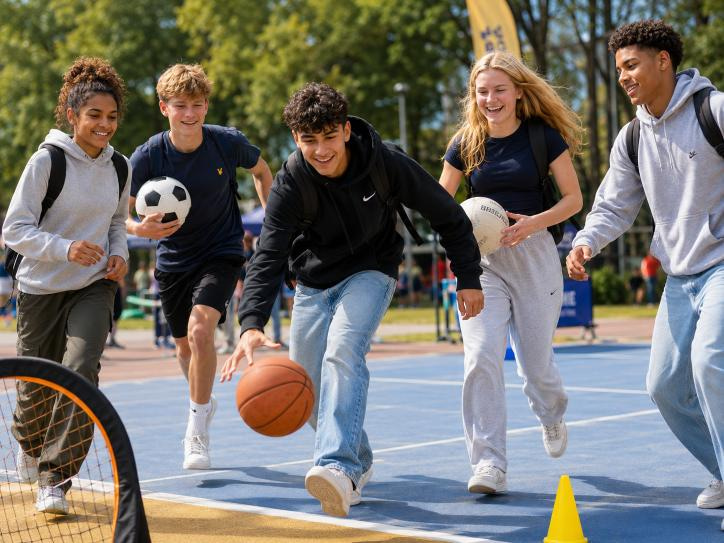
Thessaloniki: Physical activity among young people is much higher than among the wider population in the EU, according to Eurostat data for 2025 published on 7 October 2026. Some 73.1% of 16- to 29-year-olds exercised at least once a week outside work, compared with 61.6% of all residents aged 16 and over.
The biggest difference appears in frequent exercise. Among young people, 18.3% were active four to six times a week, against 12.8% of the total population. Daily activity was almost identical, at 20.9% for the young and 20.2% for everyone. At the other extreme, 16.3% of young people never exercised outside work, compared with 26.0% of the population overall.
A gender gap persists within the age group. Young men were more likely to exercise four to six times a week, at 20.6% against 16.0% for young women. Young women were also more likely to report no activity at all outside work, at 17.8% compared with 14.9% for young men. These figures show that physical activity among young people is not evenly spread between the sexes.
National differences are wide. Malta had the highest share of young people with no exercise outside work, at 31.0%, ahead of Portugal at 28.5% and Bulgaria at 28.4%. Greece, Denmark, Finland and the Netherlands each reported rates below 3%, and Greece recorded 0.0% in 2025, the lowest in the EU. The EU average of inactive young people stood at 16.3%, or about one in six.
Among the largest economies, about 23% of young people in France reported no exercise, as did 22% in Italy, 15% in Spain and 14% in Germany. Education also shapes physical activity among young people. Across the EU, young people with less schooling were almost twice as likely as graduates to skip exercise altogether, while in Greece the level of education made little difference.
Health ministries can read the data on physical activity among young people in two ways. Exercise is strongest early in life, which supports investment in school sport and youth clubs before habits settle. The gaps by gender, education and country show where programmes could focus, from Malta and Portugal to young women and early school leavers.
The numbers also frame the longer-term picture. Adults in the EU are far more likely to be inactive than the under-30s, and the 26.0% inactivity rate for the whole population is nearly ten points above the youth rate. Keeping physical activity among young people high as they age will decide whether the next generation of adults looks healthier than the current one.