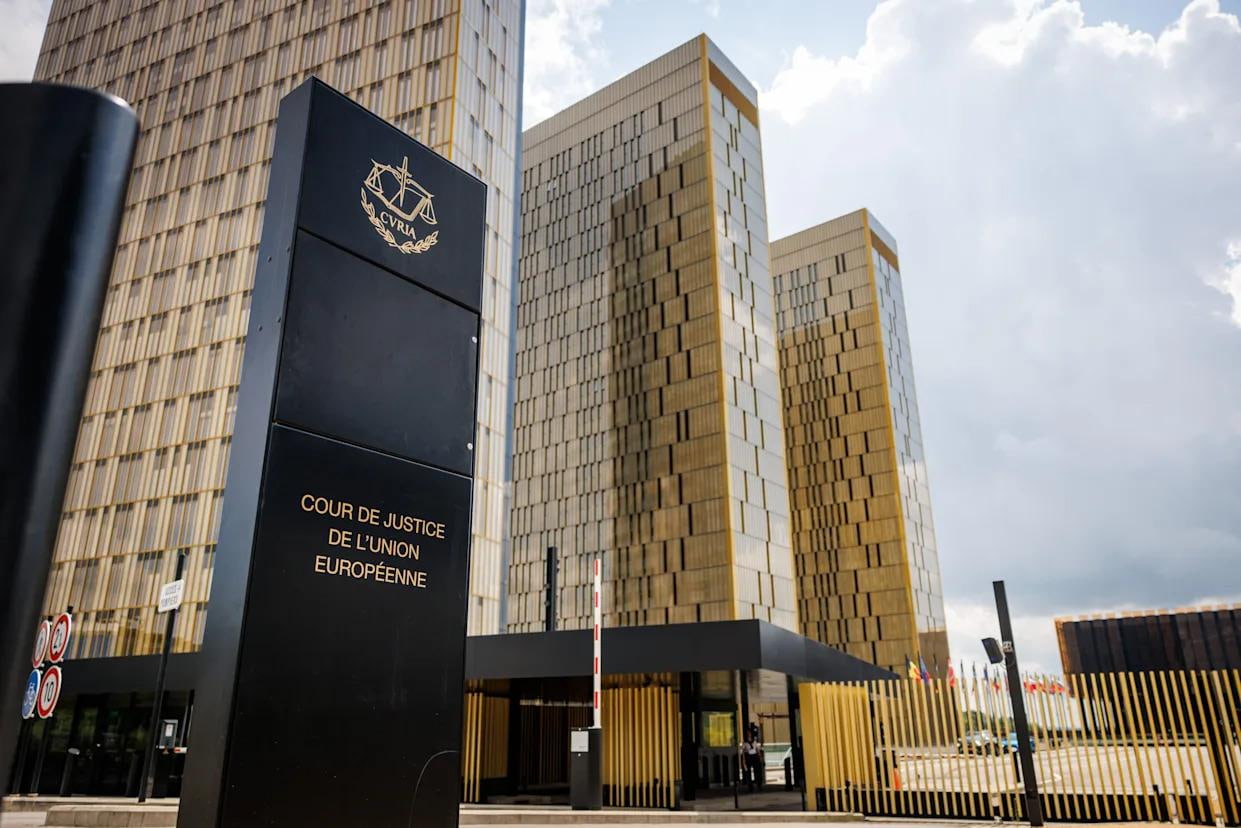
Bratislava: An employer who bans visible tattoos and separately requires men and women to wear different uniforms may think it has issued two unremarkable rules. An Advocate General at the Court of Justice told the judges this month that the combination breaches equal treatment, and the reasoning deserves attention well beyond the workplace that produced it.
Tamara Capeta’s opinion takes the two requirements together rather than separately. Read alone, a tattoo policy looks neutral, since it applies to everyone. Read alone, a gendered dress code looks like tradition. Read together, the Advocate General argued, they operate as a single instrument that disadvantages workers on grounds of sex, because the gendered uniform fixes what each employee must wear and the tattoo rule then determines which parts of the body the employer polices. Women and men end up subject to materially different levels of scrutiny while the rulebook says nothing about sex at all.
Opinions do not bind the Court, and roughly a quarter of them fail to survive the judgment. This one matters even if the judges depart from it, because it names a method. Discrimination analysis in EU law has traditionally isolated each rule and asked whether that rule, on its face or in its effects, disadvantages a protected group. Capeta invites the Court to examine how rules interact. Employers rarely write a single discriminatory provision. They write several defensible ones that combine badly.
Employment lawyers across the internal market are already modelling the consequences. Airlines, hotel chains, retail groups and security firms maintain grooming standards that distinguish between men and women on hair length, jewellery, cosmetics and footwear, and many of the same employers restrict visible body art. If the Court adopts the combined-effects approach, each of those handbooks needs rereading as a whole rather than clause by clause.
The case also touches a live argument about appearance rules and the Charter. The Court has handled headscarf litigation by asking whether an employer pursues a genuine neutrality policy consistently. That test rewards employers who write broad rules. A combined-effects test cuts the other way, because breadth is exactly what allows two neutral provisions to bite unevenly. Reconciling the two lines will occupy the judges, and national courts will wait for the answer before ruling on pending claims.
Member state governments filed observations arguing for employer discretion in customer-facing roles, a familiar position that has carried weight in earlier appearance cases. The Advocate General accepted that an employer may pursue a corporate image but insisted the means must not load the burden onto one sex. Proportionality, on that reading, is not satisfied by showing the rule has a purpose. The employer must show it could not achieve the purpose with a rule that treats staff alike.
A judgment is unlikely before the spring. The Court publishes its listings and rulings through its press service in Luxembourg, and the case sits alongside several other equal treatment references from national labour tribunals. Whatever the outcome, human resources departments have been handed a useful instruction in the meantime. Audit the rules together. Employees experience them that way.