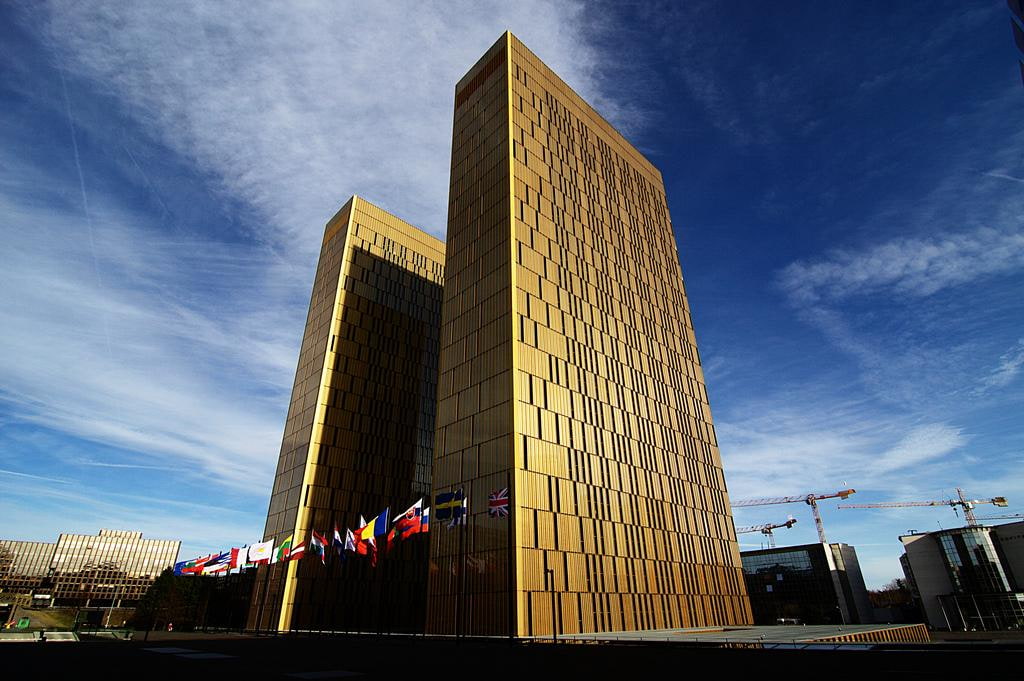
Luxembourg: The Court of Justice heard Poland’s appeal against the recovery of roughly 320 million euros in penalty payments on 8 September 2026, and the money is the smallest thing at stake. Joined Cases C-296/25 P and C-297/25 P ask whether the Commission may take penalties owed by a member state out of funds that member state expects from the Union budget, and whether it may keep doing so after the underlying dispute ends.
The sequence began in 2021. The Vice-President of the Court ordered Poland to suspend the Disciplinary Chamber of its Supreme Court and, when Warsaw did not comply, imposed a daily penalty of one million euros under Article 279 TFEU. The rate was halved in April 2023. Poland never paid. The Commission therefore recovered the sums by offsetting, deducting them from cohesion and agricultural transfers already earmarked for Polish beneficiaries. The General Court dismissed Poland’s challenges to those offsetting decisions on 5 February 2025.
The mechanism that gives interim orders teeth
Offsetting matters because the Union has no bailiff. A judgment against a member state binds a sovereign that controls its own treasury, and the Treaties supply no seizure power. The budget relationship is the only lever, and it works because every member state is simultaneously a debtor and a creditor of the same institution. Remove offsetting and an Article 279 order becomes a statement of disapproval that a determined government can simply absorb.
Poland’s argument attacks the legal basis rather than the arithmetic. Warsaw contends that the Financial Regulation permits offsetting for debts arising from established claims, and that a penalty imposed to enforce an interim measure stops qualifying once that measure has lapsed. The infringement proceedings closed with the Court’s judgment in June 2023, and Poland says the enforcement mechanism should have closed with them. The Commission replies that a debt validly incurred does not evaporate when the conduct generating it stops, and that accepting the opposite position would let any government wait out an interim order and pay nothing.
A government arguing against its own reform
The political texture is unusual. The administration pursuing this appeal is not the one that created the Disciplinary Chamber. Donald Tusk’s coalition took office in December 2023 promising to restore judicial independence, and it inherited both the fiscal loss and the constitutional principle. It has chosen to press the case, which tells you the principle is doing the work. Any capital may one day face an Article 279 order, and none of them wants the Commission holding an open-ended set-off right against the budget line that funds its farmers.
That explains why several governments watch a case that on its surface concerns a defunct chamber in a reformed judiciary. Hungary faces frozen cohesion funds under a separate conditionality mechanism. Slovakia has drawn Commission scrutiny over prosecutorial changes. A ruling that narrows offsetting would weaken every rule-of-law instrument the Union currently deploys, because the conditionality regulation and the recovery plan milestones both rest on the same assumption, namely that money owed to a capital can be withheld when that capital ignores a legal obligation.
A ruling that confirms offsetting settles the question in the opposite direction and leaves the Commission with a durable enforcement tool. The Court will not decide quickly. An Advocate General opinion normally precedes judgment by several months in cases of this weight, which places a decision somewhere in 2027. Until then the 320 million euros stay recovered and the principle stays open. Hearing details appear on the Court’s news service, and the offsetting question is analysed at length on Verfassungsblog.