August 7, 2026
LATEST
Europe Freezes Its Retaliatory Tariffs on the US IndefinitelyAir Passenger Rights Get Their First Big Rewrite in 20 YearsFive Joint Defence Projects Win Brussels Backing and Shared CashTobacco Tax Overhaul Stalls as Governments Block UnanimityCritical Medicines Act Heads for Final Adoption This AutumnMoldova Accession Reaches Its Foreign-Policy ChapterMercosur Tariffs Fall as Europe’s Farmers Watch the GaugesWhy Europe’s Digital Fairness Act Worries Online RetailersErasmus+ Faces a Budget Fight Before Its 2028 RelaunchMedia Freedom Rules Turn One as Enforcement LagsPlatform Work Rules Push Member States Toward a December ReckoningSingle Ticket Plan Would Let One Booking Cover Europe by RailHungary Races an August Deadline to Unlock Its Recovery FundsCapitals Race a September Deadline to Restore NatureEuro-Zone Inflation Nudges Back Up as Energy Bills ClimbRed Bull Case Tests a New Frontier in EU AntitrustNew EU Packaging Rules Reach Shoppers as August Deadline HitsEvery EU Country Must Draft an Anti-Fraud Plan Under New RulesEurope Blacklists a North Korean General Over Russia’s WarChina’s Rare Earths Curbs Push Europe to Find New SourcesEurope Freezes Its Retaliatory Tariffs on the US IndefinitelyAir Passenger Rights Get Their First Big Rewrite in 20 YearsFive Joint Defence Projects Win Brussels Backing and Shared CashTobacco Tax Overhaul Stalls as Governments Block UnanimityCritical Medicines Act Heads for Final Adoption This AutumnMoldova Accession Reaches Its Foreign-Policy ChapterMercosur Tariffs Fall as Europe’s Farmers Watch the GaugesWhy Europe’s Digital Fairness Act Worries Online RetailersErasmus+ Faces a Budget Fight Before Its 2028 RelaunchMedia Freedom Rules Turn One as Enforcement LagsPlatform Work Rules Push Member States Toward a December ReckoningSingle Ticket Plan Would Let One Booking Cover Europe by RailHungary Races an August Deadline to Unlock Its Recovery FundsCapitals Race a September Deadline to Restore NatureEuro-Zone Inflation Nudges Back Up as Energy Bills ClimbRed Bull Case Tests a New Frontier in EU AntitrustNew EU Packaging Rules Reach Shoppers as August Deadline HitsEvery EU Country Must Draft an Anti-Fraud Plan Under New RulesEurope Blacklists a North Korean General Over Russia’s WarChina’s Rare Earths Curbs Push Europe to Find New Sources
August 7, 2026
LATEST
Europe Freezes Its Retaliatory Tariffs on the US IndefinitelyAir Passenger Rights Get Their First Big Rewrite in 20 YearsFive Joint Defence Projects Win Brussels Backing and Shared CashTobacco Tax Overhaul Stalls as Governments Block UnanimityCritical Medicines Act Heads for Final Adoption This AutumnMoldova Accession Reaches Its Foreign-Policy ChapterMercosur Tariffs Fall as Europe’s Farmers Watch the GaugesWhy Europe’s Digital Fairness Act Worries Online RetailersErasmus+ Faces a Budget Fight Before Its 2028 RelaunchMedia Freedom Rules Turn One as Enforcement LagsPlatform Work Rules Push Member States Toward a December ReckoningSingle Ticket Plan Would Let One Booking Cover Europe by RailHungary Races an August Deadline to Unlock Its Recovery FundsCapitals Race a September Deadline to Restore NatureEuro-Zone Inflation Nudges Back Up as Energy Bills ClimbRed Bull Case Tests a New Frontier in EU AntitrustNew EU Packaging Rules Reach Shoppers as August Deadline HitsEvery EU Country Must Draft an Anti-Fraud Plan Under New RulesEurope Blacklists a North Korean General Over Russia’s WarChina’s Rare Earths Curbs Push Europe to Find New SourcesEurope Freezes Its Retaliatory Tariffs on the US IndefinitelyAir Passenger Rights Get Their First Big Rewrite in 20 YearsFive Joint Defence Projects Win Brussels Backing and Shared CashTobacco Tax Overhaul Stalls as Governments Block UnanimityCritical Medicines Act Heads for Final Adoption This AutumnMoldova Accession Reaches Its Foreign-Policy ChapterMercosur Tariffs Fall as Europe’s Farmers Watch the GaugesWhy Europe’s Digital Fairness Act Worries Online RetailersErasmus+ Faces a Budget Fight Before Its 2028 RelaunchMedia Freedom Rules Turn One as Enforcement LagsPlatform Work Rules Push Member States Toward a December ReckoningSingle Ticket Plan Would Let One Booking Cover Europe by RailHungary Races an August Deadline to Unlock Its Recovery FundsCapitals Race a September Deadline to Restore NatureEuro-Zone Inflation Nudges Back Up as Energy Bills ClimbRed Bull Case Tests a New Frontier in EU AntitrustNew EU Packaging Rules Reach Shoppers as August Deadline HitsEvery EU Country Must Draft an Anti-Fraud Plan Under New RulesEurope Blacklists a North Korean General Over Russia’s WarChina’s Rare Earths Curbs Push Europe to Find New Sources

The Digital Euro Enters Its Make or Break Trilogues

Frankfurt: After three years of argument, the digital euro has finally reached the room where European laws get written, and the coming months will decide whether the project becomes real or stalls again.

The European Parliament’s economic affairs committee approved a negotiating position in late June and ordered trilogue talks with the Council and Commission to begin. That vote ended a long deadlock between central bankers who want a public digital currency and commercial banks who fear what it might do to their deposits. The Parliament’s own tracker now lists the file as active legislation rather than a study.

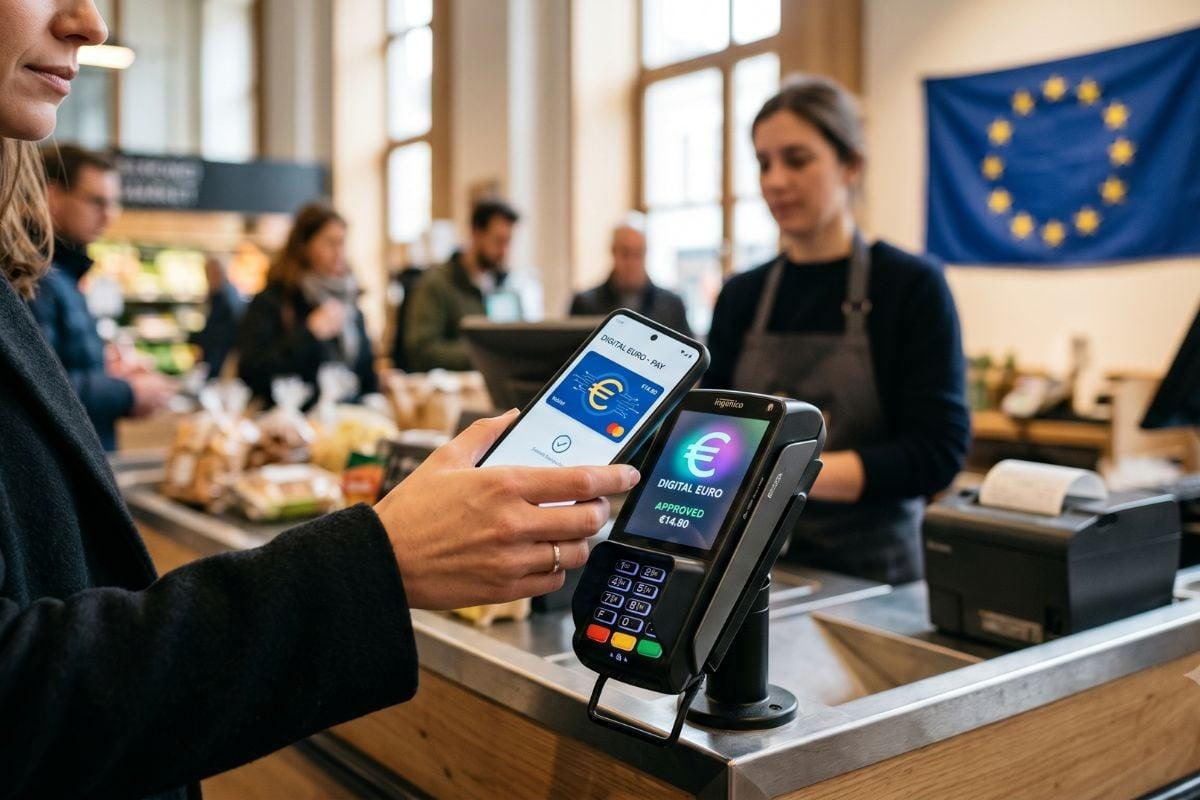
The stakes are larger than the plumbing suggests. The European Central Bank casts the digital euro as a matter of monetary sovereignty, arguing that a continent which routes most of its card payments through American networks has handed a strategic function to firms it cannot govern. A public euro that works online and offline, the bank says, would give Europeans a payment option that no foreign company or platform controls.

Why the banks pushed back

Commercial lenders spent three years resisting for a concrete reason. If households could park money directly at the central bank, they might pull deposits out of ordinary banks during a panic, draining the funding that lenders use to make loans. A bank run in the age of smartphones could move faster than any regulator.

The draft answers that fear with holding limits. Individuals could keep only a capped balance in digital euros, enough for everyday spending but too little to hollow out the banking system. Offline payments would carry cash-like privacy, so that a coffee bought with a phone reveals no more than a coffee bought with a coin. Those two design choices, holding caps and privacy, do most of the political work in the text.

Critics remain unconvinced. Some warn that a state-issued digital currency hands public authorities a window into private spending, whatever the privacy promises. Others question whether Europeans even want the instrument, given that cards and instant transfers already work. The Commission counters that resilience, not novelty, is the point, and that a payment system with no public fallback is a system exposed to outages and foreign leverage.

What the timeline really means

The calendar now drives everything. ECB board member Piero Cipollone has said the digital euro could launch in 2029, but only if legislators finish the law by the end of 2026. Trilogues rarely move quickly, and a slip of even a few months could push the whole project into the next institutional cycle.

The ECB is not waiting idly. It has moved from concept work to rulebook design and infrastructure, and it plans a pilot with dozens of payment providers to test the system before any public launch. That preparation lets Frankfurt move fast once a law exists, but it cannot substitute for the law itself, which only elected institutions can grant.

The broader signal is what this fight reveals about European ambition. A digital euro is, in the end, an argument that public infrastructure still matters in a market others build and own. If the trilogues succeed, Europe gains a payment rail of its own making. If they fail, the continent keeps renting one. The next six months will show which future the Union is willing to legislate for.