Brussels: Trump midterm defeat has handed European governments an uncomfortable question: is a weakened US president less dangerous, or more? Democrats won what coverage called a sweeping victory in the elections of 3 November 2026, and EU officials are now weighing what it means for Ukraine, NATO and transatlantic trade.
Lame duck or mad dog? The Trump midterm defeat reading in Brussels
EU diplomats cited in European coverage split into two readings. The first expects a lame duck, constrained by a Democratic Congress that can block spending and investigate the executive. The second, voiced by one diplomat who preferred to stay unnamed, expects a “mad dog”: a president who, blocked at home, turns to foreign policy where he holds the most autonomy.
History offers support for both readings of the Trump midterm defeat. US presidents who lose control of Congress often shift attention abroad, because treaties, sanctions and troop deployments depend less on legislation than domestic policy does. For Europe, that pattern implies more volatility in the months ahead, not less.
Ukraine support and the role of Congress
Ukraine is the clearest area where the result may help. Diplomats expect a Democratic Congress to press for continued military support, including air defence and ballistic missile interceptors, and to take a tougher line on Moscow. One diplomat hoped for smoother delivery of aid already agreed.
Finnish officials told reporters they see Democrats as more open to Europe and expect the win to limit the use of executive orders. One official hoped that a change at the Pentagon could free Patriot interceptors for transfer. That remains a hope rather than a decision, and it depends on personnel choices that Europeans cannot influence.
Diplomacy under way: Brussels and Abu Dhabi
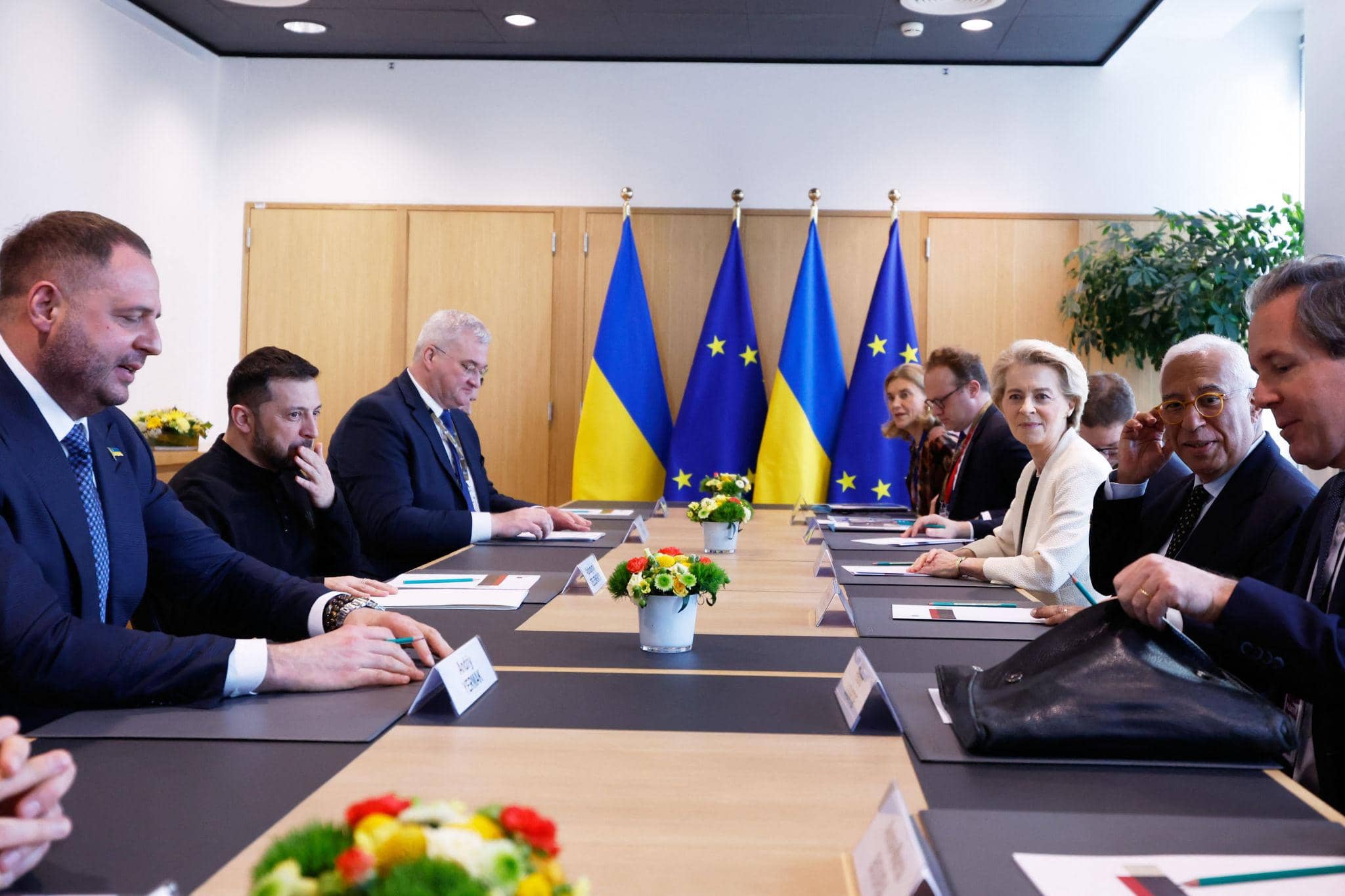
The diplomatic calendar is already full. A working-level meeting led by NATO in Brussels brought together officials from the United States, Germany, France and the United Kingdom, NATO staff including a member of Secretary General Rutte’s office, and Ukraine’s ambassador. It prepares a meeting of US, Ukrainian and Russian representatives in Abu Dhabi the following week.
Expectations after the Trump midterm defeat are modest. Officials mention possible prisoner exchanges and protection for energy infrastructure, not a settlement. The Europeans’ main task is to stay in the room, since the format places them as supporters of Ukraine rather than as negotiators.
Europe’s own agenda does not pause
European debates continue in parallel to the Trump midterm defeat. Chancellor Merz and Commission President von der Leyen disagree over the term “associate membership”, which Merz applies to Ukraine and von der Leyen to Canada, whose prime minister Mark Carney has set June 2027 as a target. Foreign ministers plan a January discussion on Georgia. These threads show that EU external policy now runs on several tracks that the US result does not control.
Trade and tariffs deserve a separate caution. The coverage reviewed here gave no analysis of the effect on EU-US trade, so any claim that a Democratic House will reverse tariffs would be speculation. Congress has limited direct power over executive tariff decisions, which suggests Europe should not plan around relief.
What Europe should do next
Three steps follow from the evidence. First, treat the Trump midterm defeat as a change in US domestic politics, not a change in the President’s powers over foreign affairs. Second, after the Trump midterm defeat, use the Democratic Congress as a channel for Ukraine support, through direct contact with committees that hold the budget. Third, keep building European defence capacity, because no election result can guarantee future American commitments.
The week’s Brussels and Abu Dhabi meetings will offer the first test of whether a weaker president behaves with restraint or with risk. Until then, the Trump midterm defeat counts as an opportunity for Europe only to the degree that Europe prepares for both outcomes.