September 16, 2026
LATEST
Software Makers Face Europe’s Product Liability Deadline in DecemberCage-Free Promises Land Before the Transport File Is FinishedTwo New Calls Will Test How Flexible Horizon Europe Really IsEurope’s Innovation Act Counts 10 Billion It Has Not Found YetProcurement Is the Chapter That Could Stall the Thailand DealMobility Week Returns With a Test of Intergenerational FairnessMinisters Debate the Chips Act Next Week With No Money AttachedTaiwan Wants Tax Treaties That Brussels Has No Power to SignNorth Korea Now Earns From Europe Without Shipping AnythingPalm Oil Is the Last Hard Question Before the Indonesia SigningCan One Year Deliver Both a Trade Deal and a Sea CodeVietnam Reached Europe’s Top Partnership Tier With Little DetailLeaked Draft Puts Europe’s Social Media Age Limit at FifteenA Ceuta Debate Whose Title Has Already Reached a VerdictFP10 Clears Committee and the Budget Gap Stays Wide OpenEurope’s New Merger Guidelines Face a Council Test Next WeekEurope’s Culture Capitals Face Their Biggest Rewrite Since 1985Only Italy Has a Bill as Platform Work Deadline NearsCustoms Fraud Charges Land in Germany Over Wrecked CarsCar Tariffs Show Why the India Deal Still Needs Two VotesSoftware Makers Face Europe’s Product Liability Deadline in DecemberCage-Free Promises Land Before the Transport File Is FinishedTwo New Calls Will Test How Flexible Horizon Europe Really IsEurope’s Innovation Act Counts 10 Billion It Has Not Found YetProcurement Is the Chapter That Could Stall the Thailand DealMobility Week Returns With a Test of Intergenerational FairnessMinisters Debate the Chips Act Next Week With No Money AttachedTaiwan Wants Tax Treaties That Brussels Has No Power to SignNorth Korea Now Earns From Europe Without Shipping AnythingPalm Oil Is the Last Hard Question Before the Indonesia SigningCan One Year Deliver Both a Trade Deal and a Sea CodeVietnam Reached Europe’s Top Partnership Tier With Little DetailLeaked Draft Puts Europe’s Social Media Age Limit at FifteenA Ceuta Debate Whose Title Has Already Reached a VerdictFP10 Clears Committee and the Budget Gap Stays Wide OpenEurope’s New Merger Guidelines Face a Council Test Next WeekEurope’s Culture Capitals Face Their Biggest Rewrite Since 1985Only Italy Has a Bill as Platform Work Deadline NearsCustoms Fraud Charges Land in Germany Over Wrecked CarsCar Tariffs Show Why the India Deal Still Needs Two Votes
September 16, 2026
LATEST
Software Makers Face Europe’s Product Liability Deadline in DecemberCage-Free Promises Land Before the Transport File Is FinishedTwo New Calls Will Test How Flexible Horizon Europe Really IsEurope’s Innovation Act Counts 10 Billion It Has Not Found YetProcurement Is the Chapter That Could Stall the Thailand DealMobility Week Returns With a Test of Intergenerational FairnessMinisters Debate the Chips Act Next Week With No Money AttachedTaiwan Wants Tax Treaties That Brussels Has No Power to SignNorth Korea Now Earns From Europe Without Shipping AnythingPalm Oil Is the Last Hard Question Before the Indonesia SigningCan One Year Deliver Both a Trade Deal and a Sea CodeVietnam Reached Europe’s Top Partnership Tier With Little DetailLeaked Draft Puts Europe’s Social Media Age Limit at FifteenA Ceuta Debate Whose Title Has Already Reached a VerdictFP10 Clears Committee and the Budget Gap Stays Wide OpenEurope’s New Merger Guidelines Face a Council Test Next WeekEurope’s Culture Capitals Face Their Biggest Rewrite Since 1985Only Italy Has a Bill as Platform Work Deadline NearsCustoms Fraud Charges Land in Germany Over Wrecked CarsCar Tariffs Show Why the India Deal Still Needs Two VotesSoftware Makers Face Europe’s Product Liability Deadline in DecemberCage-Free Promises Land Before the Transport File Is FinishedTwo New Calls Will Test How Flexible Horizon Europe Really IsEurope’s Innovation Act Counts 10 Billion It Has Not Found YetProcurement Is the Chapter That Could Stall the Thailand DealMobility Week Returns With a Test of Intergenerational FairnessMinisters Debate the Chips Act Next Week With No Money AttachedTaiwan Wants Tax Treaties That Brussels Has No Power to SignNorth Korea Now Earns From Europe Without Shipping AnythingPalm Oil Is the Last Hard Question Before the Indonesia SigningCan One Year Deliver Both a Trade Deal and a Sea CodeVietnam Reached Europe’s Top Partnership Tier With Little DetailLeaked Draft Puts Europe’s Social Media Age Limit at FifteenA Ceuta Debate Whose Title Has Already Reached a VerdictFP10 Clears Committee and the Budget Gap Stays Wide OpenEurope’s New Merger Guidelines Face a Council Test Next WeekEurope’s Culture Capitals Face Their Biggest Rewrite Since 1985Only Italy Has a Bill as Platform Work Deadline NearsCustoms Fraud Charges Land in Germany Over Wrecked CarsCar Tariffs Show Why the India Deal Still Needs Two Votes

Who Will Host Europe’s Return Hubs Once the Clock Starts

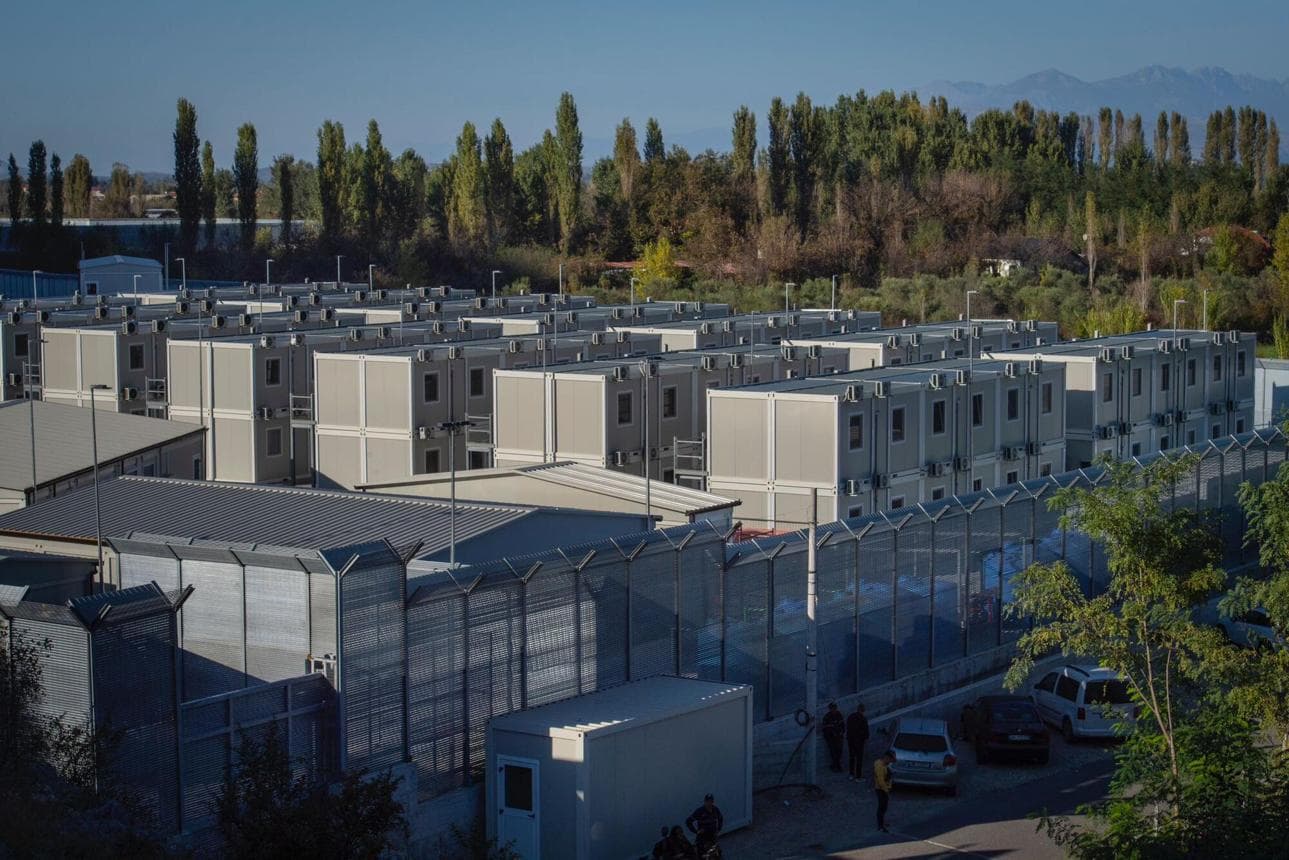
Gjadër: A processing centre in northern Albania, built for an Italian scheme that courts repeatedly stalled, has become the reference point for a debate nobody in Brussels frames that way. Europe’s new returns law permits return hubs in third countries. It does not name a single country willing to host one.

Negotiators sealed the political agreement on 1 June 2026, closing a file the Commission opened in March 2025. Member states fixed a general approach that December, Parliament granted its mandate in late March 2026, and the trilogue ran fast by Brussels standards. The regulation replaces the 2008 Returns Directive with a directly applicable instrument, and that shift alone matters: twenty-seven national transpositions become one rulebook.

The operational core is mutual recognition. A return decision issued in one member state now travels, so a person ordered to leave Greece cannot reset the clock by moving to Belgium. Enforcement authorities have wanted this for fifteen years. The regulation pairs it with a European return order, tighter obligations on the person concerned to cooperate, longer detention ceilings, and a separate track for people considered a security risk.

Return hubs need a counterparty

Return hubs draw the attention because they break a long-standing taboo. Under the new text, a member state may send a person with a final return decision to a third country that is neither their country of origin nor a country they transited. The hub can serve as the end point or as a transfer centre for onward return. Any arrangement requires the host state to respect international human rights standards, including non-refoulement, and unaccompanied minors and families with children fall outside the mechanism.

The conditionality reads well on paper. The arithmetic is harder. A government agreeing to host a hub accepts people it has no legal relationship with, for an open-ended period, in exchange for money, visa facilitation or trade concessions that European capitals have historically been slow to deliver. The countries most often mentioned in corridor conversation are also the countries whose human rights records make the non-refoulement test genuinely contested. Those two facts pull against each other, which is why no signed agreement exists more than three months after the deal.

The Albanian precedent shows the failure mode. Italy built facilities, moved people, and watched national and European courts unwind the transfers over the definition of a safe country. The new regulation changes the legal basis but not the judicial appetite for review, and the Court of Justice has shown no inclination to defer on questions of effective remedy.

Numbers that explain the urgency

Roughly one in five people ordered to leave the Union actually departs. That ratio has barely moved in a decade, and it is the single statistic driving this entire file. Interior ministers read it as proof the system fails. Migration lawyers read it as evidence that removal depends on the cooperation of origin countries, not on the severity of European procedure, and point out that readmission agreements deliver more returns than detention powers ever have.

Both readings survive contact with the evidence. Mutual recognition plausibly lifts the rate, because absconding across internal borders is a measurable leak. Return hubs plausibly do not, because the binding constraint has always been the receiving end rather than the sending end. A hub relocates the problem geographically without solving the identity documentation and consular cooperation that block most removals.

Civil society organisations, including ECRE, argue the regulation lowers procedural guarantees below the directive it replaces. Governments counter that a directly applicable instrument reduces the divergence that forum-shopping exploits. The Commission set out its own reading when it welcomed the agreement.

Some provisions apply twelve months after entry into force, which places the first real test in 2027. By then either a third country has signed, and the hub concept becomes a live policy with litigation attached, or none has, and the most contested clause in Europe’s strictest migration law will describe a facility that does not exist. Watch the visa and trade files for the price.