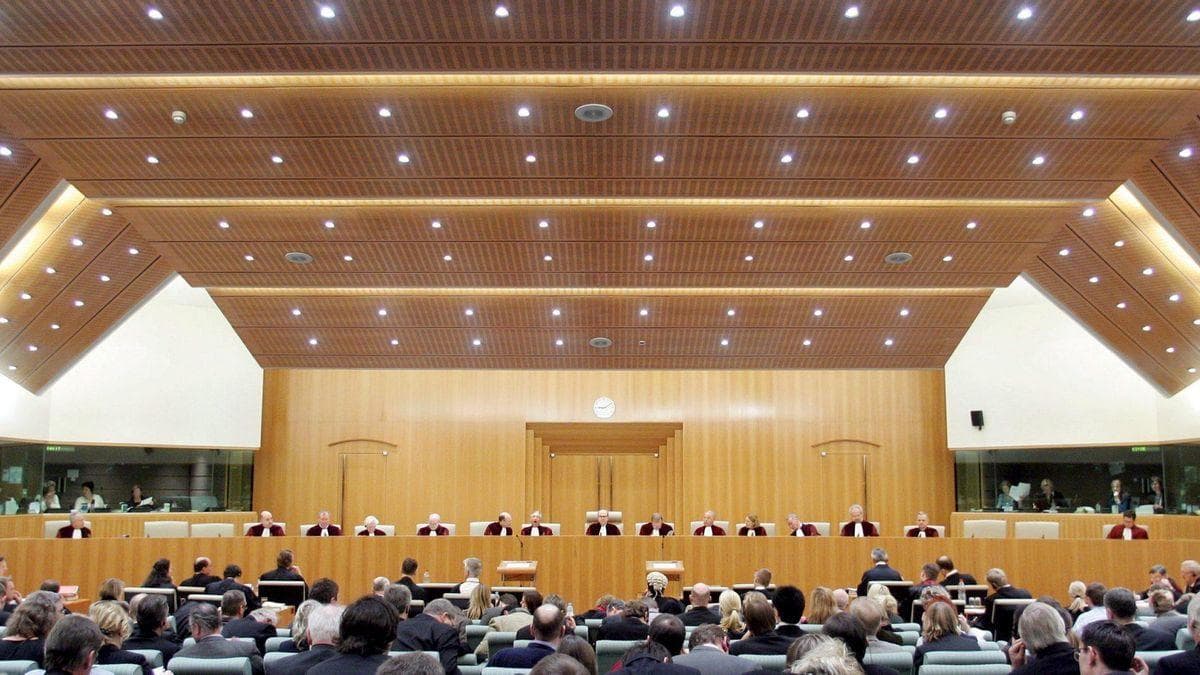
Warsaw: A dispute that began in a Polish courtroom and travelled to Ireland has forced Europe’s highest court to answer an uncomfortable question: when may one member state refuse to trust the judgments of another?
The case reached the Court of Justice just before its summer recess, and it turns on judicial independence at the very seams of the single legal space. A litigant asked an Irish court to refuse recognition of a Polish ruling, arguing that his right to a fair tribunal had been breached because one of the judges who heard his case had been seconded by the justice minister. The Irish court, unsure whether European law let it look behind a foreign judgment, sent the question to Luxembourg.
The stakes reach well beyond two parties. Mutual recognition is the glue of European justice. Courts enforce each other’s decisions on the assumption that every national bench meets a common standard of independence and impartiality. Pull at that thread and the whole fabric loosens, because a judgment worth nothing abroad is worth little at home.
The relevant guarantees sit in the second subparagraph of Article 19 of the Treaty on European Union, read together with Article 47 of the Charter of Fundamental Rights. Together they promise every citizen an independent tribunal established by law. The Court has spent recent years insisting that the promise is not decorative, striking down arrangements that let political actors shape who sits in judgment.
Yet the remedy is delicate. If national courts may freely second-guess one another’s independence, cross-border cooperation could collapse into a series of veto points, with every enforcement request inviting a fresh audit of a foreign judiciary. Judges in Luxembourg have to draw a line that protects rights without inviting chaos, allowing refusal only where the deficiency is grave and concrete rather than speculative.
For governments that have clashed with Brussels over the rule of law, the ruling carries obvious weight. A finding that seconded judges taint a verdict would ripple through thousands of pending cross-border matters and sharpen the pressure on national reforms. A cautious ruling, by contrast, would preserve the flow of cooperation while leaving the harder political fights to other venues.
Legal scholars caution against reading too much into any single decision. The Court tends to move incrementally, resolving the dispute in front of it while seeding principles that later cases will test. Even so, the direction of travel matters to anyone who has ever relied on a judgment being honoured across a border, from a business chasing a debt to a parent enforcing a custody order.
What is clear is that judicial independence has become the Union’s recurring fault line, argued not in abstract manifestos but in the concrete grind of enforcement. The answer that emerges will shape how much faith one European court must place in another, and how citizens can hold that faith to account.