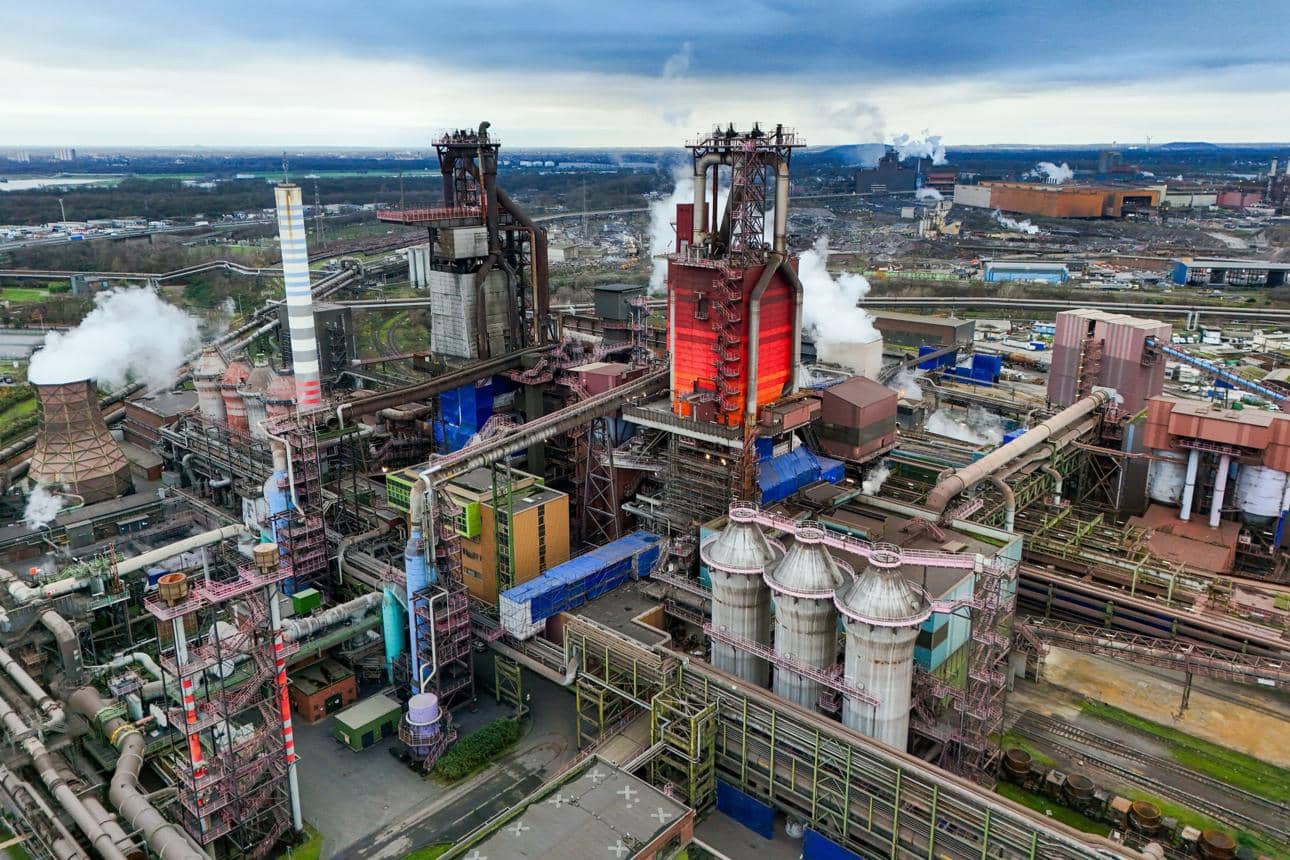
Duisburg: In the shadow of the blast furnaces along the Ruhr, plant managers who pay to pollute have been handed a slower path to the finish line, after the European Commission proposed a targeted rewrite of the bloc’s carbon market.
The revision, unveiled on 17 July, reshapes the pace at which the Union’s Emissions Trading System squeezes the supply of pollution permits. It lowers the annual reduction factor of the cap to 3.7 percent for the years 2031 to 2035 and to 1.7 percent from 2036 onward, down from the current 4.3 percent, easing the trajectory that industry had warned was becoming impossible to meet.
The change matters because the old path pointed toward a cliff. Under the previous math, the number of available allowances would have hit zero around 2039, a so-called zero-cap moment that would have forced heavy emitters either to stop or to buy from an empty market. The new schedule pushes that vanishing point out toward 2048, buying steelmakers, cement kilns and chemical plants more time to switch to cleaner processes.
The Commission frames the move as competitiveness rather than retreat, insisting the reform still serves the Union’s 2040 climate target while sparing the industries most exposed to rivals abroad. Critics counter that softening the cap risks slowing the very price signal that has driven emitters to invest in cleaner kit, and that a gentler curve today means a steeper one later.
Not every sector wins breathing room. The proposal removes free allowances for aviation from this year, and it drags methane and nitrous oxide emissions from maritime transport into the main trading system, with the largest offshore vessels swept in from 2027. The overall design still points down; it simply bends the slope. The Commission’s overview of the trading system sets out how the pieces fit together.
Households sit at the centre of the politics. A second trading system covering fuels for buildings and road transport is due to switch on in 2027, and lawmakers fear a backlash if heating and driving suddenly cost more. To cushion the blow, a Social Climate Fund will channel 86.7 billion euro of trading revenue between 2026 and 2032 toward vulnerable households, financing insulation, cleaner heating and direct support.
The proposal now enters the long bargaining between the Parliament and national governments, where industrial regions like this one will press for still more flexibility and green campaigners will fight to defend the cap’s integrity. The outcome will shape how quickly Europe’s factories decarbonise, and whether the continent can cut emissions without exporting its heavy industry to places that pollute more freely.