
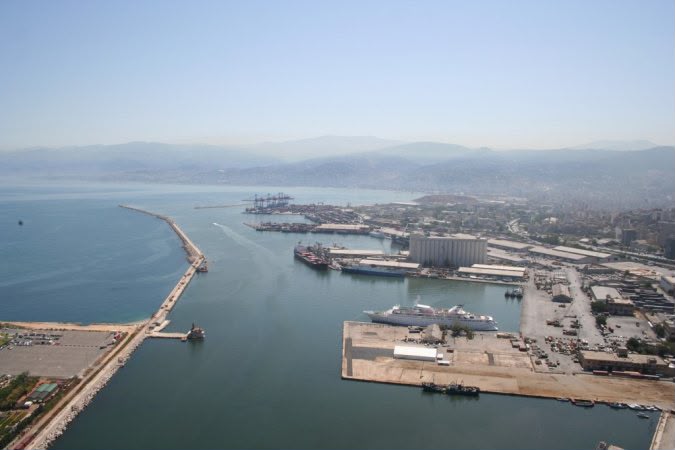
Damascus has taken back the airport and the commercial berth. Moscow has kept the coastline. The European Union and its member states, the largest donor to the Syria response, appear nowhere in the only account either signatory has given of how the future of the Russian bases in Syria was settled.
NOTE ON THE RECORD:
This editorial is built on the Syrian Foreign Ministry statement of 9 August 2026 as carried by the state news agency SANA, and on published European Commission records of Union funding and sanctions policy toward Syria. Terms of the 2017 Russia-Syria basing instruments are taken from the treaty as published on the Official Internet Portal of Legal Information of the Russian Federation, with the Russian state agency TASS carried as corroboration only. Both are used for the provisions of Moscow’s own agreement, never for characterisation of it. The operative terms governing Russian military access have not been published by either signatory, and Moscow had issued no public comment at the time of writing. The judgement that no European party took part rests on the absence of any such party from the only account either signatory has issued, not on a denial by any government. Where this newspaper draws conclusions from that silence, or from the operational requirements of naval basing rather than from a document, it says so in its own voice. Every load-bearing factual claim is attributed in the text and listed in the source register below.
On Sunday the Syrian Foreign Ministry announced that the Russian bases in Syria will cease to be bases. Hmeimim and Tartous are to become joint training and qualification centres within three months, while the non-military elements revert to Syrian administration. The wording is careful, the concession to Damascus is real, and the strategic outcome is that Moscow keeps Tartous, the only naval foothold it holds on the Mediterranean. This newspaper reads the memorandum as a change of nameplate rather than a withdrawal. No European party is named at any point in the Syrian statement, and it would be idle to pretend one could have been: neither signatory had cause to seat a third government at a bilateral negotiation over its own defence estate. The uncomfortable question is not why Europe was absent. It is why a Union that has spent a decade paying for Syria holds no position on the eastern Mediterranean seaboard from which absence would even register as a loss.
What Damascus Recovered
The ministry’s own account, carried by SANA, is exact about what Damascus gains. Syria assumes management of the facilities designated for civilian use, naming Hmeimim Airport and the fourth commercial berth at Tartous Port, to be folded gradually into the country’s civilian administrative system. Foreign Minister Asaad al-Shaibani toured Latakia airport and the port that same day. The talks were led by the Ministry of Foreign Affairs and Expatriates, and the ministry calls the result the most consequential step since they began about a year and a half ago.
The same document is notably reticent elsewhere. It offers no figure for Russian personnel, no ceiling on warship calls, no term of years, and no indication of who will command the airfield. The 2017 settlement for the Russian bases in Syria was specific to the point of arithmetic. Reproduced in full on Russia’s official portal of legal information, the Tartous agreement ran forty-nine years, renewed itself automatically in twenty-five-year increments unless one party gave a year’s written notice, and admitted up to eleven Russian warships at a time, nuclear-powered vessels among them. Putin signed the ratifying law that December, and the separate arrangement covering Hmeimim fixed no terminal date. A published instrument has given way to an unpublished one. Reuters found no Russian comment at all.
The Case for Calling It a Syrian Win
The case for reading this as a Syrian victory deserves a hearing, and it is not weak. President Ahmed al-Sharaa inherited a foreign garrison he could not expel and a patron he could not afford to humiliate. He has recovered the revenue-earning assets, put the General Authority for Border Crossings and Customs on Berth No. 4 and its warehouses, returned a civil aviation authority to Latakia, and secured a three-month clock in place of an open horizon. A Russia obliged to renegotiate its footing periodically is weaker than a Russia holding a half-century title deed. Damascus has turned a permanent presence into a conditional one, which is more than most observers expected of it a year ago.
Function, Not Nameplate
Navies, though, are not served by titles. They are served by water, fuel, repair, and a runway close at hand. On any sober assessment, the Tartous anchorage and the Hmeimim air base some eighty-six kilometres up the coast are together the only stretch of Mediterranean shore where the Russian fleet has all four, and an installation staffed by Russian instructors, supplied by Russian aircraft, and visited by Russian ships discharges the function of a base whatever the sign at its gate now reads.
An installation staffed by Russian instructors, supplied by Russian aircraft, and visited by Russian ships discharges the function of a base whatever the sign at its gate now reads.
The Russian Bases in Syria and the Loss of a Baseline
What has altered is less Russian capability than European sight of it. For nine years the terms sat on a state register: a fixed count of hulls, a fixed span of years, a fixed procedure for bringing it to an end. Planners at Naples and in Brussels could work from that. They can work from nothing comparable now, and until the operative annexes for the Russian bases in Syria are released, the prudent working assumption, on this page, is that access continues. Damascus has bought its conditionality with what Europe used to know. That is a fair trade for Syria and a poor one for anybody who must read the sea lanes off Latakia.
What Brussels Still Has to Spend
Which brings the matter to Brussels, and to a distinction the argument must not dodge. The Union has been Syria’s steadiest backer since 2011, with assistance exceeding thirty-eight billion euros on the European Commission‘s own reckoning, and it committed close to two and a half billion for 2025 and 2026 at the ninth Brussels Conference. Most of that is humanitarian and refugee support, much of it spent in Jordan, Lebanon, and Turkiye. None of it ought to be made to bear a security condition, and this page does not propose turning relief into a bargaining counter. What comes next stands differently.
Sanctions came off in 2025, a political partnership opened in Damascus in January, and in May, as Enab Baladi reported, the Union ended the partial suspension of the Cooperation Agreement that had stood since 2011, with an investment forum still to come. That is commercial statecraft, and it normally comes with stated expectations. None were attached here.
The serious objection is not that basing is Syria’s business, which it is. It is that Europe has no means of compulsion here and Damascus no reason to heed one. That may well be right, and it is precisely the point. A Union with nothing to say about a foreign fleet moored off its southern approaches has not been outmanoeuvred by anyone. It has never formed a view, and a missing view is the worse of the two failures, because Moscow cannot be blamed for it.
There is time to correct this. Three months of implementation remain, the forum is unscheduled, and the terms that will regulate the Russian bases in Syria have not been disclosed. A European seat was never going to be a veto. It would have been a documented baseline, and a price on the next request Damascus makes of Brussels. Both are still available. The Union has purchased a considerable stock of goodwill in Syria. It has yet to spend any of it on the coastline.
The Weekly Editorial
This is the editorial position of The European Post, published weekly on matters of European and international strategic significance. It represents the view of the Editorial Board.