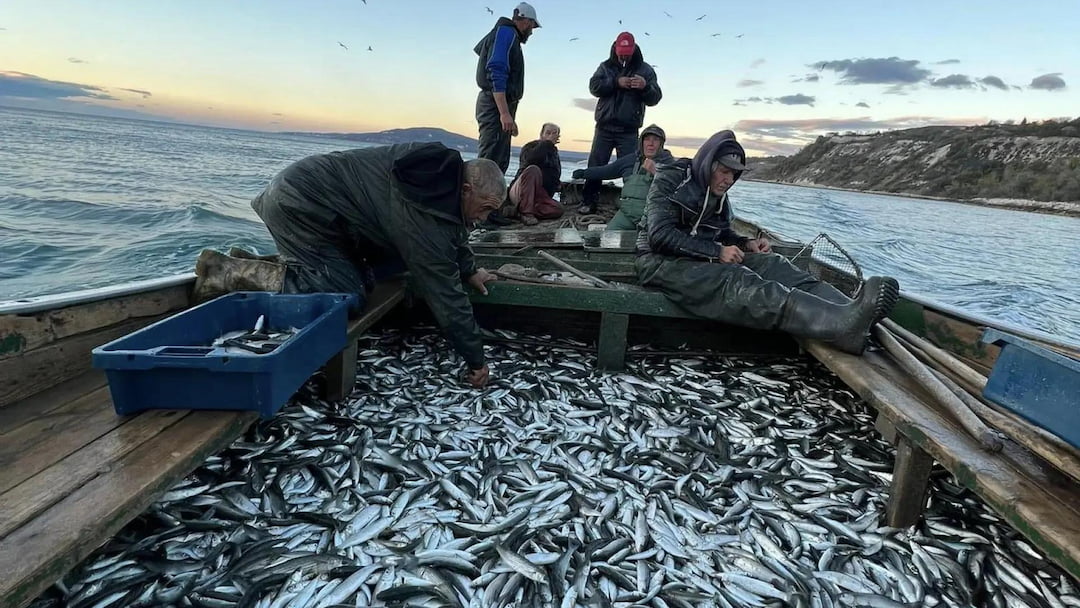
Varna: The Black Sea fishing quotas for 2027 keep the sprat catch limit at its 2026 level, according to the fishing opportunities proposal that the European Commission adopted on 16 September 2026 for the Mediterranean and the Black Sea. For turbot, the Commission sets total allowable catches and quotas in line with the management plan of the General Fisheries Commission for the Mediterranean, known as the GFCM.
The Commission proposes these Black Sea fishing quotas for sprat and turbot as part of one regulation that also covers the Mediterranean. The proposal text gives the reasoning in broad terms and the Commission page does not publish turbot tonnages in its announcement, so fishers in Bulgaria and Romania will need the full legal text for stock-by-stock numbers. The EUR-Lex proposal carries the figures.
In the western Mediterranean, the Commission suggests keeping every measure of the demersal multiannual plan. That plan entered its permanent phase on 1 January 2025, and 2027 would be its third year in that phase. It regulates fishing effort for trawlers and longliners, sets catch limits for deep-water shrimps and operates a compensation mechanism for trawlers.
The proposal also carries the GFCM management plans into EU law for the Adriatic Sea, the Strait of Sicily, the Ionian Sea and the Levant. Those plans cover demersal and small pelagic stocks, common dolphinfish and deep-water shrimps. Specific measures for blackspot seabream and deep-water shrimps will be updated after this year’s GFCM annual session.
That session runs from 24 to 30 October 2026, so the Black Sea fishing quotas can still change. The Commission says it will complement the proposal later, once the GFCM decides and once the Scientific, Technical and Economic Committee for Fisheries delivers its advice on demersal stocks, expected in October. The Brussels Times reported that member states will seek agreement at the Fisheries Council, and the Commission has also launched an impact assessment for a targeted amendment of the demersal plan.
The calendar is short. The Commission announcement says the Council is expected to reach political agreement on 14 and 15 December 2026 and that the regulation should apply from 1 January 2027. Ministers therefore have about six weeks after the GFCM session to settle the final Black Sea fishing quotas.
For coastal communities, flat Black Sea fishing quotas for sprat mean predictability but no extra opportunity. Small-scale boats along the Bulgarian and Romanian coasts depend on stable quotas to plan the season, and processors prefer steady landings. Environmental groups, on the other hand, will watch whether the turbot limit really follows the scientific logic of the GFCM plan.
The next signals arrive in quick order: the GFCM decisions at the end of October, the scientific advice on demersal stocks, and the December Council. Until the Commission publishes the complementary proposal, the Black Sea fishing quotas remain a framework with a flat sprat limit at its centre, and the final turbot numbers still lie ahead.