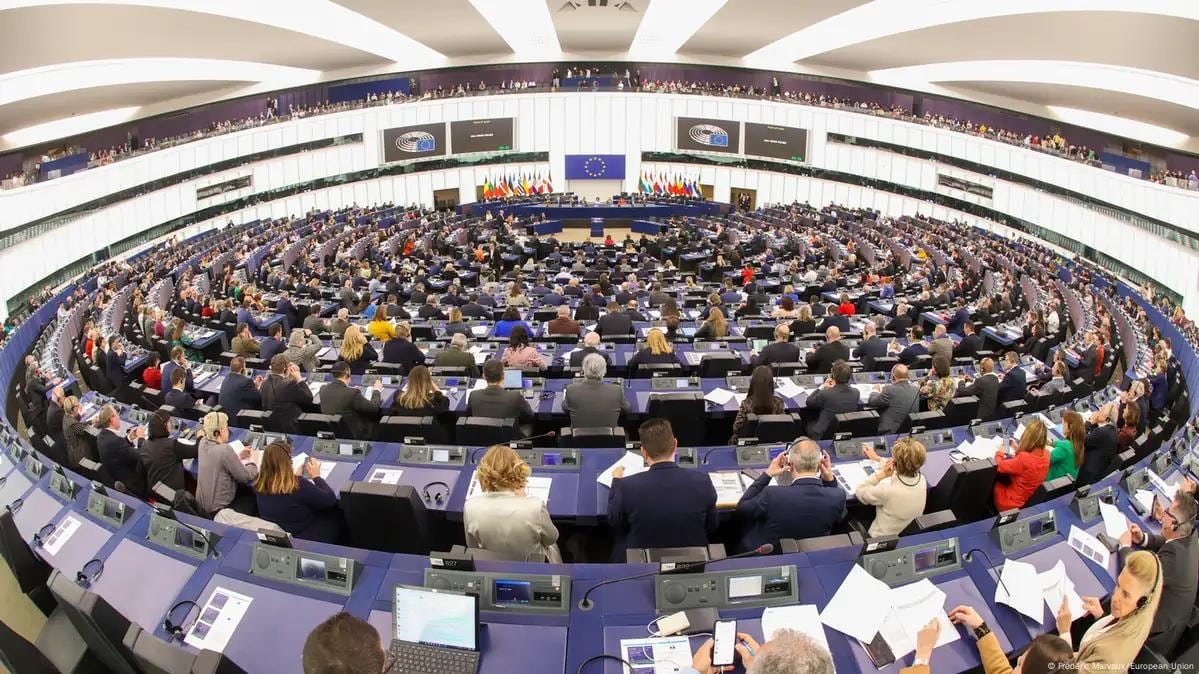
Brussels: The Commission and the High Representative presented the first Joint Report on the implementation of the EU Maritime Security Strategy since 2023, and the Commission’s maritime directorate published it on 3 November 2026. The report finds progress across all six key objectives of the strategy, three years after the revised text entered into force.
The headline conclusion is political as much as technical. According to the Commission announcement, “the findings confirm the crucial role of the EUMSS as a framework for aligning civilian and military efforts to protect the maritime interests of the EU and its Member States and to uphold international law, particularly the United Nations Convention on the Law of the Sea.”
Under the EU Maritime Security Strategy, activity at sea leads the list of results. EUNAVFOR ASPIDES, launched in February 2024 in the Red Sea and the Gulf of Aden, protected more than 800 merchant vessels and monitored more than 2,000, with what the report calls a 100% success rate. The EU also set up an annual live maritime security exercise, and five major multipurpose operations ran in the Black Sea, the Baltic Sea and the Adriatic Sea in 2024 and 2025, followed by a new one in the North Sea in 2026.
Partnerships grew as well. The EU signed new political agreements on maritime security with Australia, Canada, Ghana, Iceland, India, Japan, the Republic of Korea, Norway and the United Kingdom. It also became a Friend of the Djibouti Code of Conduct, and the Coordinated Maritime Presence in the Gulf of Guinea has matured into what the report describes as an effective instrument.
Shared awareness of the sea picture improved too. The operational phase of the Common Information Sharing Environment began in July 2024, and the European Defence Agency expanded its MARSUR III network. In September 2026, partners tested live data exchange with national command systems and NATO during the REPMUS exercise off Portugal.
The EU Maritime Security Strategy gives particular weight to critical infrastructure and the shadow fleet. The Commission adopted an Action Plan on Cable Security in February 2025, followed by a Cable Security Toolbox, and in June 2026 it funded two regional cable and maritime surveillance hubs for the Baltic and the Mediterranean. Sanctions now cover more than 700 vessels and about 100 enablers, and member states and EUNAVFOR IRINI have carried out flag verification boardings in line with UNCLOS.
Capabilities follow the money. In September 2026 the Council approved five European Defence Projects of Common Interest, notably Integrated Maritime and Seabed Defence and Drone and Counter-Drone European Resolve, with “indicative overall investments of up to €72 billion and €5 billion respectively,” according to the report.
The background explains why the review of the EU Maritime Security Strategy matters. The Council adopted the first EU Maritime Security Strategy in 2014, and the revised version builds on a joint communication of March 2023. The report names sabotage of critical infrastructure, drone attacks on merchant vessels, shadow fleet activity, piracy, cyberattacks and drug trafficking as the threats that drive the agenda.
Looking ahead, the Commission lists stronger maritime domain awareness, joint capabilities, and closer civil-military and public-private cooperation as its priorities. The EU Maritime Security Strategy now has a three-year track record, and the next test is whether member states match its aims with funded ships, sensors and shared data.