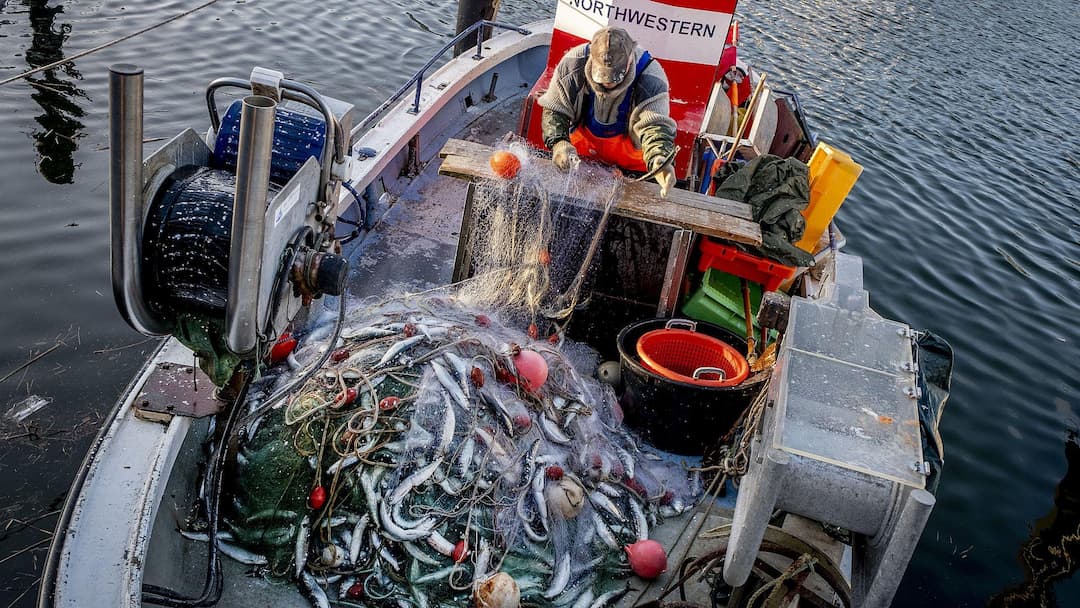
Baltic fishing quotas 2027 are now politically settled, after EU fisheries ministers reached agreement at their Council meeting in Luxembourg on 26 October 2026. The deal, chaired by Irish Agriculture Minister Martin Heydon, sets next year’s catch limits for the Baltic Sea and keeps most of the cautious approach that governments adopted in recent years.
The biggest increases go to the pelagic stocks. According to trade press coverage published on 3 November, the Council raised the sprat limit by 44 percent, central Baltic herring by 71 percent, Gulf of Riga herring by 11 percent and Bothnian herring by 12 percent. Plaice gets a smaller rise of 3 percent. Salmon in the Main Basin and the Gulf of Finland stays at its 2026 level.
Central Baltic herring deserves a closer look. Even after a 71 percent rise, the limit remains below the level that scientific advisers recommend, and the spawning closure stays in place. For Bothnian herring, the agreement adds a three-month restriction in shallow coastal waters during the spawning season. These conditions show how the Baltic fishing quotas 2027 try to pair larger catches with protection for breeding fish.
Cod remains the hardest case in the Baltic fishing quotas 2027 package. The Council kept by-catch limits for western Baltic cod, eastern Baltic cod and western Baltic herring at their 2026 levels, and the ban on recreational cod fishing continues. The Commission’s proposal, published as COM(2026) 437 in the autumn, had suggested deeper cuts to some of these by-catch allowances. The trade report does not explain why ministers held them steady, so readers should check the Council’s own press release for the reasoning.
Heydon said the agreement builds on concerted efforts in recent years that are beginning to yield results. That line captures the political bargain behind the Baltic fishing quotas 2027. Governments can point to recovering pelagic stocks as proof that restraint works, while coastal communities in Finland, Sweden, Latvia, Poland and Denmark get more fish to land from the stocks that can bear it.
The agreement also covers one North Sea item. For Norway pout, shared with the United Kingdom, the EU set a by-catch-only limit of 300 tonnes after consultations with London. It is a small number, yet it shows how Baltic decisions and wider Atlantic talks run through the same autumn calendar.
Two steps remain before fishermen can rely on the figures. The Commission says formal adoption of the regulation follows later in November, and national authorities must then divide the totals into quotas for their own fleets. Several figures in the public reporting differ from the Commission’s original proposal, so operators should wait for the published legal text.
The test of the Baltic fishing quotas 2027 will come at sea next year. If central Baltic herring and sprat keep recovering, ministers will face pressure to loosen restrictions further, while weak cod stocks will keep the by-catch rules tight. For the Baltic fleet, the agreement offers more fish in 2027 but no relief on cod.