November 7, 2026
LATEST
Teacher Shortages Put The EU Teachers Agenda To The TestKingspan Fine And KKR Charge Put EU Merger Control To WorkMEPs Near First Vote On EU Space Act In Parliament Industry CommitteeMercosur Safeguard Rules Let EU Curb Surges In Car And Goods ImportsMontenegro And Albania Receive EU Accession Roadmaps From CommissionHelsinki Presses Washington Over Paid-For Patriot InterceptorsMeloni Letter Exposes The EU Single Voice Problem On UkraineEmissions Trading Link Defines The EU-UK Summit Agenda For 20 NovemberAddis Ababa Talks Test The EU-African Union Partnership PlanDark Patterns Face Reform As Digital Fairness Act NearsLong-Term EU Budget Talks Face A December DeadlineReturn Hubs Plan Reshapes EU Deportation Rules After DealFishing Sector Gets Vision 2040 Fisheries Strategy With €2bn FloorNominations Open For The Next European Research Council PresidentInvestFrontier Launch Pulls Private Capital Into Humanitarian AidYoung Farmers Targeted By 10 Share In Post-2027 CAP PlanCOP17 Biodiversity Deal Leaves Nature Finance Gap OpenParliament Backs High-Speed Rail Network Linking CapitalsEnergy And Tyre Labelling Gets Simpler Rules In Council MandateEU Defence Readiness Goal For 2030 Slips Despite €418 Billion OutlayTeacher Shortages Put The EU Teachers Agenda To The TestKingspan Fine And KKR Charge Put EU Merger Control To WorkMEPs Near First Vote On EU Space Act In Parliament Industry CommitteeMercosur Safeguard Rules Let EU Curb Surges In Car And Goods ImportsMontenegro And Albania Receive EU Accession Roadmaps From CommissionHelsinki Presses Washington Over Paid-For Patriot InterceptorsMeloni Letter Exposes The EU Single Voice Problem On UkraineEmissions Trading Link Defines The EU-UK Summit Agenda For 20 NovemberAddis Ababa Talks Test The EU-African Union Partnership PlanDark Patterns Face Reform As Digital Fairness Act NearsLong-Term EU Budget Talks Face A December DeadlineReturn Hubs Plan Reshapes EU Deportation Rules After DealFishing Sector Gets Vision 2040 Fisheries Strategy With €2bn FloorNominations Open For The Next European Research Council PresidentInvestFrontier Launch Pulls Private Capital Into Humanitarian AidYoung Farmers Targeted By 10 Share In Post-2027 CAP PlanCOP17 Biodiversity Deal Leaves Nature Finance Gap OpenParliament Backs High-Speed Rail Network Linking CapitalsEnergy And Tyre Labelling Gets Simpler Rules In Council MandateEU Defence Readiness Goal For 2030 Slips Despite €418 Billion Outlay

Agri-Food Promotion Budget Holds At €162 Million For 2027

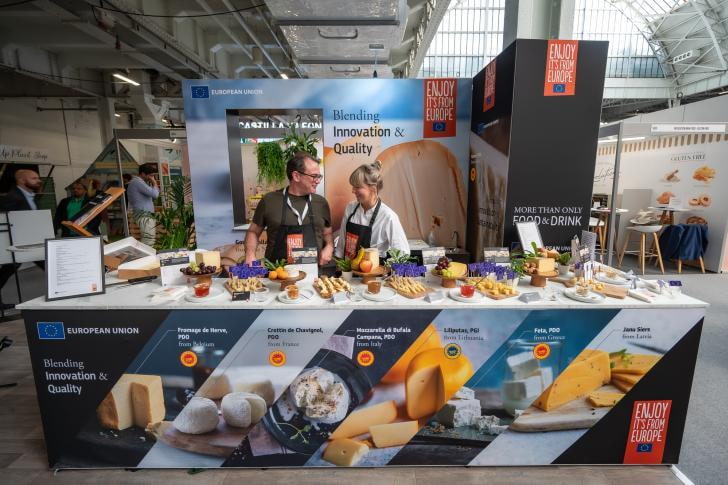
Brussels: EU agri-food promotion will receive €162 million in 2027, €50 million more than the Commission first planned, Agriculture Commissioner Christophe Hansen told the European Parliament’s AGRI Committee on 5 November 2026. The figure arrives while the 2027 budget is still being negotiated, and it has already split lawmakers over whether it is a rescue or a cut.

How the 2027 promotion money is divided

The 2027 agri-food promotion work programme splits the €162 million into three envelopes. Single programmes, run by organisations from one Member State, take €92 million. Multi programmes, which bring together partners from at least two countries, receive €60 million. The Commission keeps €10 million for its own initiatives to diversify export markets.

Simple arithmetic shows where the weight sits. Single programmes account for about 57 percent of the total, multi programmes for 37 percent, and the Commission’s own export work for roughly 6 percent. National and sectoral bodies therefore keep the largest share of EU agri-food promotion, while cross-border campaigns, which the Commission has long presented as the more efficient format, stay the smaller pot.

Is the 2026 comparison a cut or a front-loaded budget?

The agri-food promotion comparison with 2026 drives the political argument. The 2026 envelope stood at €205 million, and Camilla Laureti, vice-chair of the Socialists and Democrats, pointed out that €162 million remains below that level. Hansen rejected the framing. He explained that the 2026 figure included an exceptional €35 million for a food campaign that will in fact run in 2027, so he describes the money as front-loaded rather than withdrawn.

That explanation deserves a check. Removing the €35 million from the 2026 total leaves a baseline of €170 million. Against that baseline, the 2027 allocation is €8 million lower, a fall of about 5 percent. The Commissioner’s reading is therefore right that the headline gap of €43 million overstates the change, but a modest real reduction remains. This is our own calculation from the published figures, not an official number.

Why political pressure shaped the agri-food promotion budget

The €50 million uplift did not appear from nowhere. In July 2026, Italy and nine other countries joined forces to oppose cuts to promotion funding, and on 14 July the Commission adopted simplified rules for the policy. The 2027 figure reads as a response to that coalition, delivered together with the promised simplification.

Salvatore De Meo, a Forza Italia member of the European People’s Party, welcomed the signal after fears of a steep cut. He called it a step in the right direction but not enough, and he stressed that talks on the 2027 budget remain open. His point carries weight, because a work programme sets intentions while the final appropriation is decided in the budget procedure. The conciliation phase now under way is where any figure can still move.

What the numbers mean for farmers and exporters

Laureti linked the debate to farm incomes. She cited a 40 percent fall in the number of EU farms between 2005 and 2024 and argued that fair prices are as much a problem as production. Agri-food promotion money does not fix price formation in the supply chain, and critics will keep asking whether it should rank above support for producers who face weak margins.

Supporters answer that agri-food promotion pays for market access abroad. Co-financed campaigns help European wine, dairy, olive oil and meat producers build recognition in third countries, and the €10 million export diversification line gives the Commission room to act when a major market closes. In a year of trade disputes, that flexibility has a clear value.

What happens next

Three markers will show whether the €162 million holds. First, the outcome of the 2027 budget conciliation, where Parliament and Council must settle the agricultural lines. Second, the launch of the 2027 calls for proposals, which will reveal how much of the money reaches multi programmes. Third, the delivery of the food campaign that Hansen says is shifted into 2027.

For now, EU agri-food promotion has avoided the deep cut that ten governments feared, yet it has not returned to its 2026 level. The next few weeks of budget talks will decide whether the Commissioner’s 2027 number becomes the final one.